U.S. 30-Year Treasury Above 5% for 55 Days: The Cheap-Money Hangover Is Here
America has spent 55 days in 2026 paying more than 5% to borrow for 30 years. If your business only works when money is cheap, it doesn’t really work.
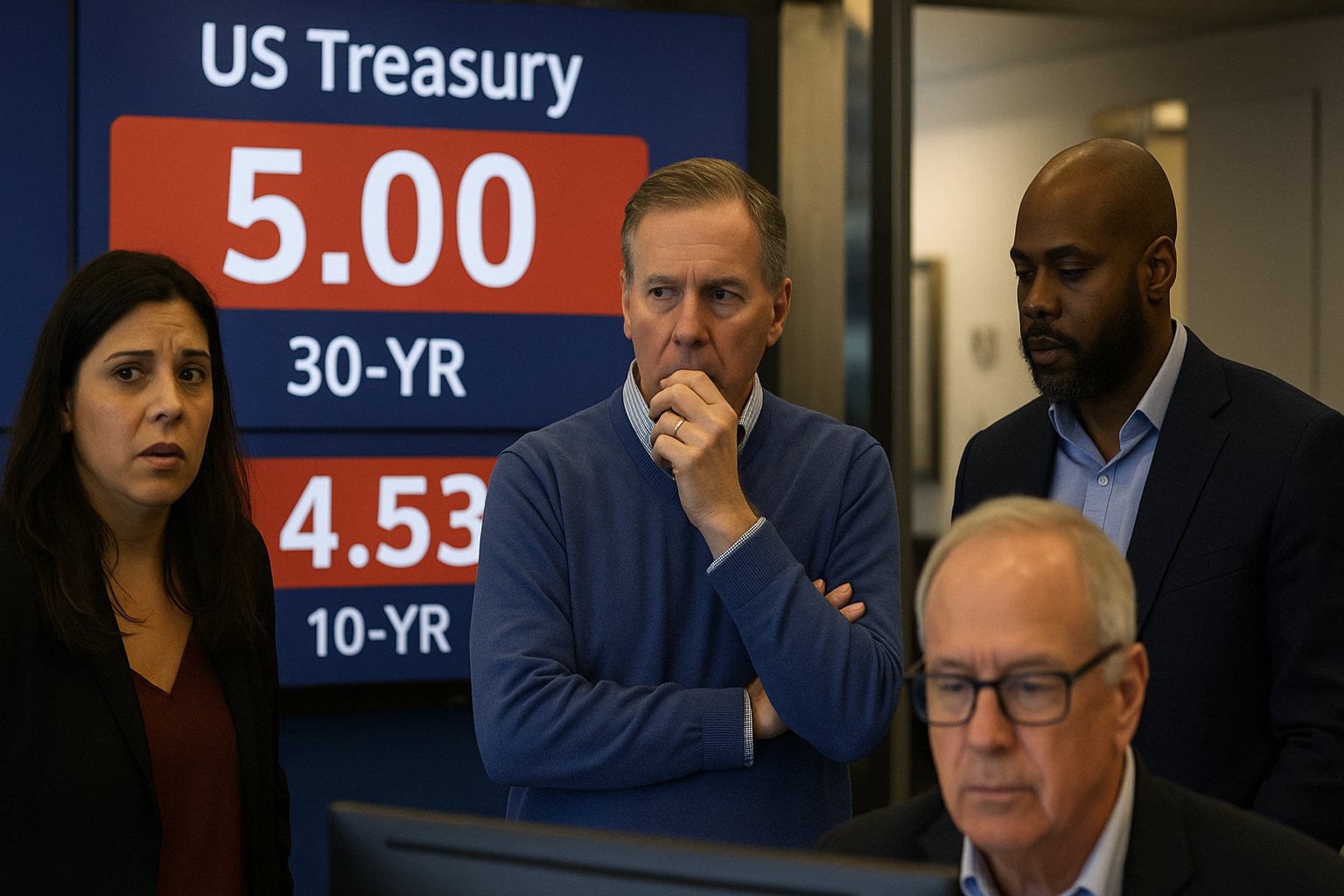
The market is charging America more than 5% to borrow for 30 years—and Washington is still acting as if a small Fed move is the whole bloody story.
That is not a bond-market wobble. It is the price of years of deficits, inflation complacency and an economy built around the assumption that capital will always be cheap enough to rescue bad decisions.
As of Sunday, September 13, 2026, the long end of the U.S. Treasury market is the story investors, founders and operators cannot afford to ignore. The 30-year Treasury yield has closed above 5% on 55 days this year, the most in any year since 2006. It hit 5.34% in mid-August, its highest level since 2007 and within 10 basis points of a 22-year high.
Most people will read that and switch off because bonds sound like something handled by blokes in bad ties. Big mistake. The 30-year Treasury is not a nerdy side chart. It is the reference price for patience. When that price rises, everything that depends on long-term capital gets repriced: homes, infrastructure, private equity, venture valuations, corporate debt and the share prices of companies promising profits sometime after the sun burns out.
The immediate problem: inflation is back in charge
The trigger for the latest move is simple enough. U.S. consumer prices rose again in August, with gasoline responsible for more than one-third of the monthly increase. Core CPI, which strips out food and energy, rose 0.3% for the month—more than markets expected.
That matters because the Federal Reserve meets on September 15-16. Only a week ago, the debate was whether Chair Kevin Warsh could afford to keep rates steady. After the inflation print, markets sharply increased the odds of a rate hike at this meeting.
There is a deliciously uncomfortable contradiction here. Analysts in Reuters’ September 9 poll still mostly expected the Fed to hold rates through the rest of 2026. Yet financial markets were already pricing a much tougher path, including two rate increases by March. That gap is where the danger lives.
Markets do not care what economists write in a survey. Markets care about the price required to convince somebody to lend money for 10, 20 or 30 years while inflation, oil and government borrowing are all moving in the wrong direction.
And right now, that price is rising.
The Fed can lift short-term rates by 25 basis points. It cannot drill for oil, end a geopolitical conflict, unwind tariffs overnight or make Congress discover fiscal discipline. Monetary policy is a blunt tool. It can cool demand. It cannot magically fix a supply shock.
That is why a rate hike may calm the market briefly without solving the larger problem. If investors conclude inflation is sticky and Treasury issuance will remain enormous, they will demand more yield to own long-dated government debt anyway.
The 5% yield is a warning label, not a trading signal
Let’s be clear: 5% on a 30-year Treasury is not automatically a financial apocalypse. Australia and the United States have both lived through much higher rates. The trouble is not that 5% is historically unprecedented. The trouble is that the modern financial system has been trained on the opposite.
For more than a decade, investors were rewarded for owning long-duration assets: growth stocks, tech businesses, property, private companies and anything with a convincing slide deck about profits arriving later. Low rates made distant cash flows look valuable today.
Higher long-term yields reverse that mathematics. A dollar earned in 2036 is worth less when investors can collect a compelling return from government paper now. That is why long-duration assets get punished first when rates rise. It is not emotional. It is arithmetic.
Founders hate hearing this because it wrecks the preferred mythology: a great business should be valued on its vision. No. A great business is valued on the cash it can produce, the capital it requires and the risk attached to both. Vision helps. Cash pays the bills.
The 30-year yield is also sending a more serious message than the Fed funds rate. It says investors want compensation not merely for expected short-term policy rates, but for inflation risk, fiscal risk and the uncertainty of holding U.S. debt for decades. That extra compensation is called term premium. The jargon is ugly. The point is not.
The market is saying: “We will lend, but you are going to pay us properly.”
America is competing with its own companies for capital
The overlooked part of this story is not just government borrowing. It is who else is trying to raise enormous amounts of money at exactly the same time.
September is expected to bring about $215 billion in corporate bond issuance, following record issuance in August. A fair chunk of that is tied to the AI infrastructure race: data centres, chips, power, networking and the vast plumbing required to turn AI from an exciting demo into a functioning industrial system.
I am not anti-AI. That would be like being anti-electricity. But I am deeply suspicious of the idea that a capital spending boom is automatically a profitable boom.
When companies borrow heavily to build capacity, they compete with governments, homebuyers and every other borrower for the same capital. If demand for funding overwhelms demand for bonds at existing yields, yields rise. That means funding costs rise. Then the supposedly unstoppable project needs more revenue, more time or more capital to justify itself.
It is easy to celebrate an AI data centre announcement. It is harder to ask what the return on invested capital will look like if financing costs remain high and power costs remain volatile.
That question should be keeping boards awake.
The strongest businesses will cope. They have genuine cash flow, low debt, pricing power and customers who cannot easily leave. The weak businesses will discover that “adjusted EBITDA” does not pay interest. Neither does a strategic narrative.
The contrarian angle: high rates can be good for builders
Here is the bit nobody selling you a growth-stock newsletter wants to say: more expensive capital is not uniformly bad.
It is bad for businesses that require constant outside funding to survive. It is bad for overleveraged property plays. It is bad for private-equity models that rely on cheap debt doing half the work. It is bad for founders who confused fundraising with achievement.
But it can be excellent for disciplined operators.
Higher rates punish rubbish. They force customers to distinguish between a nice-to-have product and a must-have one. They make teams focus on margins rather than vanity growth. They lower the price of assets owned by people who borrowed too much. They make cash flow fashionable again.
That is not cruelty. That is capitalism operating without the training wheels.
If you have a healthy balance sheet, a good product and the nerve to stay rational while others panic, periods like this create opportunities. Competitors cut marketing. Sellers become realistic. Talent becomes available. Acquisition targets stop quoting fantasy prices.
The catch is obvious: you need liquidity before the opportunity arrives. You cannot be the bargain hunter if you are the distressed seller.
What this means for you
Do not make a grand macro bet because you read one article. That is how people turn useful information into expensive theatre. But do use this moment as a proper stress test.
If you run a business: calculate what happens if your borrowing cost rises by 1 percentage point at refinancing. Not in a spreadsheet nobody opens—put it on one page. Then work out what you would cut, what you would raise prices on and what investment would need to pause. Do it before the bank forces the conversation.
If you are a founder: stop describing capital efficiency as a virtue for later. It is a survival trait now. Know your cash runway, your gross-margin trend and the exact point at which growth stops creating value. If you cannot answer those three questions quickly, you do not have control of the business.
If you are an investor: look past the headline index. Ask which companies have debt maturing soon, weak free cash flow and valuations based on profits many years away. A great company can still be a terrible buy at the wrong price. Conversely, solid cash-generative businesses become more interesting when everyone is obsessing over the next rate decision.
If you are a saver: do not leave meaningful cash earning nothing out of laziness. Short-dated government paper, term deposits and high-quality cash products are finally paying returns worth comparing. Match the duration to when you actually need the money. Do not lock up your emergency fund chasing an extra fraction of a percent.
And for everyone: stop waiting for the Fed to make your financial decisions easier. The Fed meeting on September 15-16 matters. But your own balance sheet matters more.
The 30-year Treasury sitting above 5% is the market telling us cheap money was never a business model. It was an environment. Environments change.
The people who adjust early will call this period an opportunity. The people who keep pretending 2021 is coming back will call it unfair.
Sources
- Bloomberg: US 30-Year Bond Enters September on Its Worst Stretch Since 2006
- Axios: The tab is coming due for America's borrowing binge
- Reuters: Fed to hold rates steady in rest of 2026; rising number of analysts see at least one hike
- AP: Fed Chair Warsh signals rate hikes may be needed with US inflation stubbornly elevated