U.S. Treasury’s 5.311% 30-Year Yield Is the Real Iran-War Alarm
The U.S. Treasury is paying 5.311% to borrow for 30 years, and markets are still pretending the problem is merely oil. That is not a commodity story. It is a cost-of-capital problem.
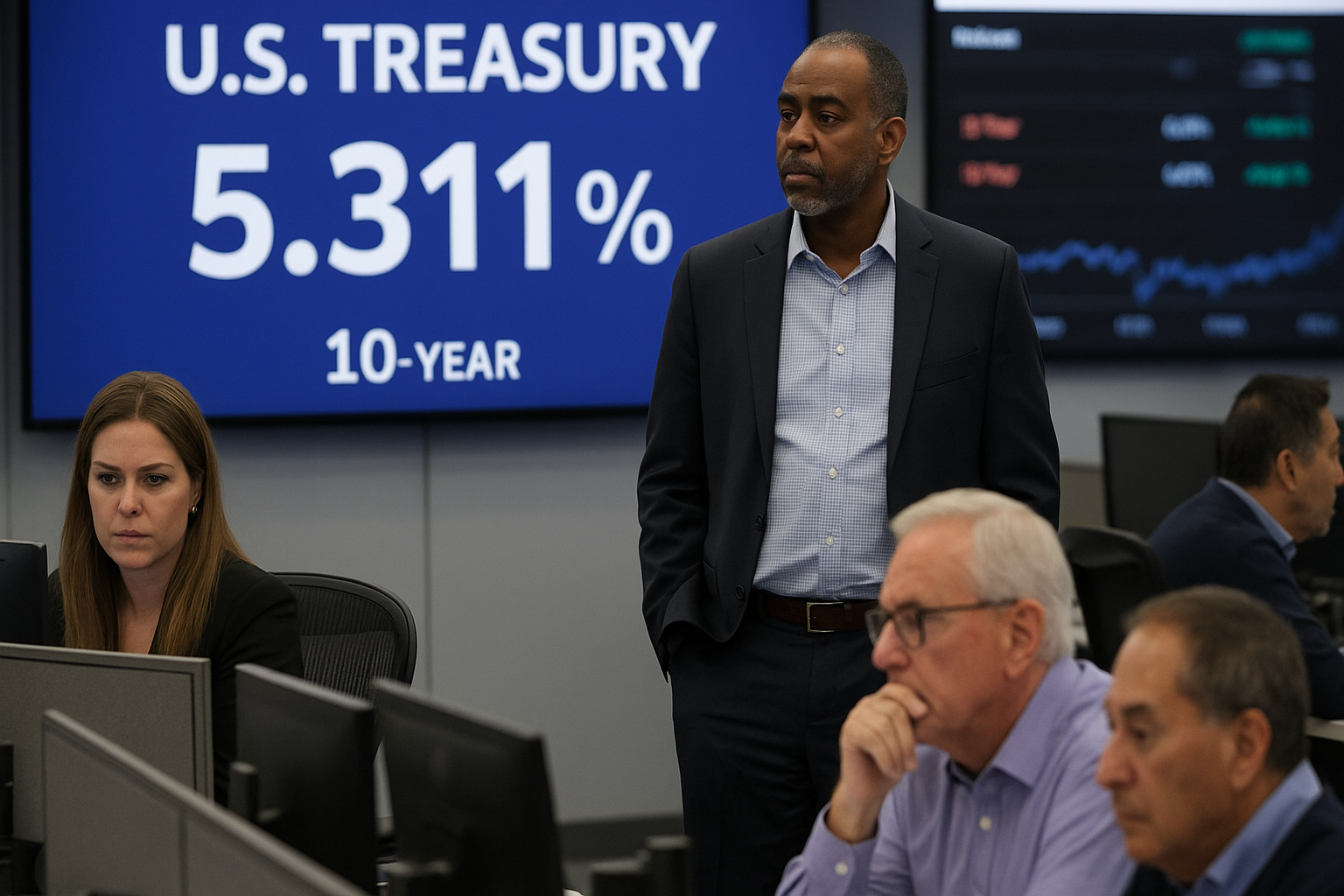
The U.S. Treasury is paying 5.311% to borrow for 30 years, and markets are still pretending the problem is merely oil.
That is not a commodity story. It is a cost-of-capital problem — and it will hurt far more people than a few extra dollars at the petrol pump.
On Monday, August 17, the 30-year Treasury yield rose more than 4 basis points to 5.311%, its highest level since June 2007. At the same time, oil climbed as hopes for a durable U.S.-Iran settlement faded and shipping through the Strait of Hormuz remained badly disrupted.
Most people see that and think: oil up, inflation up, rates stay high. Fair enough. But it misses the nastier bit.
The market is starting to ask whether long-term government debt deserves a permanently higher price. If the answer is yes, every business owner, founder, investor and household borrowing money gets dragged into the bill.
This is bigger than a bad week for oil
The immediate trigger is obvious. Reuters reported that Iran said it could shift to a fully offensive posture if diplomacy with the United States failed. The temporary ceasefire was not turning into a durable peace, and the passage of commercial ships through Hormuz had become a trickle.
The shipping numbers are the sort that should make a sensible person sit upright. Kpler data cited by Reuters showed five commodity vessels transited the strait on Saturday, August 15, versus 31 during the prior weekend. None were recorded on Sunday.
Hormuz is not some distant geopolitical squabble that only matters to blokes trading crude futures in London. It is one of the world’s essential energy bottlenecks. When the route is unreliable, oil markets do not simply add a neat little “risk premium” and get on with it. Insurers reprice. Freight gets more expensive. Refiners scramble. Inventories matter more. Businesses begin paying for uncertainty before they physically run short of product.
That is why the oil move matters.
But the oil headline is still the first-order effect. The second-order effect is that higher and more volatile energy prices make inflation harder to kill. And when inflation looks harder to kill, bond investors demand more compensation to lend money for a very long time.
That is what the 5.311% 30-year Treasury yield is shouting.
The bond market is no longer buying the easy story
For years, investors were trained to believe every wobble ended the same way: growth softens, inflation eases, central banks cut, long-duration assets fly.
Lovely story. Easy story. Possibly dead story.
Barclays strategists noted that three separate softer U.S. data releases this month had argued for lower long-term yields — yet yields still rose. That matters because it suggests the bond market is not just reacting to one inflation print or one payroll report. It is pricing a broader problem: persistent government borrowing, heavy Treasury issuance, higher term premiums and enormous funding demands tied to the AI buildout.
Put plainly: there is a queue forming for capital.
The U.S. government needs to borrow vast sums. AI infrastructure needs data centres, power, chips, networks and debt-financed construction. Companies need to refinance loans written when money was cheap. Households still need mortgages, car finance and business credit.
When all those borrowers want money at once, lenders get to be picky. They demand a better return. That is Capitalism 101, not an advanced seminar at a hedge fund.
The dangerous mistake is assuming the Federal Reserve can fix that simply by cutting short-term rates. It might help at the margin. But the Fed does not control the 30-year yield with a magic wand. Long rates also reflect inflation expectations, fiscal credibility, supply of government debt and the extra compensation investors want for locking up money for decades.
If investors decide that 5%-plus long-term yields are normal rather than temporary, plenty of business models built on cheap capital will discover they were not business models at all. They were interest-rate trades wearing a company logo.
Why founders should care more than traders
A trader can hedge oil, short bonds or punt on the next Federal Reserve meeting. Good luck to them.
Operators do not have that luxury. We have payroll, inventory, leases, customers, suppliers and a bank that suddenly wants to discuss “updated pricing”.
A higher long-end yield works its way through the real economy with a lag. It hits commercial property valuations. It raises refinancing costs for private equity-owned companies. It makes venture capital more selective. It lowers the present value of profits that might arrive years from now. It puts pressure on highly leveraged businesses that have been surviving on optimism and covenant waivers.
This is particularly awkward for AI-related businesses and the companies funding the physical infrastructure behind them. There is no question that AI is real. I use it, I build with it, and I think it will create serious wealth.
But a real technology can still be attached to a stupid price.
The European Central Bank has warned that stretched technology and AI valuations, combined with leverage and thin cash buffers in some investment funds, could amplify a market shock. The Bank of England has made a similar point: a correction in AI valuations could spill well beyond technology shares into broader global markets.
That is the bit investors hate hearing because it ruins the pub conversation. You can be right about the technology and wrong about the investment. The internet changed the world; plenty of people still got financially belted buying rubbish at peak dot-com prices.
The overlooked risk is not inflation. It is bad optionality.
Here is the contrarian view: the greatest danger is not necessarily that oil stays high forever.
It is that businesses and investors lose room to move.
When energy is expensive, governments run bigger deficits to cushion households. When governments issue more debt, long yields can rise. When long yields rise, businesses face higher financing costs. When financing costs rise, fewer projects clear the hurdle rate. Hiring slows, investment gets cut, and fragile companies are exposed.
Then, if oil drops later because growth rolls over, that is not automatically good news. It may simply mean demand has weakened enough to break something.
This is why staring at the oil price alone is amateur hour. Oil can fall for bullish reasons — more supply, a diplomatic breakthrough, better shipping flows — or bearish ones, like a weakening global economy. The same price chart can tell two completely different stories.
The thing to watch is the relationship between oil, long-dated bond yields and credit conditions.
If crude eases but long yields stay elevated, markets are telling you the problem has moved beyond the Middle East. It becomes a fiscal and capital-supply problem. That is harder to solve and much more relevant to your mortgage, your company’s debt facility and your portfolio multiple.
Don’t confuse a resilient sharemarket with a healthy economy
The sharemarket can look remarkably calm while stress builds underneath it. It only takes a handful of enormous companies to keep an index looking healthy. That is not the same thing as broad prosperity or robust corporate balance sheets.
The current setup is especially deceptive because the biggest AI winners have genuine revenue, genuine customers and genuine strategic importance. This is not Pets.com with a sock puppet.
But that does not make them immune to the arithmetic of discount rates.
When the risk-free rate rises, the market does not need a catastrophe to reprice expensive growth assets. It just needs investors to demand a better return for waiting. A company expected to produce huge cash flows in 2032 is worth materially less when long-term yields are 5.311% than when they are 3%.
No amount of keynote enthusiasm changes that maths.
What this means for you
First, stop making decisions based on the hope that rates will soon go back to where they were. Run your numbers using today’s borrowing costs, then add another 1% to 2% as a stress test. If the deal only works under a fantasy interest-rate assumption, bin it.
Second, match your debt to your asset life. Do not fund long-lived assets with short, floating-rate debt unless you enjoy waking up to nasty emails from lenders. Certainty is not free, but neither is panic.
Third, audit your business for energy exposure beyond your direct utility bill. Freight, packaging, supplier pricing, employee commuting, logistics and customer budgets all move when fuel costs stay elevated. Ask suppliers now where their exposure sits. The cheapest time to understand your supply chain is before it sends you a surcharge.
Fourth, if you are an investor, own quality rather than stories. Strong balance sheets, real free cash flow, pricing power and manageable refinancing needs are boring right until they save your backside.
Finally, watch the 30-year Treasury yield as closely as you watch the S&P 500. If it keeps pushing higher while markets shrug, do not mistake complacency for safety.
The oil market is giving everyone a loud warning. The bond market is giving them the expensive one.