U.S. VA Loans at 6.40%: Why 0% Down Can Cost You Dearly
At 6.40%, a zero-down VA loan can buy a house without buying you any margin for error. That is not a bargain; it is leverage wearing a flag.
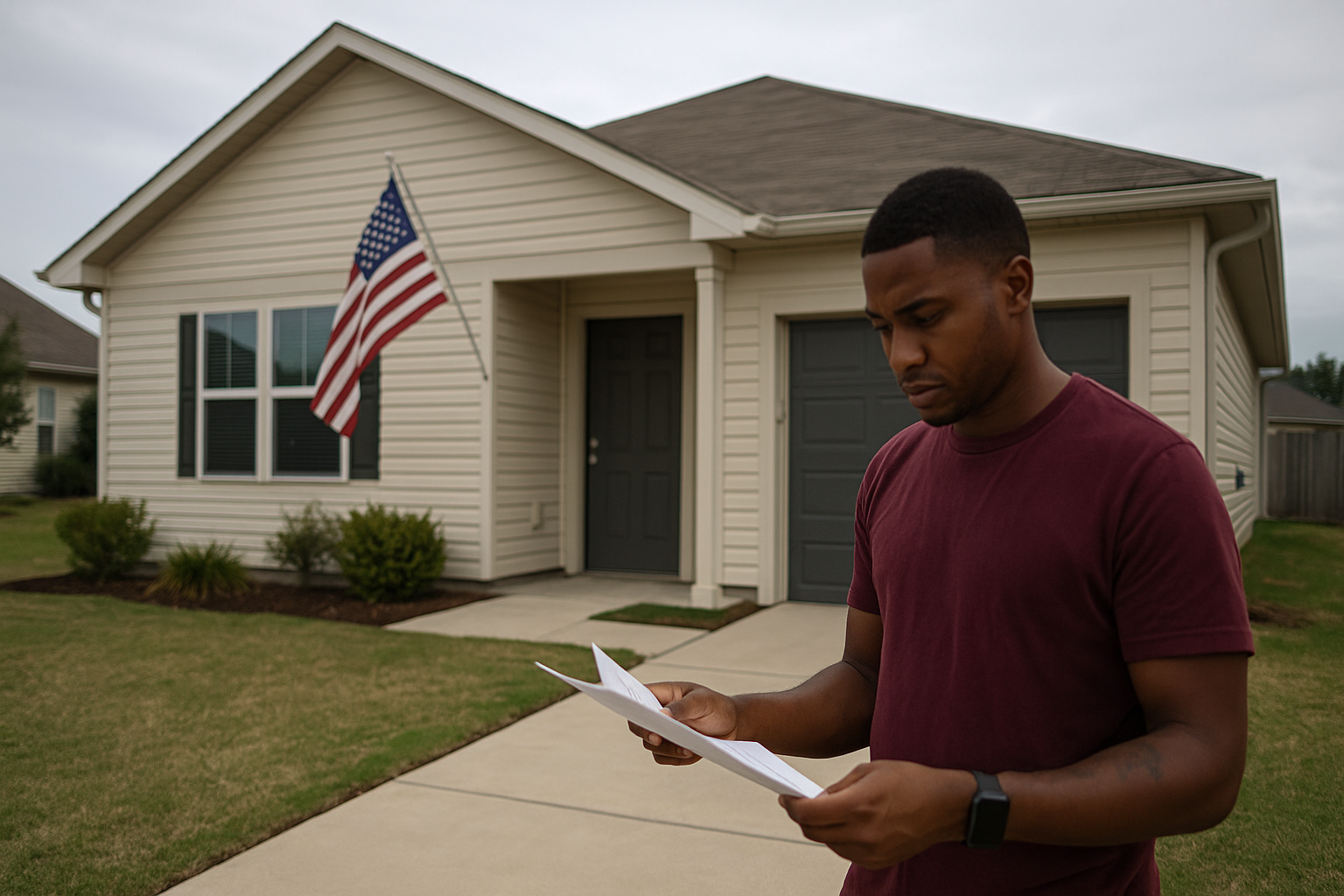
At 6.40%, a zero-down VA loan can buy a house without buying you any margin for error. That is not a bargain; it is leverage wearing a flag.
The U.S. housing market has trained people to treat homeownership as a moral victory and a low deposit as a clever hack. Sometimes it is. But if you confuse being approved with being safe, you can turn a government-backed benefit into an expensive handcuff.
CNBC reported on September 3 that the 30-year fixed VA-loan rate was 6.40%, based on Optimal Blue data. VA loans can require no deposit and do not require private mortgage insurance. Those are real advantages. They are not, however, a licence to buy the most house a lender will let you touch. ([cnbc.com](https://www.cnbc.com/select/what-are-va-loan-rates-today-september-3-2026/?utm_source=openai))
The real story is not 0% down. It is 100% exposure.
A buyer putting nothing down is not getting a free lunch. They are choosing maximum exposure to one asset, in one suburb, financed with a very large monthly obligation.
Take a simple example. Buy a US$500,000 home with a zero-down, 30-year fixed loan at 6.40%. The principal-and-interest repayment is roughly US$3,128 a month. That is before property taxes, homeowners insurance, maintenance, utilities, moving costs, furniture, or the inevitable thing that breaks three weeks after settlement because houses have a wicked sense of timing.
Put 20% down and the loan falls to US$400,000. At the same assumed rate and term, principal and interest falls to about US$2,502 a month. That US$626 monthly difference is not a rounding error. It is US$7,512 a year of breathing room before you even discuss taxes and repairs.
Now, I am not saying every eligible veteran should wait until they have US$100,000 in cash. That would be idiotic advice in plenty of markets and for plenty of families. A VA loan is a serious wealth-building tool precisely because it removes a barrier that locks many people out of ownership.
I am saying something less fashionable: if you use 0% down, your cash buffer needs to do the job that your deposit did not.
That is the bit people skip because deposits are visible and buffers are boring. But the buffer is what stops a job change, a roof leak, a relocation, or a flat patch in home prices from becoming a forced-sale problem.
The U.S. Department of Veterans Affairs has given buyers an edge — not invincibility
VA loans are designed for eligible veterans, active-duty service members and certain other borrowers. The compelling bits are obvious: no required down payment in many cases, and no private mortgage insurance even with a small deposit. CNBC’s mortgage guide contrasts that with minimum deposits of 3% for some conventional loans and 3.5% for FHA loans. ([cnbc.com](https://www.cnbc.com/select/how-much-down-payment-do-i-need-for-a-house/?utm_source=openai))
That advantage matters enormously.
A conventional buyer trying to purchase a US$500,000 house with a 6% deposit needs US$30,000 before closing costs. A buyer using a zero-down VA loan may preserve that cash for emergencies, relocation, renovations, or simply not being broke on day one. Good. That is exactly how smart leverage should work.
But preserved cash is only useful if it stays preserved.
Too many people see a lower upfront hurdle and immediately upgrade the property: bigger house, better postcode, newer kitchen, more debt. They have not made homeownership cheaper. They have merely used the financial advantage to stretch further.
That is the trap. The VA benefit gets spent on lifestyle instead of converted into resilience.
I have seen versions of this in business for years. Someone gets access to capital, confuses access with profit, then wonders why the business is fragile. Debt does not make you wealthy. Owning a quality asset over time, while surviving the bad months, is what makes you wealthy.
Property is no different.
A 6.40% rate changes the maths — even if it does not change the dream
People obsess over whether rates will fall. Fair enough. Rates matter. But buyers often use that question to avoid the one that actually decides whether they will sleep at night: Can I hold this asset if life gets inconvenient?
A fixed-rate mortgage gives you one major advantage: payment certainty on principal and interest. That is valuable. Yet the total cost of owning a home is not fixed. Taxes can move. Insurance can move. Repairs absolutely move, generally in the wrong direction and without asking permission.
The answer is not to wait forever for a prettier rate. That is another form of paralysis. If the house suits your life, the location is sound, the repayment is comfortable, and you can hold it for a decent period, buying can make sense at a rate you do not love.
But do not build your plan around a future refinance. Treat a refinance as upside, not survival.
If rates fall later, terrific: you may have an opportunity to reduce the repayment. If they do not, you still own a home whose economics you underwrote honestly. That is how adults invest.
The opposite approach is to borrow at the edge of your capacity while telling yourself, “We’ll refinance next year.” That is not a strategy. It is a prayer wearing a spreadsheet.
The overlooked angle: the best use of a VA loan may be buying less house
Here is the contrarian view: the smartest VA buyer may be the one who deliberately leaves borrowing capacity unused.
This sounds almost offensively sensible, which is why most people will ignore it.
If you can qualify for a US$500,000 home, look seriously at a US$400,000 or US$425,000 home. Keep the VA loan’s deposit advantage, but use it to build a war chest rather than justify a larger mortgage.
A proper war chest means three separate piles of money:
- Move-in cash: Closing costs, immediate repairs, appliances, furniture, and the dull expenses everyone forgets. - House cash: A dedicated reserve for maintenance and insurance surprises. Your home is an asset, but it is also a machine with pipes, wiring, paint, and a roof. - Life cash: Several months of essential personal expenses, untouched by the house. If your emergency fund disappears into the deposit or the renovation, it was never an emergency fund.
This is not timid. It is aggressive in the way I like: it gives you staying power.
Staying power lets you negotiate harder when buying, refuse desperate decisions later, and survive a soft market without selling at precisely the wrong time. The buyer with cash and a manageable repayment has options. The buyer with a beautiful kitchen and no buffer has a very expensive set of handcuffs.
Do not confuse a home with a diversified investment portfolio
I am pro-property. I have made money from owning assets, and I understand why people want a home they control. But a primary residence is not the same thing as a diversified portfolio, no matter how many people say “property always goes up” at barbecues.
Your home can create stability, forced saving, and long-term equity. It can also concentrate a huge percentage of your net worth in one address.
That is why the question is not simply whether you can obtain a VA loan at 6.40%. The question is what buying does to the rest of your financial life.
Are you still investing for retirement? Are high-interest debts gone? Can you maintain the property without reaching for a credit card? If you needed to move in two years, would you have enough equity and cash to manage the transaction without getting belted by selling costs?
A mortgage lender assesses credit risk. You need to assess life risk.
Those are not the same job, and they should not be.
What this means for you
If you are eligible for a VA loan, do not let anyone shame you into believing a 20% deposit is the only respectable way to buy. The VA benefit is valuable. Use it.
But use it like an investor, not like someone who has just been handed a bigger shopping trolley.
Tomorrow, do four things:
1. Run the payment at today’s rate, not your hoped-for refinance rate. Use 6.40% as the starting point if that is the quote in front of you, then add property tax, insurance, and a realistic maintenance allowance. ([cnbc.com](https://www.cnbc.com/select/what-are-va-loan-rates-today-september-3-2026/?utm_source=openai)) 2. Price a home below your approval limit. Set a purchase ceiling based on a payment you can carry after a bad month, not after a good bonus. 3. Keep cash after closing. Zero down only works in your favour if it leaves you with reserves. If the transaction cleans you out, the loan is too large or the deal is too tight. 4. Make refinance optional. Buy only if the current repayment works. A later refinance should improve an already sound deal, not rescue a reckless one.
The U.S. Department of Veterans Affairs has handed eligible buyers a rare structural advantage: the ability to own without first saving a massive deposit. That is powerful.
Just do not spend that advantage on more house than you need. Keep some of it. Turn it into options. Options are what make you rich — and, more importantly, hard to knock over when the world gets messy.