Veritas’s £1.65B Bodycote Buy: Why Boring Wins
A £1.65 billion cheque just landed on a company that makes critical parts last longer. Boring is where pricing power lives.
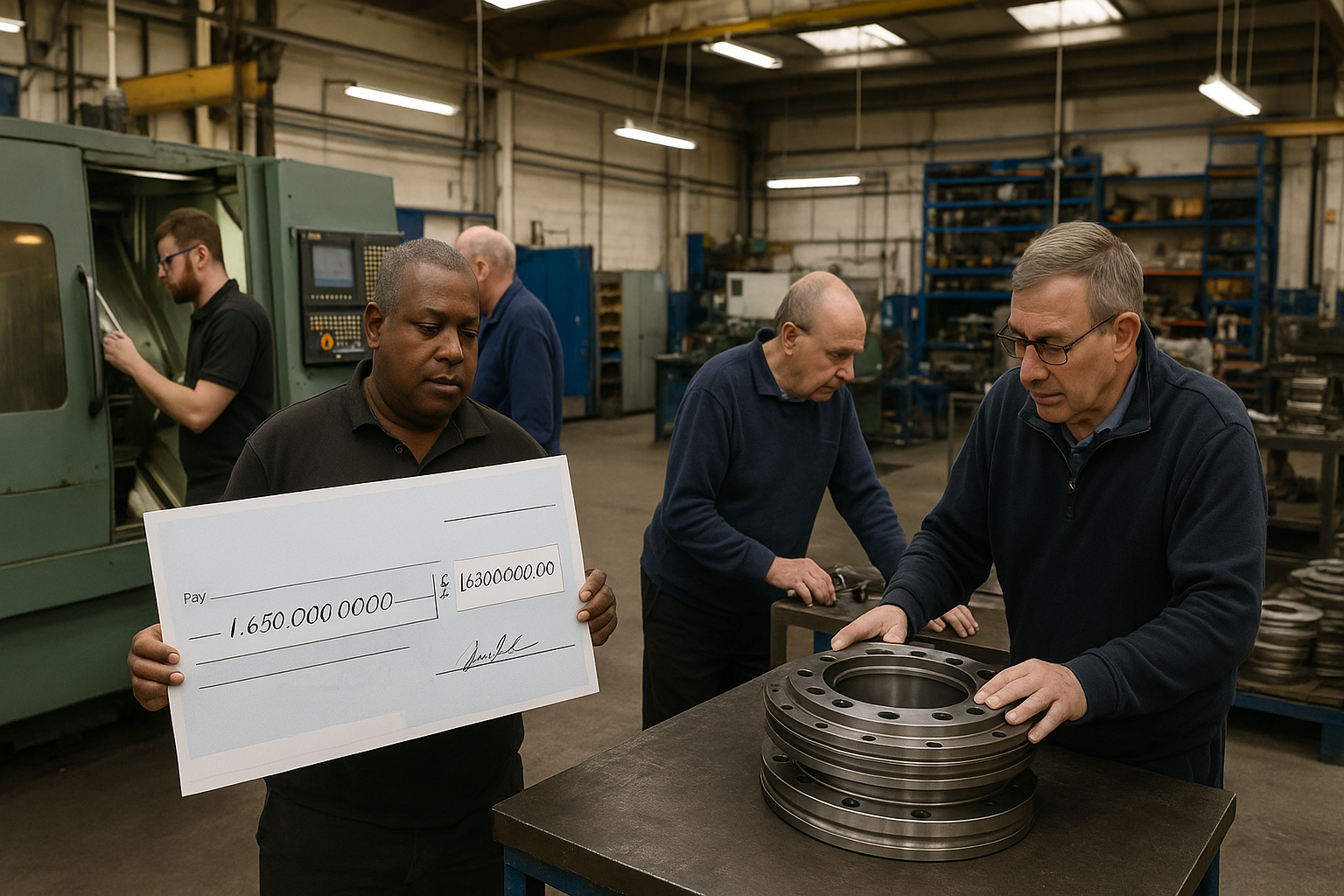
The sexy end of industry gets the magazine covers. The company that makes critical parts last longer just attracted a £1.65 billion cheque—because boring is where the pricing power lives.
Veritas Capital’s recommended takeover of British thermal-processing specialist Bodycote is not a glamorous deal. There is no consumer app, no celebrity founder and no AI slogan slapped across a slide deck. There are furnaces, coatings, aerospace parts, defence supply chains and the unsexy business of making metal components perform properly.
That is exactly why it matters.
On September 1, Veritas agreed to buy Bodycote through its Vulcan Alpha Bidco vehicle in a transaction valued at £1.85 billion including debt. Shareholders are set to receive 940 pence per share in total: 932.8 pence in cash plus a 7.2 pence interim dividend. The equity value is about £1.65 billion.
And Veritas did not get handed the keys. It beat rival buyout firm CVC after Apollo had already had a crack earlier in the year and walked away. That is a proper auction for a business most people could not explain at a barbecue.
The lesson is simple: serious money does not chase excitement. It chases assets with customers who cannot afford for them to fail.
The deal: Veritas paid up because Bodycote is hard to replace
Bodycote provides thermal-processing services for aerospace, defence and industrial customers. In plain English, it helps make metal parts stronger, more durable or fit for demanding applications.
That sounds like a commodity until you think about what happens when the relevant component goes into an aircraft engine, a defence platform or an industrial machine that costs millions to shut down. At that point, the customer is not hunting for the cheapest bloke with a furnace. They are buying process control, certification, repeatability and a supplier they trust not to stuff it up.
Veritas’s offer came in at 940 pence per share, comprising the cash payment and the dividend. Bodycote’s board backed it unanimously. The company said the value represented a 37.5% premium to its three-month volume-weighted average share price before takeover speculation emerged in May, and a 42.5% premium to the corresponding 12-month average.
That is not a bargain-bin bid. It is a buyer paying for certainty.
But it is also not charity. Veritas is telling the market it believes Bodycote will be worth more in private hands than the price it is paying in public.
That is the only part of private equity worth understanding. Forget the jargon. A buyout firm looks at a listed business and asks: can we buy this cash-generating asset, improve its operations or capital allocation, hold it through a cycle, then sell or relist it at a higher value? If the answer is yes, it starts ringing bankers.
Veritas got there after competition. In August, CVC and Veritas had submitted conditional proposals around 915 pence and 914 pence per share respectively. Veritas then raised its hand to 940 pence. CVC said it was considering its position, so the market has not entirely ruled out another move.
Bodycote shares briefly traded above the offer price after the announcement. That is the market doing what markets do: putting a small price on the chance that somebody comes back with a fatter envelope.
Why this business attracted a bidding war
The lazy interpretation is that private equity has run out of ideas and is buying whatever it can find in the UK.
There is some truth in that. UK-listed companies have been fertile ground for overseas buyers for years, and Reuters noted the familiar argument: British companies often trade at lower valuations than comparable US and European businesses. A weaker pound and the economic drag from Brexit have helped keep that discount alive.
But that explanation is too tidy. A cheap market alone does not make a good business.
Bodycote had three things buyers love.
First, it operates in sectors where failure is expensive. Aerospace, defence and performance industrial work are not places where customers casually switch suppliers because someone offered a 3% discount. The real cost of a bad decision can be a delayed production line, a failed audit, a compromised part or a damaged customer relationship.
Second, it has exposure to end markets that governments and large industrial groups are still funding. Defence spending, aerospace production and industrial maintenance do not move in a straight line, but they are not dependent on whether consumers feel like ordering novelty socks online this quarter.
Third, Bodycote is a specialist service business rather than a manufacturer betting its life on one product. That matters. Products get copied. Sophisticated process capability, local operating know-how and long-standing customer qualification are much harder to replicate quickly.
Veritas itself pointed to Bodycote’s aerospace, defence and performance-industrial exposure as a fit with its portfolio, which includes aeroengine technology firm Chromalloy. That should make competitors and regulators pay attention, but it also explains the industrial logic. The firm is not buying a random British mid-cap. It is buying deeper access to a supply chain it already understands.
The overlooked angle: this is not really a cheap-UK story
Here is the contrarian view: calling Bodycote a “UK discount” deal misses the point.
Yes, the company is listed in London. Yes, foreign money is circling British assets. And yes, a lower public-market valuation can create an opening.
But the thing Veritas is buying is not especially British. It is a global industrial capability attached to customers in industries where qualification matters more than postcode. That is a different animal from buying a domestic retailer because its shares have been smashed.
The better way to see it is this: public markets often get bored with businesses whose value compounds through operational discipline rather than headline growth. A specialist processor can be doing exactly what it should—adding capacity, improving quality, serving demanding customers—and still struggle to become the market’s favourite toy.
Private capital is happy to own that sort of business if it can see a path to better returns.
That does not mean private equity is always smarter than public investors. Plenty of buyout deals are dressed-up debt trades with a motivational poster stapled to them. But businesses with genuine industrial moats can look more valuable once the quarterly-performance circus is removed.
Bodycote’s board made that tension explicit. It said it remained confident in the company’s ability to create sustained value independently, but judged the offer attractive against the uncertainty of executing its strategy amid macroeconomic and end-market risks—particularly continued weakness in automotive and industrial markets.
That is boardroom language for a very human problem: do you take a solid premium in cash now, or roll the dice on a more valuable future that may take years to arrive?
For shareholders, that is not a philosophical debate. It is the entire decision.
The price is not the only number that matters
Most investors see “£1.85 billion deal” and stop thinking. Don’t.
The important number is not just enterprise value. It is what the buyer is paying, what the target can earn through a cycle, and what has to go right after the ink dries.
The 940 pence offer includes a 7.2 pence interim dividend. The actual cash consideration is 932.8 pence. That distinction looks fussy, but it matters. Good operators learn to separate headline value from what is actually changing hands.
Then there is the debt-inclusive value of £1.85 billion versus the equity value of roughly £1.65 billion. Again: not semantics. Enterprise value is the price of the operating business, including the capital structure. Equity value is what belongs to shareholders. If you cannot tell the difference, you cannot sensibly compare deals.
Finally, the deal is recommended, not completed. It is structured as a UK court-sanctioned scheme of arrangement and still requires shareholder approval and regulatory clearances. Under the stated terms, at least 75% in value of shares voted by scheme shareholders must support it, alongside the relevant court process.
A signed deal is not cash in the bank until the conditions are cleared.
What this means for you
Whether you are a founder, operator, investor or someone trying to build a business worth owning, there are four practical takeaways here.
1. Stop trying to look exciting. Start trying to become painful to replace.
Your moat is rarely your logo, your pitch deck or your Instagram following. It is the cost and risk a customer faces if they replace you. Build systems, expertise, trust and outcomes that make switching feel dangerous or annoying. That is where pricing power lives.
2. The boring parts of a supply chain can be the best parts.
Everyone wants to own the shiny end product. Often the better business is the specialist sitting behind it: the company that enables quality, compliance, uptime or performance. Find the tollbooths, not just the traffic.
3. Learn to read the deal, not the headline.
When you see an acquisition announcement, write down the per-share value, cash component, debt-inclusive value, premium, financing, approvals and rival bidders. Do that ten times and you will understand more about capital allocation than most people who spend all day talking about markets.
4. Build for more than one buyer.
Bodycote got a better outcome because more than one credible bidder was in the room. Apollo showed interest. CVC made proposals. Veritas had to improve its terms. If you are building a company, do not optimise for one imagined acquirer. Build a business that several smart buyers would hate to see in a rival’s hands.
That is leverage. And leverage—not vibes—is what gets you paid.
Veritas’s Bodycote deal is not sexy. Good. The best businesses often are not. They are just essential, trusted and very hard to replace. That is a far better way to get rich than trying to become the loudest thing in the room.