Verizon’s 274-Store Exit Puts Dan Schulman’s Turnaround on the Line
If your turnaround plan begins with 3,000 people getting shoved off the payroll, it had better end with customers staying. Verizon’s 274-store handover is Dan Schulman’s first proper test.
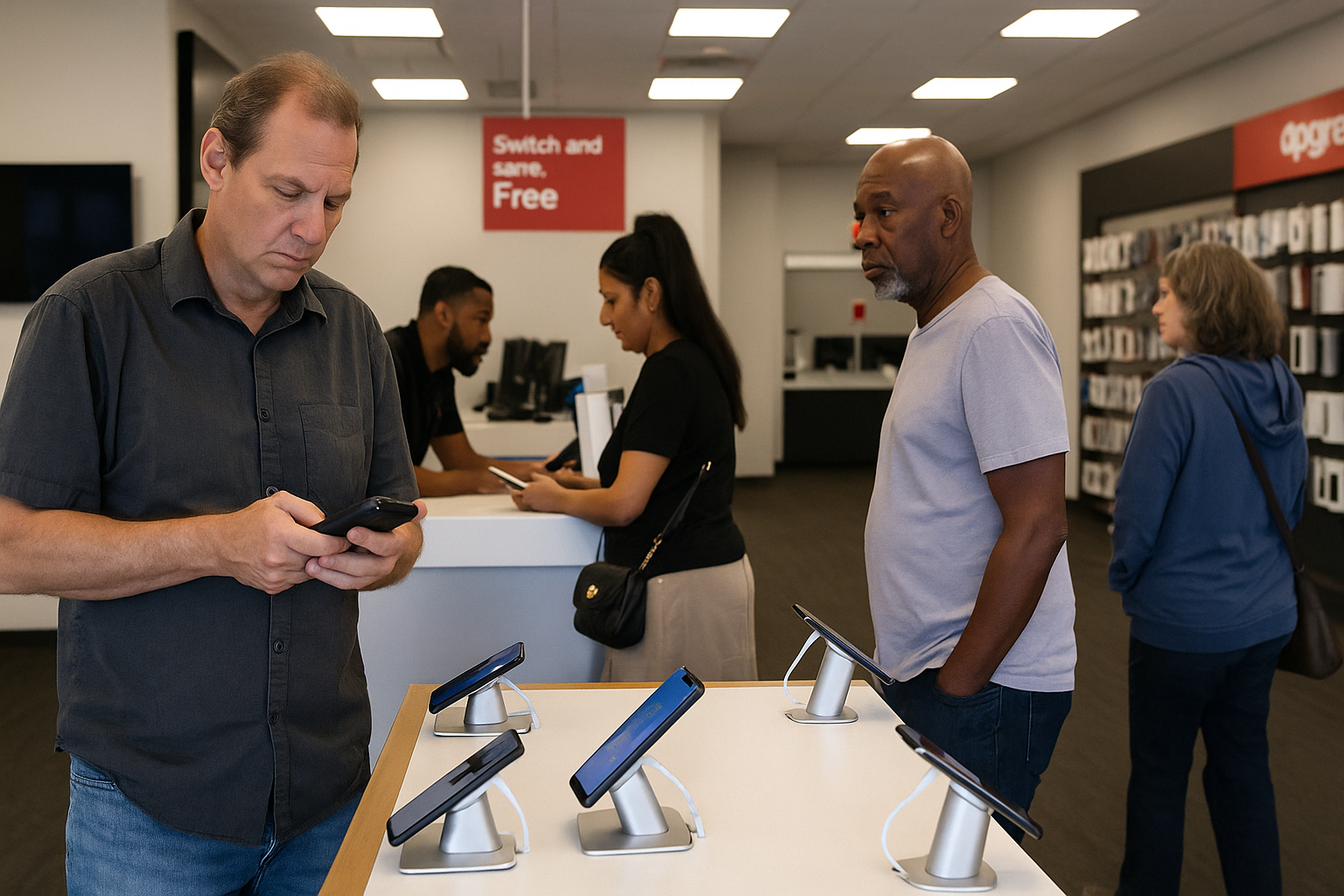
Verizon is handing 274 stores to franchise operators today, and roughly 3,000 people are caught in the blast radius. If that doesn’t produce a better customer experience, Dan Schulman hasn’t simplified the business — he has merely made the pain somebody else’s problem. ([investing.com](https://www.investing.com/news/stock-market-news/verizon-to-shed-274-stores-lay-off-another-500-corporate-employees-4796427?utm_source=openai))
This is not a store closure story
Let’s get the language straight, because corporate comms loves a euphemism.
Verizon is not simply shutting 274 underperforming shops and walking away. It is transferring company-owned locations to franchise operators, while also cutting about 500 corporate jobs. The changes affect about 3,000 retail and corporate workers in total and leave Verizon with about 1,000 company-owned stores from August 16, 2026. ([investing.com](https://www.investing.com/news/stock-market-news/verizon-to-shed-274-stores-lay-off-another-500-corporate-employees-4796427?utm_source=openai))
That distinction matters.
A closed shop is an admission that demand was rubbish or the location was wrong. A franchised shop is a different bet: the customer still sees the Verizon logo, but someone else carries more of the labour, property and day-to-day operating burden.
That can be smart. It can also be the oldest trick in the management handbook: shift costs off the balance sheet, call it agility, then discover six months later that the customer has noticed the service got worse.
Schulman became Verizon CEO in October 2025 after serving on its board since 2018. He inherited a business with a magnificent network, a recognisable brand and a fairly obvious problem: those assets were not translating cleanly into growth or the shareholder returns management wanted. ([investing.com](https://www.investing.com/news/stock-market-news/verizon-to-shed-274-stores-lay-off-another-500-corporate-employees-4796427?utm_source=openai))
Plenty of executives would have spent a year commissioning PowerPoint decks about “reimagining the omnichannel journey.” Schulman has chosen the more honest route. Cut complexity. Cut headcount. Give fewer stores a clearer purpose. Then see whether customers actually come back.
It is brutal, but at least it is a plan.
The numbers say this is a real reset, not a tidy-up
This is Verizon’s second meaningful retail handover in less than a year. It previously sold 179 company-owned stores to franchise operators in November and closed one other location. The company had also announced more than 13,000 job cuts in November — its largest single round of layoffs — before eliminating several hundred additional jobs in May. ([investing.com](https://www.investing.com/news/stock-market-news/verizon-to-shed-274-stores-lay-off-another-500-corporate-employees-4796427?utm_source=openai))
That sequence tells you what is happening inside the building.
This is not a CEO trimming travel budgets and asking staff to print less. It is a redesign of the operating model. Corporate-owned retail is expensive because you own the management layers, staffing, training, leases, incentives and every bit of operational friction that comes with them. Franchisees can move faster locally and bear more of that cost.
But don’t confuse a lower payroll with a stronger business.
Retail staff are not spreadsheet cells. In telecom, the front line handles device upgrades, billing confusion, trade-ins, service failures and the moment a frustrated customer decides whether to stay or walk across the road to a competitor. The employee may be on a franchisee’s payroll, but the customer will still blame Verizon when something goes pear-shaped.
Verizon says that, in earlier store transfers, about 70% of employees at the retail locations took jobs with the new operators. That is better than a straight mass closure. It is still a reminder that a company can preserve a storefront without preserving the same job, pay structure, manager or culture. ([investing.com](https://www.investing.com/news/stock-market-news/verizon-to-shed-274-stores-lay-off-another-500-corporate-employees-4796427?utm_source=openai))
The real number to watch isn’t 274. It is 1,000.
According to an internal memo reviewed by The Wall Street Journal, Verizon’s leadership concluded that maintaining at least 1,000 company-owned stores for the next three years is central to the strategy. That means these remaining stores are no longer just a legacy footprint. They are the controlled test bed: the places where Verizon must prove what excellent sales and service look like before it asks thousands of independently operated locations to deliver the brand promise. ([marketscreener.com](https://www.marketscreener.com/news/verizon-to-cut-about-3-000-jobs-divest-itself-of-some-retail-stores-ce7f5ed3dd88f420?utm_source=openai))
Schulman is trying to fix a business that stopped earning the benefit of the doubt
Here is the awkward truth: having the best network is not enough if the customer experience feels like a tax audit.
Verizon’s first-quarter 2026 results showed 55,000 net postpaid phone additions, its first positive first-quarter phone result since 2013 and a sharp improvement from the prior year. That is encouraging. It is not victory. One positive quarter is a green shoot, not a forest. ([bloomberg.com](https://www.bloomberg.com/news/articles/2026-04-27/verizon-reports-early-year-phone-subscriber-gains-under-new-ceo?utm_source=openai))
The company’s own targets show the size of the task. Verizon guided to 750,000 to 1 million total postpaid net additions for 2026, roughly two to three times its reported 2025 figure. Meanwhile, it remains focused on expanding its fibre footprint to 40 million to 50 million locations over the medium term. ([verizon.com](https://www.verizon.com/about/sites/default/files/Verizon-Earnings-Press-Release_0.pdf?utm_source=openai))
That creates a management challenge most boardrooms underestimate. You are trying to cut costs, rebuild trust, improve retail execution, grow wireless customers and expand fibre — all at once.
That is exactly where turnarounds go off the rails. Every division gets a target. Every leader has a dashboard. Everybody claims progress. Yet the customer experiences only one company.
If a shopper walks into a franchised Verizon store and gets pressured into a plan they do not understand, it does not matter that the network team hit its targets. If a customer cannot solve a billing issue because corporate and franchise systems are clunky, it does not matter that headquarters removed “complexity.” The brand gets weaker anyway.
The overlooked angle: franchising can expose weak management faster
Most commentary will frame this as a cost-cutting story. That is too shallow.
Franchising is a management stress test.
When you own every store, you can hide a lot with rules, reporting lines and heroic middle managers. When independent operators run more of the network, your systems have to work. Your incentives have to be clear. Your product set has to be simple enough to sell without a corporate babysitter hovering over every transaction.
That is why I don’t automatically hate this move.
A healthy franchise model forces headquarters to earn cooperation. You cannot endlessly change promotions, make pricing indecipherable or dump rubbish processes on operators and expect them to smile. If the economics are poor, the best operators stop investing their energy. If the customer experience is bad, franchisees will feel it in lost foot traffic before some executive sees it in a quarterly deck.
The risk is that Verizon tries to have it both ways: centralise every important decision, offload the messy costs, then blame franchisees when satisfaction slips. That model dies slowly and expensively.
The better model is simpler. Keep the 1,000 corporate stores as laboratories. Measure conversion, churn, resolution time, employee retention and customer complaints. Find the practices that work. Roll them out to franchisees with sensible economics. Kill the practices that do not work, even if a senior vice-president sponsored them.
That is leadership. Everything else is costume jewellery.
What this means for you
Whether you run a 10-person startup, a retail chain or a large operating division, steal the useful lesson here: do not outsource a broken operating model.
Before you cut a function, sell a location, hire an agency or hand work to a partner, answer four questions:
1. What customer outcome must improve? Not “what cost comes out?” Name the measurable outcome: faster delivery, fewer complaints, higher retention or better conversion.
2. Which metric will tell you within 90 days whether the move worked? If you cannot name it before the restructure, you are not managing. You are hoping.
3. Who owns the customer when the partner stuffs up? The answer is always you. Write the service standard, escalation path and financial consequence accordingly.
4. What capability are you keeping in-house? Verizon is retaining 1,000 company-owned stores for a reason. Never outsource every place where you learn what customers and staff are actually experiencing.
Schulman’s wager is clear: Verizon can become leaner without becoming worse. That is possible. But cutting payroll is easy; building a company customers choose when they have options is the difficult bit.
Today, August 16, is when the real work starts.