Victor Wembanyama’s Spurs Sell Local Access for $119.99 on DAZN
The Spurs didn’t just change broadcasters. They put Victor Wembanyama’s local games behind a $119.99 season pass and called it fan access.
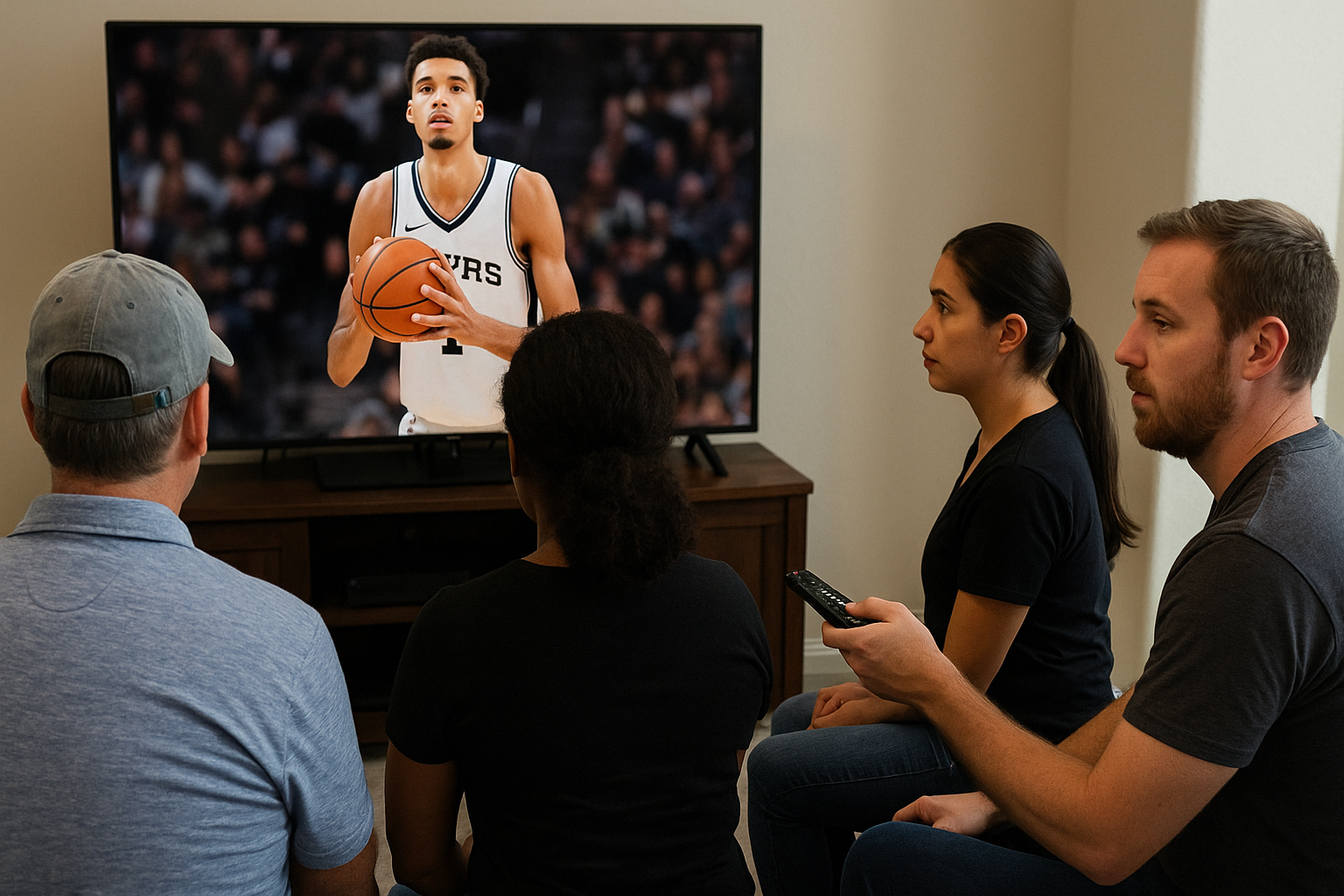
The Spurs didn’t just change broadcasters. They put Victor Wembanyama’s local games behind a $119.99 season pass and called it fan access.
That sounds harsh because it is. But it is also the honest version of what the San Antonio Spurs and DAZN announced this week: the old local-TV model has broken, and fans are now being asked to help finance whatever comes next.
The deal: Spurs basketball becomes a direct subscription product
Beginning with the 2026–27 NBA season, DAZN will become the San Antonio Spurs’ exclusive direct-to-consumer destination for regular-season games that are not picked up exclusively by national broadcasters. It will also carry every preseason game and Spurs-produced programming, including pregame and postgame shows.
The service will cover the Spurs’ home broadcast territory across Central, South and West Texas. The price is $19.99 a month or $119.99 for the season. Season-ticket members receive 20% off the season pass, bringing their price to roughly $95.99. There will also be a free seven-day trial.
The Spurs will keep 22 games free over the air through a local broadcast partner that has not yet been named. Nationally exclusive games will remain with the NBA’s national media partners.
That last bit matters. This is not a clean, one-app promise. It is a new bundle: some Spurs games on DAZN, some free on local television, some on national TV platforms. The difference is that the team is now explicitly building a paid, direct relationship with the local viewer rather than simply renting out its local rights to a regional sports network.
No financial terms of the DAZN agreement were disclosed. So anyone pretending to know whether the Spurs have landed a brilliant payday or accepted a smaller cheque to regain control is having a lend. We do not know yet.
What we do know is more interesting: San Antonio has decided that the customer relationship is now worth more than the comfort of the old distribution model.
FanDuel Sports Network’s collapse left a hole — DAZN is filling it
The announcement follows the shutdown of FanDuel Sports Network, which had been the Spurs’ primary local broadcaster. That is the actual story underneath the press-release language.
For years, local sports television operated on a fairly simple bargain. Cable distributors paid carriage fees. Regional sports networks combined those fees with advertising revenue. Teams collected rights payments. Fans complained about their cable bill but generally knew where to find the match.
Then viewers cut the cord, the economics got ugly and the middleman started disappearing.
The Spurs now have a choice most sports businesses will face sooner than they think: sit around waiting for a replacement middleman, or take ownership of distribution and the customer data that comes with it.
They chose the second option.
DAZN is not merely delivering video. It becomes the front door through which Spurs supporters watch games, take a trial, pay a subscription, receive promotions and consume team-made content. The company will also carry selected programming from Spurs Sports & Entertainment, including San Antonio FC matches and Austin Spurs games.
That is a much broader play than showing basketball games. It is an attempt to turn one local sports fan into a customer across several properties.
And that is why this deal is bigger than a broadcaster swap.
Victor Wembanyama is the obvious asset — but the audience is the prize
When a franchise has Victor Wembanyama, it has an unusually valuable problem: how do you make it dead simple for local fans to watch the player everyone wants to see?
The Spurs’ answer is DAZN. Conveniently, the answer also creates a direct subscription business around that demand.
This is where sports owners need to stop pretending they are in the television business. They are in the attention business. Television was simply the pipe that made the money flow for a long time.
Now the pipe is digital, and digital has different advantages. A streaming platform can know who watched, what they watched, whether they dropped off at halftime, what device they used and whether a trial user became a paying customer. A traditional regional broadcaster knew households in aggregate. A direct platform can build a file on an individual customer.
That data is valuable because it gives a team a chance to sell more intelligently: tickets, memberships, merchandise, events, content and partner offers. The sensible pitch is not, “We will squeeze another $119.99 from every supporter.” The sensible pitch is, “We will make watching so easy that we earn the right to serve that supporter for years.”
Whether the Spurs and DAZN execute that is another question entirely.
The overlooked problem: the cheapest option can still be too expensive
Sports executives love to say fans want flexibility. True. Fans also want simplicity and value. Those are not the same thing.
A $119.99 season pass is not outrageous in isolation. The issue is that it does not exist in isolation. A supporter may already be paying for broadband, a live-TV service, an NBA-related subscription, national streaming services and whichever platform has the game they want next week.
Then there is the fragmented schedule. DAZN has the local non-national Spurs games. Twenty-two games will be free over the air. Nationally exclusive games sit elsewhere. In theory, each piece makes commercial sense. In practice, every extra decision is friction.
Friction is expensive.
The 22 free broadcasts are the shrewdest part of the arrangement. They give the Spurs a mass-market on-ramp and preserve a route for casual fans who will not pay another subscription. That matters especially when the objective is to make the next generation care about the club, not merely extract maximum revenue from the existing diehards.
Free-to-air games are marketing. The DAZN pass is monetisation. Teams that confuse those two jobs tend to damage both.
The seven-day trial is also telling. DAZN and the Spurs know conversion will be the game. A trial lowers the first barrier. But if the product experience is clunky, the customer has plenty of ways to leave. The platform cannot rely on cable inertia anymore. It must earn the renewal.
The contrarian view: this may be a defensive deal, not a revolutionary one
People will call this a bold streaming move. Maybe. I would call it a necessary move dressed in a bold suit.
The prior local-TV infrastructure was gone. The Spurs needed a home for games. DAZN needed credible local U.S. inventory and a recognised franchise to advance its broader strategy in the country. That makes this a rational partnership for both sides.
But rational is not the same as transformative.
The test is not whether DAZN can stream a game to a television, phone, browser or game console. That is table stakes. The test is whether the Spurs can use the platform to create an experience materially better than the old one: cleaner discovery, reliable streams, useful programming, sensible pricing and a reason for a casual viewer to stay after the final buzzer.
If DAZN simply replicates local television behind a login, this is a distribution repair job. Fine, but not thrilling.
If it helps Spurs Sports & Entertainment turn a viewer of Wembanyama into a repeat customer across basketball, football, development-league sport and live experiences, then it becomes a far more valuable asset than a rights deal.
That is the upside. The downside is brutally simple: supporters may decide another app is one app too many.
What this means for you
If you run a business, do not wait for your distributor, platform or landlord to become unreliable before you build a direct customer relationship. By then, you are negotiating from the back foot.
The Spurs are doing three practical things worth stealing.
First, they are keeping a free entry point. The 22 over-the-air games are not charity. They are customer acquisition. Every business needs a low-friction way for new people to experience the product before asking for commitment.
Second, they are bundling adjacent assets. DAZN will not only carry Spurs games; it will also show selected San Antonio FC and Austin Spurs content. If you have multiple products, do not market them as separate islands. Build one customer relationship and give people reasons to move deeper into your ecosystem.
Third, they are testing recurring revenue rather than relying entirely on a wholesale buyer. A direct subscription can be powerful, but only if the product genuinely deserves it. Do not charge for access merely because you can. Charge when you make the customer’s life easier, better or more profitable.
That is the hard bit. Selling a pass is easy. Becoming the service people do not want to cancel is where the real money is.
The Spurs and DAZN now have a $119.99 bet that they can do exactly that.