Volatility Shares’ 32 NHL ETFs Turn Hockey Into a Trading Desk
The NHL’s next money machine may not be a $20 beer or a betting slip. It may be 32 ETFs that let punters trade Connor McDavid’s Oilers like a stock.
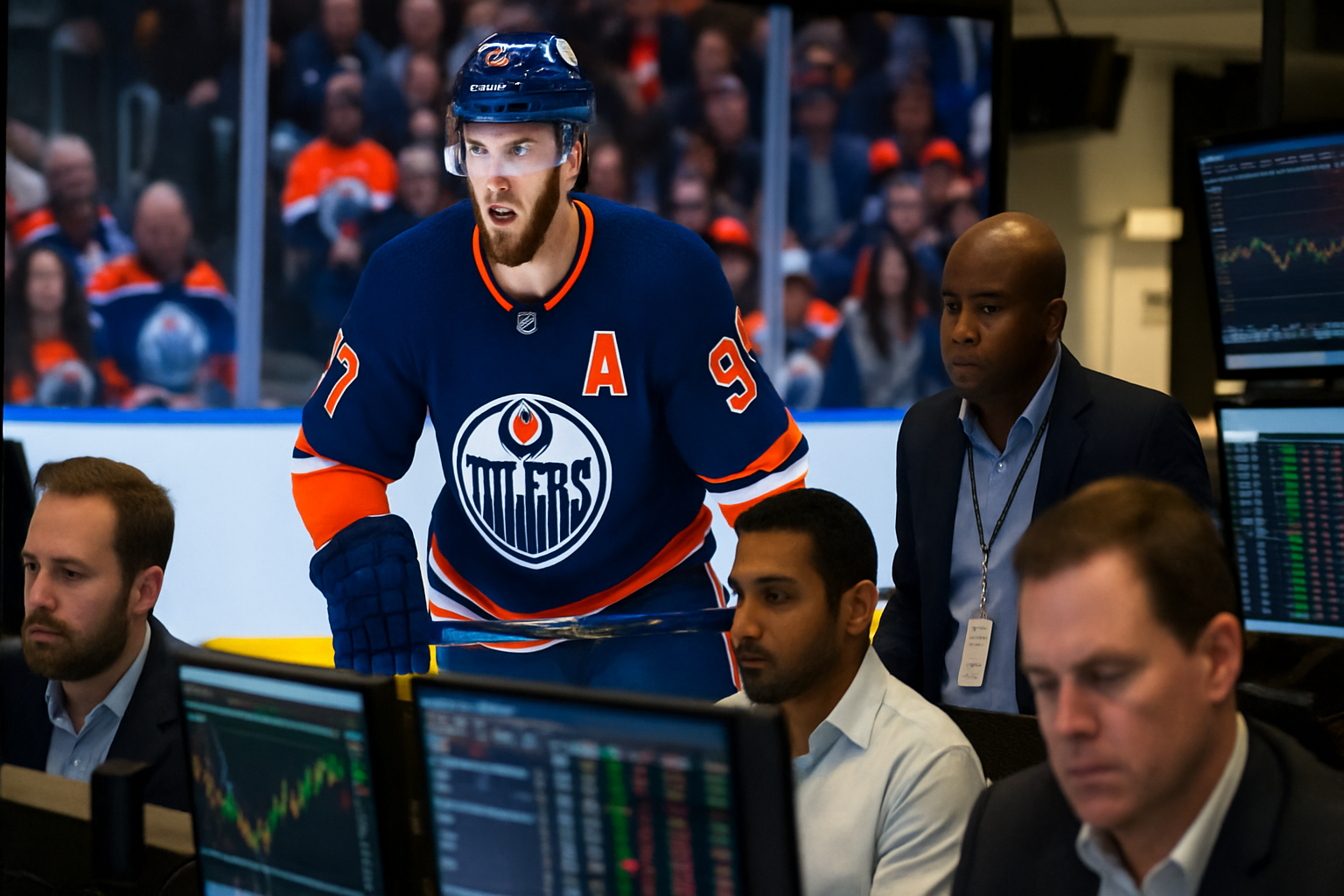
A hockey fan used to lose money the old-fashioned way: overpriced tickets, an enormous jersey and blind faith in a team that could not defend a lead.
Now Volatility Shares has filed to register 32 single-team NHL ETFs—one for every franchise—built around futures tied to each club’s on-ice performance. That means the Edmonton Oilers, Toronto Maple Leafs, Florida Panthers and the rest could become something fans can buy, sell and, inevitably, misunderstand in a brokerage account. ([reddit.com](https://www.reddit.com/r/hockey/comments/1vosd1s/jeffrey_ptak_wild_wild_stuff_filing_to_register/?utm_source=openai))
This is not ownership in an NHL club. You are not buying a slice of the Oilers, Connor McDavid or the cash flow from Rogers Place. You are buying an ETF that would hold futures contracts linked to a performance index for a particular team.
That distinction is the whole ballgame. And it is exactly where people will get burned if they do not read past the ticker symbol.
What Volatility Shares actually filed for
The filing reported on Saturday, August 15, is for 32 proposed products: one linked to each NHL franchise. The funds would obtain exposure through futures tied to the CME FSPI index for the relevant club. FutureSports’ indexes are designed to turn officially reported, live team statistics into rules-based benchmarks; CME says the index values will reflect in-game and season-long performance. ([reddit.com](https://www.reddit.com/r/hockey/comments/1vosd1s/jeffrey_ptak_wild_wild_stuff_filing_to_register/?utm_source=openai))
Put bluntly: this is a financial wrapper around sporting performance.
If you are a Maple Leafs tragic, the product is not a magical way to “invest in Auston Matthews.” If you are certain McDavid and the Oilers will fly, it is not the same as purchasing a business with assets, media rights, ticket revenue, sponsorship income and a management team you can hold accountable.
It is a trade on a published index. The index is calculated from sporting outcomes. The ETF would hold derivatives linked to that index. Those are three layers between your cash and the thing you think you are buying.
That does not automatically make it rubbish. Plenty of useful financial products have layers. But layers create friction, costs and opportunities for retail investors to kid themselves.
The important word is proposed. A registration filing is not a launch, and CME itself says its FSPI sports-index futures are still pending regulatory review. CME announced its FutureSports partnership on July 29 and said the first monthly and quarterly cash-settled futures were expected to begin trading this summer, subject to that review. ([cmegroup.com](https://www.cmegroup.com/media-room/press-releases/2026/7/29/cme_group_partners_with_futuresports_to_introduce_worlds_first_futures_on_sports_indexes.html?utm_source=openai))
So do not rush off to ring your broker and ask how to short the Vancouver Canucks. There may be no product to trade yet.
The money is not in hockey. It is in turning attention into financial volume.
Sports people love saying leagues are entertainment businesses. That was true 20 years ago. It is no longer enough.
The valuable sports business now is a machine that converts attention into repeatable transactions: broadcast subscriptions, gambling turnover, merch drops, fantasy fees, premium hospitality, data licences, sponsorship inventory and, apparently, derivatives volume.
A fan watches the Oilers because McDavid is ridiculous. A bookmaker sees a customer acquisition opportunity. A broadcaster sees subscription retention. A sponsor sees an audience. An exchange sees trading flow. An ETF issuer sees assets under management.
Same fan. Five businesses reaching into the same wallet.
CME’s sales pitch is unusually honest about this. It says the products could let traders go long or short a team’s performance, react to trades and lineup news around the clock, and give sports-related businesses a way to hedge exposure to team performance. It also describes the wider sports industry as a $650 billion global market. ([cmegroup.com](https://www.cmegroup.com/media-room/press-releases/2026/7/29/cme_group_partners_with_futuresports_to_introduce_worlds_first_futures_on_sports_indexes.html?utm_source=openai))
That last bit matters. This is not a cute hockey experiment from a bunch of blokes who love slapshots. It is capital markets looking at a giant, emotional, data-rich industry and asking: Where else can we create tradable risk?
That question is commercially rational. It is also not necessarily good for the punter.
The sensible use case exists. It just will not be the headline.
Here is the contrarian point: sports-performance futures are not automatically gambling dressed up in a tie.
A local business with genuine exposure to a team’s results could have a sensible reason to hedge. Think of a stadium-area operator, a hospitality group, a sponsor with bonus payments tied to playoff exposure, or an insurer with event-related revenue risk. If a poor season dents foot traffic, ad impressions or activation value, an instrument correlated with team performance could theoretically offset part of that hit.
CME and FutureSports explicitly point to potential users such as stadium owners, sponsors, insurers, apparel businesses and broadcast partners. ([cmegroup.com](https://www.cmegroup.com/media-room/press-releases/2026/7/29/cme_group_partners_with_futuresports_to_introduce_worlds_first_futures_on_sports_indexes.html?utm_source=openai))
Fine. That is a real commercial case.
But do not confuse a theoretical hedge for a clean hedge. The bar owner near an arena does not lose money in exactly the same way a team-performance index falls. A sponsor’s sales are affected by creative quality, product, distribution, the economy and whether anybody remembers the campaign. A broadcaster’s economics depend on bundles, carriage deals, advertising and subscriber churn—not just whether Nathan MacKinnon scores in overtime.
That is called basis risk: your hedge and your actual business problem move differently. It is the sort of boring phrase people ignore right up until it costs them a fortune.
For retail fans, the “hedging” argument is mostly nonsense. You are not hedging your heartbreak. You are speculating on a synthetic instrument linked to a team you already care too much about.
Why the ETF wrapper is the clever—and dangerous—bit
Futures are not new. Commodity producers and buyers have used them for generations because they have an obvious commercial problem: crop prices, fuel costs, interest rates, currencies.
Sports are different because the underlying asset is emotion.
An ETF makes that emotion feel familiar. People know the letters. They see ETFs in their retirement account, their brokerage app and every finance influencer’s video. That familiarity can make a complicated derivative strategy feel as harmless as buying a broad US share-market fund.
It is not.
CME itself says FSPI futures would offer capital-efficient exposure and that traders could use margin—meaning a smaller amount of capital can control a larger position. That is a feature for sophisticated users with a defined risk plan. For someone chasing a bad weekend from their team, it is petrol near a bushfire. ([cmegroup.com](https://www.cmegroup.com/markets/equities/sports-index-futures.html?redirect=%2Ffspi&utm_source=openai))
And the ETF adds its own practical issue: it has to manage futures exposure. Futures expire. They must be rolled or replaced. The fund can have tracking differences from the index you thought you owned. Liquidity matters. Bid-ask spreads matter. Fees matter. The market price of the ETF can differ from its underlying net asset value.
None of that makes these products illegitimate. It makes them products that demand homework.
The problem is that the likely customer is not the disciplined operator hedging a real exposure. It is the bloke who thinks he has found a smarter way to bet on the Leafs without calling it betting.
The overlooked winner is the data layer
The biggest strategic story here is not Volatility Shares. It is the emergence of sport as financial-market data.
FutureSports is trying to create benchmark indexes from league-approved statistics, while CME provides the exchange infrastructure and the regulatory framework for futures. The league data is not simply a scoreboard anymore. It becomes an input into a financial product. ([cmegroup.com](https://www.cmegroup.com/media-room/press-releases/2026/7/29/cme_group_partners_with_futuresports_to_introduce_worlds_first_futures_on_sports_indexes.html?utm_source=openai))
That gives leagues and data owners more ways to monetise the thing they already control: official information.
It also raises integrity stakes. Once sporting outcomes can influence regulated market products, injury information, line-up changes, officiating scrutiny and access to non-public team information take on another dimension. The CFTC and NHL already signed a memorandum of understanding focused on protecting hockey integrity and guarding against fraud, insider trading and other abuses in prediction markets. ([ebs.publicnow.com](https://ebs.publicnow.com/view/DED3E3F04C6225C6A928734D7A36198EDB4EAFDF?utm_source=openai))
That is not paranoia. It is the cost of financialising the game.
Every new market needs trusted inputs. If the inputs are live sport, the sport has to become more disciplined about information control. The more money that follows a scratched goalie, a late injury or an unexpected rest decision, the less casual those decisions can look.
What this means for you
If you are a founder, investor or operator, here is the useful lesson: when an industry has deep emotional engagement and reliable live data, finance will eventually build products around it.
Do not copy the gimmick. Study the mechanism.
First, identify where your business has genuine variable exposure. Not vibes—actual exposure. Revenue that rises or falls with a measurable external event. That is where a hedge can make sense.
Second, separate the asset from the wrapper. An NHL team is an operating business. A team-performance future is a derivative. An ETF holding that future is another wrapper again. Whenever somebody pitches you an “investment,” ask what you legally own, what drives returns, what fees sit between you and the outcome, and what can break.
Third, never let familiarity replace due diligence. A ticker in a brokerage account can be as risky as anything in a casino if you do not understand the mechanics.
And finally: do not make financial decisions because you are emotionally invested in the underlying story. That rule applies to hockey, crypto, property, a mate’s startup and your own business.
The NHL ETF idea is clever. It may even become big business. But clever products are usually built first to serve the issuer, the exchange and the ecosystem around them.
Your job is to work out whether there is anything left for you after they have all been paid.