Waymo’s 20M Trips Put Munich’s 2027 Robotaxi Market on Notice
If you still think self-driving cars are a Silicon Valley parlour trick, you’re about 20 million Waymo trips late. Munich is the real test: can robotaxis crack the world’s toughest car market?
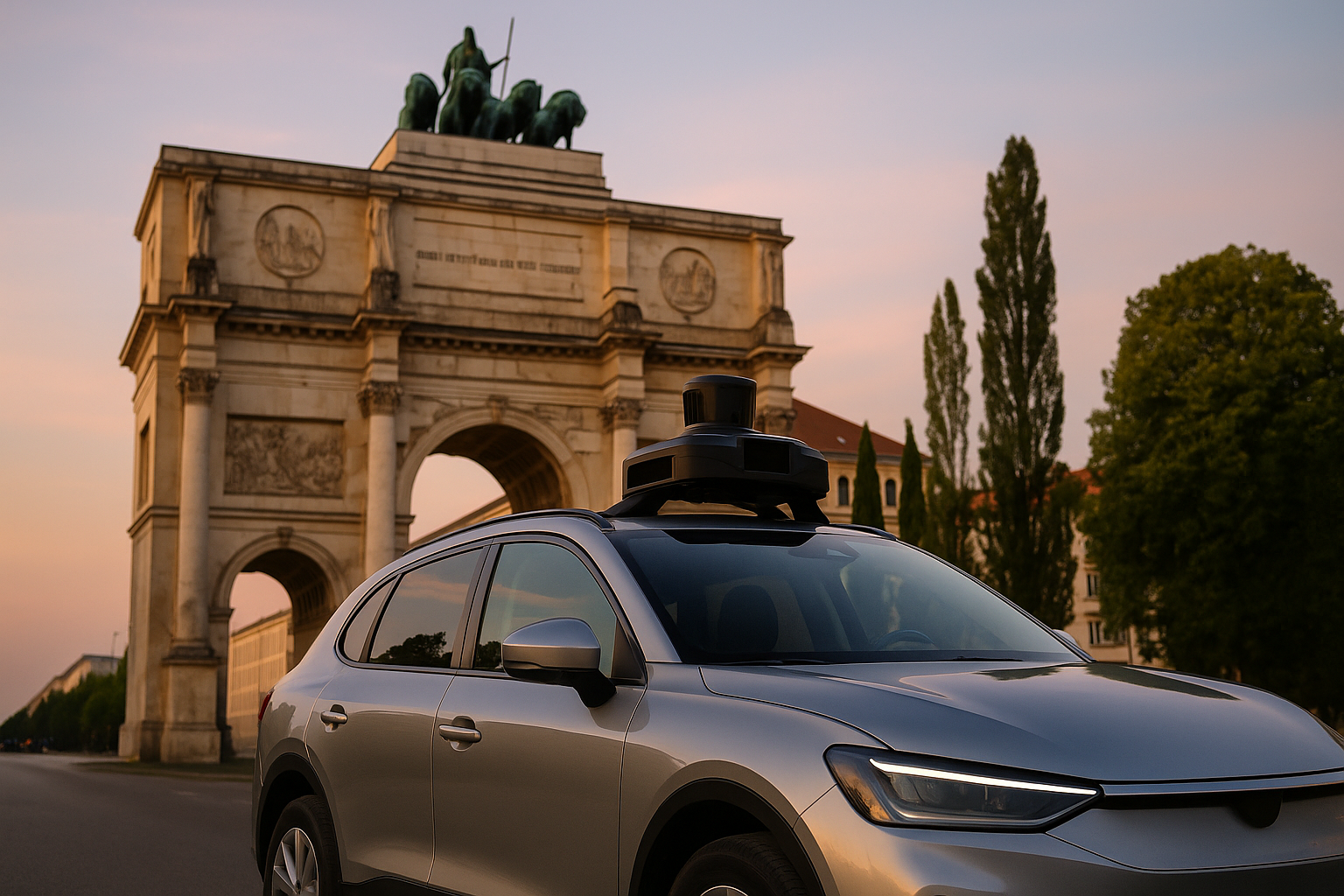
If you still think self-driving cars are a Silicon Valley parlour trick, you’re about 20 million Waymo trips late. Now Alphabet’s robotaxi business is taking its shot at Munich — the heartland of German motoring — with public rides targeted for the end of 2027.
That is not a cute overseas expansion. It is a very expensive declaration that the steering wheel is becoming optional.
Waymo is walking into the lion’s den
On August 25, Waymo announced it was laying the groundwork for a fully autonomous ride-hailing service in Munich. The company will first map the city manually, then test autonomous vehicles with trained specialists behind the wheel, before trying to open commercial rides to the public toward the end of 2027.
Read that timeline properly. There is no magical switch being flicked next Tuesday. Mapping, validation, permits, local fleet operations and public trust all sit between the announcement and a paying passenger. This is physical AI, not another chatbot update. If it stuffs up, it does not generate a weird email. It can hurt someone.
But Waymo is no longer making the case from a PowerPoint deck. It says it has completed more than 20 million trips and serves hundreds of thousands of commercial rides each week. It also says its data now covers more than 350 million fully autonomous kilometres, which it claims show materially fewer serious-injury crashes, pedestrian injury crashes and cyclist injury crashes than human drivers in comparable operating areas.
You can debate the company’s methodology, and you should. Never outsource your scepticism to a press release. But the relevant point is simpler: Waymo has amassed an operating record that most autonomous-vehicle hopefuls would kill for.
Munich is where that record gets stress-tested against one of the world’s most demanding automotive cultures.
Germany does not just build cars. It has made the car part of its national identity. BMW’s headquarters is in Munich. So is a deep bench of suppliers, engineers, research institutions and people who can tell the difference between a serious machine and marketing rubbish. If Waymo can become a trusted, routine transport option there, it earns a kind of credibility no glossy launch in Las Vegas can buy.
This is a regulation bet disguised as a technology story
Most people will frame this as Waymo taking robotaxis to Europe. That is true, but it misses the sharper point.
Waymo is choosing Germany because Germany has already done something Silicon Valley usually hates: it has created a legal framework before the product is everywhere.
Germany’s 2021 autonomous-driving law and the regulations that followed created a framework for Level 4 autonomous vehicles in defined operating areas. In plain English, that is the category where the system drives without expecting a human to take over within its approved conditions.
That matters because robotaxis do not win merely by being clever. They win when a company can get a vehicle approved, insure it, operate it, manage remote technical supervision where required, deal with authorities and explain responsibility when something goes wrong.
The hard bit is not teaching a computer to spot a cyclist. The hard bit is building a business that can operate safely and legally at scale when every edge case has an insurer, regulator, lawyer and angry local columnist attached to it.
TechCrunch reported that Waymo does not yet have the permits it needs in Germany. Good. It should not. Permits are meant to be earned, not sprinkled on a company because its parent has a large market cap.
Still, Germany’s framework gives Waymo something precious: a path. The difference between a breakthrough business and a very expensive science project is often not the technology. It is whether the rules let you deploy it repeatedly.
Founders love to talk about disruption as though regulation is just sand in the gears. That is lazy thinking. Clear, tough rules can become a moat. Once you have designed your operation to meet them, every weaker competitor has to catch up.
The real product is not the car
Here is the overlooked bit: Waymo is not really selling autonomous cars.
It is selling reliable movement.
A passenger does not care whether the vehicle has lidar, custom silicon, 14 layers of neural-network wizardry or a bloke named Gary monitoring a screen somewhere. They care whether it arrives, whether it is clean, whether it gets them there safely, whether they can bring luggage, whether it handles rain, whether it works at 11:30 p.m., and whether the price is sensible.
That is why the early robotaxi race will look less like a car sale and more like a logistics war.
The winners will need fleets, depots, charging, repairs, cleaning, customer support, mapping, safety operations, local government relationships and enough vehicle availability that the app is useful when people actually need it. The autonomous driving system is necessary. It is not sufficient.
I have seen this pattern repeatedly in business. People get excited by the clever bit because it is easy to demonstrate. The money is usually made by the boring machinery around it.
Waymo’s Munich announcement explicitly talks about investing in local fleet operations and high-skilled jobs. That is not filler. It is the operating model. A robotaxi company that cannot run vehicles economically through a city is just a very clever taxi museum.
And this is where incumbent carmakers should be nervous. Their advantage has traditionally been manufacturing, dealer networks and engineering excellence. Waymo is trying to shift the value from owning the machine to controlling the network that dispatches it.
If that sounds familiar, it should. The smartphone did not kill cameras; it made them a feature inside a more valuable system. Autonomous driving could do something similar to cars. The vehicle may remain expensive and technically brilliant, but the economic prize shifts toward the company that owns the rider relationship, the software and the fleet utilisation.
Germany is not an easy market — and that is precisely the point
Waymo’s proposed public launch is still more than a year away. Plenty can go wrong.
German approvals could move slowly. Local politics could get prickly. The vehicles will need to handle Munich’s streets, weather, roadworks, cyclists, pedestrians and driving habits. Public acceptance cannot be assumed. And a service that runs beautifully in a tightly defined area can still struggle when customers expect it everywhere.
There is another complication: Waymo will not have Europe to itself. TechCrunch notes that London is becoming a battleground involving Waymo, Wayve and Uber, while Baidu has begun testing autonomous vehicles there through partnerships. In Germany, Mobileye and Volkswagen are among companies already holding testing permits, according to the outlet.
That competition is healthy. Monopolies make people complacent, and autonomous transport is far too important to leave to one American company, one Chinese company or one legacy manufacturer hoping the old rules come back.
But do not confuse competition with equivalence. Lots of companies can test. Very few can demonstrate years of commercial operation, scale a fleet and keep expanding the service area without setting fire to the balance sheet.
The contrarian take is this: Europe may not be behind in autonomy because it is cautious. It may be creating the conditions for the eventual winners to be more durable.
America often excels at letting businesses sprint first and sort out the mess later. Europe is more likely to demand the paperwork before the sprint. That can be maddeningly slow. It can also prevent the market being filled with half-baked operators who burn public trust for everyone else.
Trust is not a soft metric here. It is the asset.
One serious safety failure, badly handled, can freeze a city’s political appetite overnight. One year of dependable service can make the technology feel boring. And boring is exactly what a transport service should become.
What this means for you
Whether you run a startup, invest your own money or manage a proper operating business, there are three useful lessons here.
First: stop confusing a demo with a business. Ask what must exist around the product for it to work repeatedly: approvals, distribution, service, insurance, support, training and unit economics. If someone cannot answer that, they do not have a business yet. They have theatre.
Second: treat regulation as a design constraint early. Do not wait until you are successful to discover that the law, compliance burden or licensing regime makes your model unworkable. Build the constraints into the product before they become an emergency invoice.
Third: follow the workflow, not just the technology. The biggest opportunities in AI will not always be the model builders. They will often be the businesses that make the technology dependable inside a messy real-world workflow. Fleet software, maintenance systems, mapping, insurance, safety tooling, customer operations — the unsexy layers can be where the defensible money sits.
Waymo’s Munich move is not proof that robotaxis have won. Anyone claiming that is carrying on.
It is proof that the argument has changed. The question is no longer whether autonomous driving can leave the lab. The question is which companies can earn permission, operate reliably and turn a difficult city into a profitable network.
That is a much better question. And it is where the real money will be made.