Waymo’s $5B Debt Bet Says Robotaxis Are Finally a Business
Waymo didn’t raise another vanity round. It borrowed $5 billion — the sort of move you make when the party is over and the unit economics had better turn up.
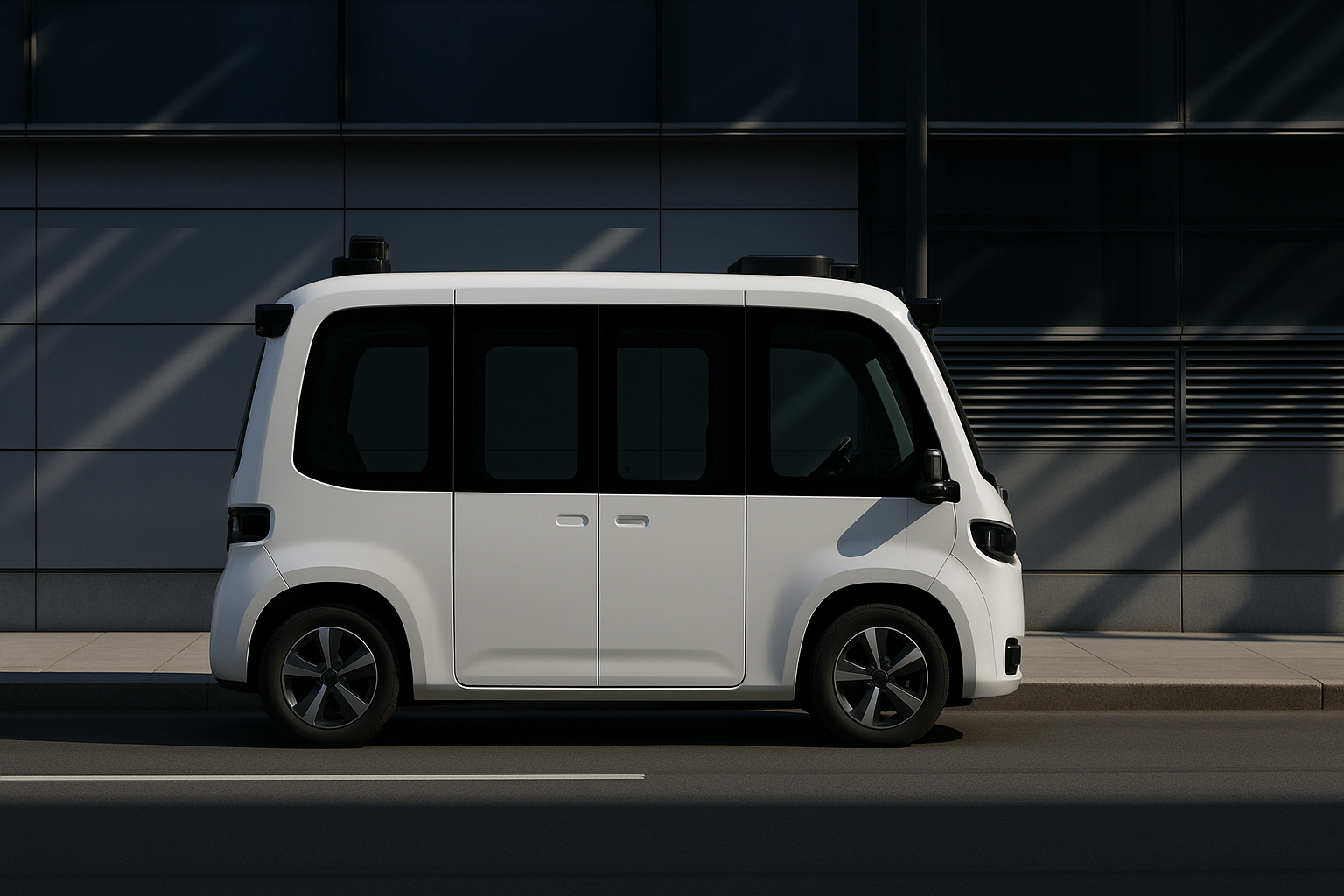
Waymo has borrowed $5 billion. Not raised it. Borrowed it.
That might sound like finance-nerd trivia, but it is the clearest sign yet that robotaxis are being dragged out of the science-project phase and into the far less glamorous world of repayment schedules, operating leverage and proving you can make a bloody profit.
And that is where the real game starts.
Waymo’s first debt financing is a $5 billion term loan backed by heavyweight lenders including PIMCO, Blackstone and Sixth Street. This is not a prediction about where the market might go. It is a live test of whether autonomous ride-hailing can carry the financial weight of its own ambition.
Waymo Has Raised $16B in Equity — Now It Has to Behave Like a Business
Waymo, Alphabet’s autonomous-driving company, announced on October 8 that it had closed a $5 billion term loan, its first debt financing.
Goldman Sachs was the sole lead bookrunner. PIMCO, Blackstone and Sixth Street led the syndicated lending group, joined by names including Capital Group, T. Rowe Price, Apollo, Blue Owl, Fidelity, Franklin Templeton and Oaktree.
That list matters. These are not tourists buying a flashy pitch deck because they fancy AI. They are professional capital allocators lending money to a company that now has to demonstrate that it can scale with enough discipline to service debt.
Earlier this year, Waymo raised $16 billion in equity at a reported $126 billion valuation. Alphabet remains the majority investor. Equity investors can live with a long runway, huge spending and a fuzzy payoff date. Debt investors are a different beast. They care about cash flow, collateral, downside protection and whether management has a proper plan when reality gets annoying.
Waymo says the loan gives it financial flexibility as it expands its autonomous ride-hailing service across the United States and internationally. It had launched in its 15th US city last month, according to the company, and has flagged expansion beyond America.
Good. But expansion is not the same as a business.
Putting driverless cars into more suburbs can make a company look bigger while making its economics worse. A robotaxi network has to pay for vehicles, sensors, computing, charging, maintenance, mapping, depots, cleaning, insurance, remote assistance, regulatory work and customer support. The car may not have a driver, but it is hardly free of humans or costs.
That is why the move from equity to debt is more important than the headline figure itself.
The $5B Loan Is a Vote of Confidence — and a Stopwatch
The cheerful interpretation is obvious: serious lenders believe Waymo has commercial momentum and enough real-world demand to justify more capital.
Fair enough. Waymo is not a concept video. It began inside Google’s self-driving project, tested for years, launched its first commercial robotaxi market in Phoenix and obtained the final approval needed to charge for rides in California in August 2023. It has since built a much more aggressive commercial footprint, including service in cities such as San Francisco, Los Angeles, Austin, Miami and others.
The less comfortable interpretation is also the useful one: Waymo needs a mountain of money because it is trying to build a physical network, not just a software product.
The AI crowd has become addicted to the idea that software scales cheaply. Write code once, sell it a million times, pour yourself a margarita. Robotaxis do not work like that. Every new market demands physical deployment. Every additional ride creates wear, energy use, cleaning requirements and operating complexity. Every safety incident brings regulatory and reputational risk.
Bloomberg reported that the loan grew from an earlier target of more than $3 billion to $5 billion. That suggests real appetite from lenders. It also tells you Waymo has no intention of expanding cautiously.
This is a land-grab, but not the old Silicon Valley kind where you buy Facebook ads and call it growth. This one requires cars, capital and permission from governments. It is closer to building a logistics network than shipping another AI feature.
The debt is therefore both validation and a stopwatch.
Waymo has more firepower. It also has less room to hide.
The Overlooked Point: Debt May Make Waymo Better
Most founders hear “debt” and immediately picture danger. Fair enough. Debt can kill a business fast when revenue is weak and management uses borrowed money to postpone an obvious problem.
But good debt can force useful behaviour.
It makes management prioritise. It asks awkward questions. Which city has the best demand density? Where does utilisation justify more cars? Which partnerships reduce customer-acquisition cost? What does each vehicle earn after the boring costs everyone ignores in the press release?
These are not sexy questions. They are the questions that turn a clever invention into a company worth owning.
I have seen plenty of businesses become soft because they were overfunded. When money is cheap, every idea gets a meeting, every team gets another hire and every mediocre metric gets dressed up in a PowerPoint deck. You can waste years that way.
A lender is less sentimental. It does not care whether your mission statement has nice fonts. It cares whether the machine works.
Waymo is backed by Alphabet, so nobody should pretend this $5 billion loan puts it on the edge of bankruptcy. That would be nonsense. But the financing changes the internal conversation. A company that can access debt at scale is saying it intends to finance expansion partly against a future it believes is commercially dependable.
That is a far bolder claim than “people think autonomous driving is cool.”
Safety Is Still the Price of Admission
Here is the part the robotaxi bulls cannot hand-wave away: more scale means more scrutiny.
Waymo’s expansion has already attracted regulatory attention. The National Highway Traffic Safety Administration’s Office of Defects Investigation has investigated reports involving Waymo vehicles and school buses. The National Transportation Safety Board has also investigated incidents involving robotaxis allegedly passing stopped school buses in more than one state. TechCrunch reported that another federal investigation followed after a Waymo robotaxi struck a child near a school at about six miles per hour; the child sustained minor injuries.
That is not a footnote. It is the business model.
Robotaxis do not need to be merely better than human drivers on average. They need to be trusted by local regulators, passengers, parents, insurers and politicians after the worst clips spread across the internet. Human drivers get away with an astonishing amount because everyone already accepts that humans are flawed. Machines are judged differently. One avoidable mistake can become a national story.
This creates a brutally hard operating balance. Waymo must grow fast enough to justify its capital base, but carefully enough that it does not create the next regulatory roadblock itself.
The companies that win this category will not be those with the flashiest autonomous-driving demo. They will be the ones that treat safety, government relations and operational response as core product functions — not PR departments bolted on afterwards.
Robotaxis May Be a Better AI Bet Than Another Chatbot
The contrarian angle is this: everyone is obsessing over chatbots because they are visible, cheap to try and easy to talk about. But the bigger long-term commercial prize may sit in businesses where AI is attached to a painful, recurring real-world cost.
Driving is one of those costs.
Taxis, rideshare, delivery, fleet operations and logistics all involve labour, idle assets, unpredictable demand and relentless utilisation problems. If autonomy genuinely improves safety and eventually cuts the cost per trip, the upside is not a nicer user interface. It is a rewrite of transport economics.
That “if” is doing plenty of work. It should.
Investors should not confuse an enormous addressable market with an inevitable winner. The market can be massive and still punish companies that overbuild, underestimate regulation or cannot keep their fleets busy enough. A driverless car sitting idle is still an expensive car.
But Waymo’s debt raise tells us something important: sophisticated capital is now treating robotaxis less like a moonshot and more like an infrastructure buildout with measurable commercial milestones.
That is a proper shift.
What This Means for You
Whether you are building a startup, running an established company or investing your own money, there are three useful lessons here.
First: know when to graduate from the story to the numbers. Early-stage businesses are sold on possibility. Mature businesses are funded on evidence. If you have been operating for years and still cannot explain your unit economics in plain English, you do not have a scaling problem. You have a business problem.
Second: use capital that matches the job. Equity is for uncertainty, experimentation and big upside. Debt is for assets and expansion you can justify with evidence. Too many founders raise equity for things that should be funded from revenue, then wonder why they own so little of their own company. Conversely, taking debt before the cash engine is ready is how people lose the lot. Match the instrument to the risk.
Third: treat constraints as a competitive advantage. A hard budget, a repayment obligation or a rigorous operating metric can make you sharper. If you need an endless river of outside cash to keep the lights on, you are not building a business. You are hosting a very expensive confidence game.
Waymo’s $5 billion loan is not proof that robotaxis have won. It is proof that the market has stopped being patient with the promise alone.
Now comes the only test that matters: can the cars earn their keep?