Waymo’s $5B Debt Financing Is a Warning to Venture Capital
Waymo raised $16 billion in equity, then took a $5 billion loan. That is not a victory lap—it is a warning that endless equity rounds are no strategy.
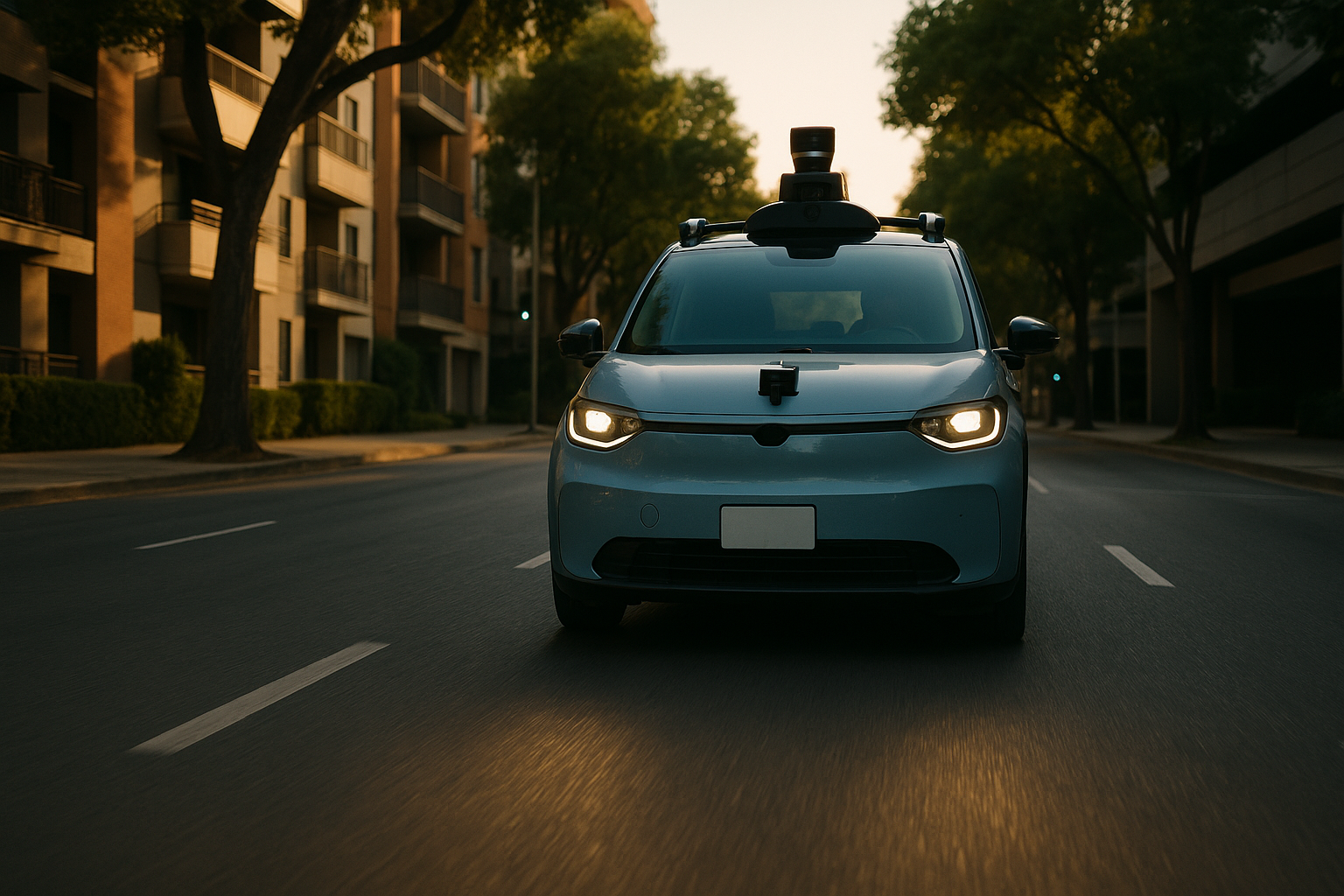
Waymo raised $16 billion in equity, then borrowed another $5 billion.
If your entire capital strategy is another equity round, pay attention.
Waymo has raised $21 billion in fresh capital this year—and the most important $5 billion is the money it borrowed.
This Waymo debt financing is the part founders should study, not just the valuation headline.
On October 8, Waymo closed its first debt financing: a $5 billion term loan backed by heavyweight lenders including PIMCO, Blackstone and Sixth Street. This came only eight months after Alphabet’s self-driving unit raised $16 billion at a $126 billion post-money valuation, led by Dragoneer, DST Global and Sequoia Capital. ([techcrunch.com](https://techcrunch.com/2026/10/08/waymo-locks-in-5b-loan-from-blackstone-pimco-to-fuel-robotaxi-expansion/?utm_source=openai))
Most startup coverage will treat that as another enormous AI-and-robotaxi number. Fair enough. It is enormous.
But the real story is simpler: Waymo is trying to stop being a very expensive science project and start behaving like a real infrastructure business. And the capital stack tells you exactly where venture is heading.
$5 billion says the game has changed
Equity is glorious when you are early. Investors buy the dream, accept dilution as the price of growth, and hope the upside eventually makes everyone look clever.
Debt is different. Debt does not care about your founder mythology, your viral launch video or how many people clapped at your demo day. It wants repayment. It wants discipline. It wants a credible path from capital spent to cash generated.
Waymo’s lenders have not suddenly become romantics about autonomous cars. They have put up $5 billion because Waymo has a large parent in Alphabet, a growing commercial operation and an asset-heavy expansion plan that increasingly resembles transport infrastructure rather than a software experiment.
Waymo said the financing would give it more flexibility as it expands in existing markets and pushes into the US, Europe and Japan. The company now operates robotaxi services in 15 markets and is testing in London and Tokyo. ([techcrunch.com](https://techcrunch.com/2026/10/08/waymo-locks-in-5b-loan-from-blackstone-pimco-to-fuel-robotaxi-expansion/?utm_source=openai))
That distinction matters. You borrow money to buy and deploy assets that should produce an economic return. You sell equity when the outcome is too uncertain—or too far away—for anyone sensible to underwrite the cash flows.
A fleet of autonomous vehicles, depots, charging, maintenance, mapping, insurance, remote support and city-by-city launches is not a cheap SaaS business. It is operationally brutal. Waymo can have world-class technology and still burn an obscene amount of money if the unit economics do not work at scale.
The loan does not prove that those economics are solved. Don’t get carried away. It does prove that sophisticated private-credit firms see enough commercial substance to lend into the expansion.
That is a much tougher test than a flashy valuation.
Waymo is showing founders what “scale” actually costs
Founders love saying they are building a platform. Usually what they mean is they have a web app, a payment processor and a few AWS bills.
Waymo is building the sort of company where scale means physical fleets, regulatory approvals, local operations and public safety scrutiny. Every new city is not simply a new market in a spreadsheet. It is a fresh pile of operational complexity.
That is why the February equity round and the October debt deal belong together. The $16 billion equity raise supplied risk capital for the big bet. The $5 billion loan adds firepower for the roll-out phase. ([waymo.com](https://waymo.com/blog/2026/02/waymo-raises-usd16-billion-investment-round/?utm_source=openai))
In other words: equity got Waymo the right to play. Debt is helping it pay for the playing field.
The startup world needs to relearn this. There is a lazy belief that “scale” is always good. It isn’t. Scaling an unprofitable or operationally sloppy model merely makes the losses bigger, faster and harder to hide.
The companies that will win the next decade will not necessarily be the ones that raise the biggest venture rounds. They will be the ones that know which activities should be financed with expensive equity, which can be financed with cheaper debt, and which should not be financed at all because the economics are rubbish.
Waymo has the luxury of Alphabet as majority owner, which most founders obviously do not. But that does not make the lesson irrelevant. It makes it clearer.
The overlooked angle: this is private credit eating venture capital’s lunch
The interesting party in this deal is not just Waymo. It is the lender group.
PIMCO, Blackstone, Sixth Street, Apollo, Blue Owl, Fidelity, Oaktree and others are not traditional venture funds hunting for the next 100-bagger. They are capital allocators looking for yield and downside protection. That is a completely different species of money. ([techcrunch.com](https://techcrunch.com/2026/10/08/waymo-locks-in-5b-loan-from-blackstone-pimco-to-fuel-robotaxi-expansion/?utm_source=openai))
For years, founders had a fairly simple mental model: angel money, seed round, Series A, Series B, then maybe growth equity or an IPO. That map is becoming outdated for serious companies.
Private credit has exploded because there are now more late-stage private companies with meaningful assets, contracts, revenue or sponsor support—but fewer easy public-market exits. These businesses still need capital. The lenders are happy to supply it, provided they are paid properly and protected properly.
That means venture capital is losing its monopoly on financing growth.
Good. It should.
Venture money is the most expensive money you will ever take. It buys you flexibility when nobody can sensibly price your risk. Once your business becomes more predictable, continuing to fund everything with equity is often a lazy habit disguised as ambition.
If you can finance inventory, equipment, receivables, property, vehicles or contract-backed growth with non-dilutive capital, you should at least investigate it. You do not get bonus points for handing over more of your company than necessary.
Of course, debt can also kill you. It introduces fixed obligations, covenants and less room to make mistakes. Founders who borrow before they have stable demand are playing with a loaded gun.
The point is not “debt good, equity bad.” That is amateur-hour thinking.
The point is that capital needs to match the risk.
Why Waymo’s valuation is not the headline you should copy
The $126 billion valuation is what gets attention because it is easy to repeat and makes for a sexy headline. But a valuation is a negotiated opinion at a point in time. It is not a bank balance, a profit figure or a guarantee that public markets will agree later.
Waymo’s more useful signal is that it is layering financing types as the business matures. It raised enormous equity capital in February. Then it brought in debt lenders in October. That is what a company does when it intends to build for decades rather than merely survive until the next round.
There is another hard truth here. Waymo is no longer competing only with other autonomous-vehicle startups. It is competing for cities, regulation, talent, vehicle supply, fleet infrastructure and customer trust. The technology is necessary, but it is not sufficient.
That is where many AI founders are going to get smacked in the face.
The model is not the company. The demo is not distribution. And a massive round is not an operating system for the business.
Waymo has spent years doing the boring stuff: testing, permits, fleet operations, safety processes and city launches. That work is expensive, unglamorous and very difficult to compress into a pitch deck. It is also where defensibility lives.
What this means for you
If you are a founder, do three things this week.
First, split your spending into two buckets: uncertain bets and repeatable assets. Product experiments, unproven customer acquisition and new-market discovery belong in the uncertain bucket. Inventory, equipment, contracted receivables or repeatable infrastructure may eventually belong in the other. Do not fund both with the same blunt instrument forever.
Second, build a financing map before you need money. Know the milestones that make you fundable by angels, venture investors, banks, revenue-based financiers and private-credit providers. If your only plan is “raise another round,” you do not have a capital strategy. You have a hope strategy.
Third, get religious about operational proof. Waymo’s $5 billion debt deal matters because there is now a commercial business for lenders to assess, not merely a beautiful future to imagine. Track retention, contribution margin, payback periods, utilisation, churn and cash conversion. Pick the handful that genuinely govern your business and know them cold.
For investors, the lesson is equally blunt: stop confusing a giant round with de-risking. The companies worth owning are moving from story to systems—from equity dependence to financing sophistication, from growth theatre to repeatable economics.
Waymo has not proved robotaxis are a licence to print money. It has proved something more practical: when a startup becomes a real business, the capital starts getting more demanding.
That is not bad news. That is the point.