Wendy’s $571M Quarter: Bob Wright’s Turnaround Starts With the Basics
Wendy’s reported $571 million in revenue, U.S. same-store sales down 7.0% and a withdrawn full-year outlook. That is the bill arriving.
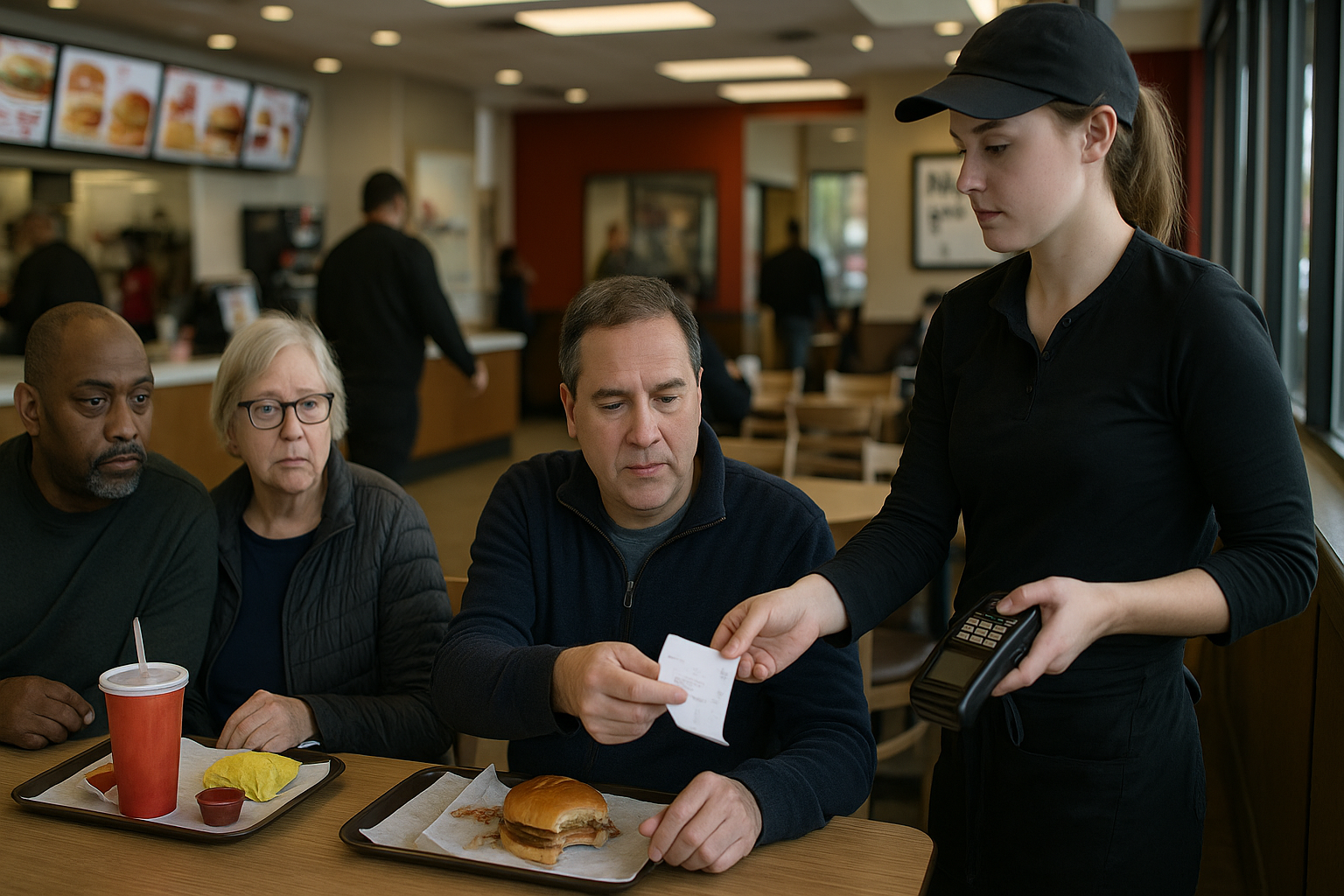
Wendy’s reported a miserable second quarter: $571 million in revenue, global systemwide sales down 6.5%, U.S. same-store sales down 7.0%, and a withdrawn full-year outlook.
That is not a “soft patch”. That is the bill arriving.
Bob Wright took over as CEO on May 21, 2026. Less than three months later, Wendy’s reported those results.
Wendy’s has done the corporate equivalent of changing the driver while the engine light is still flashing.
The numbers Bob Wright inherited are ugly
Start with the bit that matters: customers in the United States bought less Wendy’s. U.S. systemwide sales fell 8.2% in the second quarter ended June 28, while international systemwide sales grew 3.4%. International growth is nice, but it does not rescue a burger chain when its largest and most important market is going backwards.
The company still produced $32.6 million in net income and $124.1 million in adjusted EBITDA. Fine. But operators know better than to confuse an accounting profit with a healthy enterprise. A brand can be profitable while losing relevance, traffic and franchisee confidence. That is often how the proper trouble starts: gradually, then all at once.
Wendy’s also withdrew its 2026 outlook and cut its dividend to support a turnaround. Read that carefully. Management is telling investors that it cannot responsibly forecast the near future under the old assumptions, and that cash needs to stay inside the business.
That is not weakness. Pretending everything is fine would be weakness. But it is a very public admission that the old playbook was not producing the goods.
Wright’s early diagnosis was refreshingly blunt. He said decisions made in the name of cost and efficiency may have degraded quality. Good. That is the sort of sentence more CEOs should say before the spreadsheet boys turn a good business into a slightly cheaper version of itself.
This is why the CEO hire matters
Wright is not a parachuted-in consultant with a 90-day deck and a collection of buzzwords. He has run Potbelly, held senior operational roles at Wendy’s before, and worked in leadership positions at Domino’s, Checkers and Charleys Philly Steaks. That matters because a restaurant turnaround is not mainly a branding exercise. It is an operating exercise.
You do not fix a tired quick-service brand with a new typeface, a celebrity campaign or a PowerPoint full of “consumer occasions.” You fix it by making the product better, the restaurants cleaner, service quicker, franchisee economics more viable and local execution less variable.
That sounds painfully obvious because it is. Yet large companies routinely forget it.
Wendy’s board appears to understand that Wright needs more than a title. In June, it hired Steve Cirulis as both chief financial officer and chief strategy officer. Cirulis previously worked alongside Wright at Potbelly, where Wendy’s says the pair helped lead a turnaround that included more than a 500% increase in share price, double-digit average-unit-volume growth and materially improved restaurant margins.
The combined CFO-and-strategy role is worth watching. It can be smart because it stops strategy becoming theatre divorced from numbers. It can also be dangerous if “strategy” becomes a fancy word for cutting costs. The test is simple: do the financial decisions make the customer experience better or worse?
If Wendy’s can answer that question honestly before every decision, it has a chance.
The real customer is the franchisee
Here is the overlooked part of this story: Wendy’s is not merely trying to impress diners. It has to restore belief among franchisees.
Franchise systems are a bit like marriages with thousands of witnesses. Corporate sets the direction, franchisees live with the daily consequences, and both sides can make the other miserable if trust breaks down.
When U.S. sales fall 8.2%, it is not some abstract investor-relations issue. It affects store-level labour decisions, refurbishment plans, new-store economics, local marketing, debt capacity and whether an operator feels optimistic enough to reinvest.
Wright has said he wants to strengthen the franchisee financial model. That is the right objective, but it needs translating into hard choices.
Are restaurants getting enough traffic to justify labour? Are promotions driving profitable frequency or training customers to wait for discounts? Are franchisees being asked to buy equipment or remodel stores before the unit economics support it? Are menu additions making kitchens slower and service worse? Is corporate using complexity as a substitute for solving the basics?
The answer to those questions matters more than whatever clever campaign comes next.
I have seen this in businesses I have owned and invested in: when the people closest to the customer stop believing the central office understands reality, your strategy is already on borrowed time. They might still comply. They might still attend the calls. But they stop bringing energy, judgment and discretionary effort. That is where value leaks out.
Stop treating efficiency as a virtue when it damages the product
The contrarian angle is that Wendy’s may need to become less efficient in a few carefully chosen places.
Yes, I said it. Less efficient.
If cost-cutting made food worse, service slower or stores harder to operate, then reversing some of that damage may initially increase costs. Better ingredients, simpler processes, stronger staffing at peak periods, equipment maintenance and restaurant-level training are not free.
But neither is a 7.0% U.S. same-store-sales decline.
Founders and executives often make the same mistake: they optimise what is easy to measure and neglect what customers can feel. You can measure labour as a percentage of sales. You can measure food cost. You can measure head-office spend. It is much harder to measure the moment a customer decides, quietly, that your product is no longer worth coming back for.
By the time that shows up in reported sales, the problem has been brewing for ages.
This is why Wright’s comment on quality matters more than it first appears. It signals a willingness to diagnose the problem at the product-and-operations level rather than blame the weather, the consumer, inflation or some other convenient excuse.
The hard part is following through when the cure dents the next quarter’s margin.
What Wendy’s should do next
If I were running the business, I would focus the next six months on four things.
First, identify the five most common points of customer disappointment in the U.S. estate. Not through a consultancy survey. Through restaurant visits, drive-through timing, complaint data, mystery shops and frank discussions with franchisees. Then fix those five things ruthlessly.
Second, simplify. Every menu item, promotion, process and reporting demand should have to earn its place. Complexity is a tax. It slows kitchens, raises training requirements, creates errors and makes average operators look worse than they are.
Third, rebuild unit economics before making grand promises about expansion. A franchisee who is making good money with a better customer proposition is your best growth engine. A franchisee being squeezed into building more locations is a future PR problem with a debt facility.
Fourth, make the scoreboard public inside the company. Pick a handful of measures that matter: repeat traffic, speed of service, product-quality scores, restaurant-level profitability and franchisee satisfaction. Review them constantly. If the numbers are bad, do not invent a new slogan. Fix the operation.
What this means for you
Whether you run a startup, a division or a local business, Wendy’s is a useful warning: cutting costs is not the same thing as building a better business.
Tomorrow, ask your team one uncomfortable question: which decisions did we make to improve efficiency that made life worse for customers or the people delivering the work?
Then make them name three.
Do not punish the answer. You want the truth before the market delivers it with a nasty number attached.
Next, spend a day where the customer meets the business. Listen to sales calls. Sit in support. Visit a site. Watch someone use the product. Speak to the person who actually fulfils the promise you advertise. Most leadership teams do not lack dashboards; they lack exposure to reality.
Bob Wright’s job at Wendy’s is not to produce a prettier turnaround narrative. It is to make customers want the product again and make franchisees money delivering it. Everything else is garnish.
That is the job in every business, frankly. Build something people value. Make the economics work for the people doing the work. Then scale it.
Simple. Not easy. But far better than pretending a broken engine needs a new paint job.