West Pharmaceutical’s $3.38B CEO Handover Is a Test of Real Management
Most CEO handovers are a polite way to hide a problem. West Pharmaceutical is changing leaders while aiming for up to $3.38 billion in 2026 sales — after a global cyberattack.
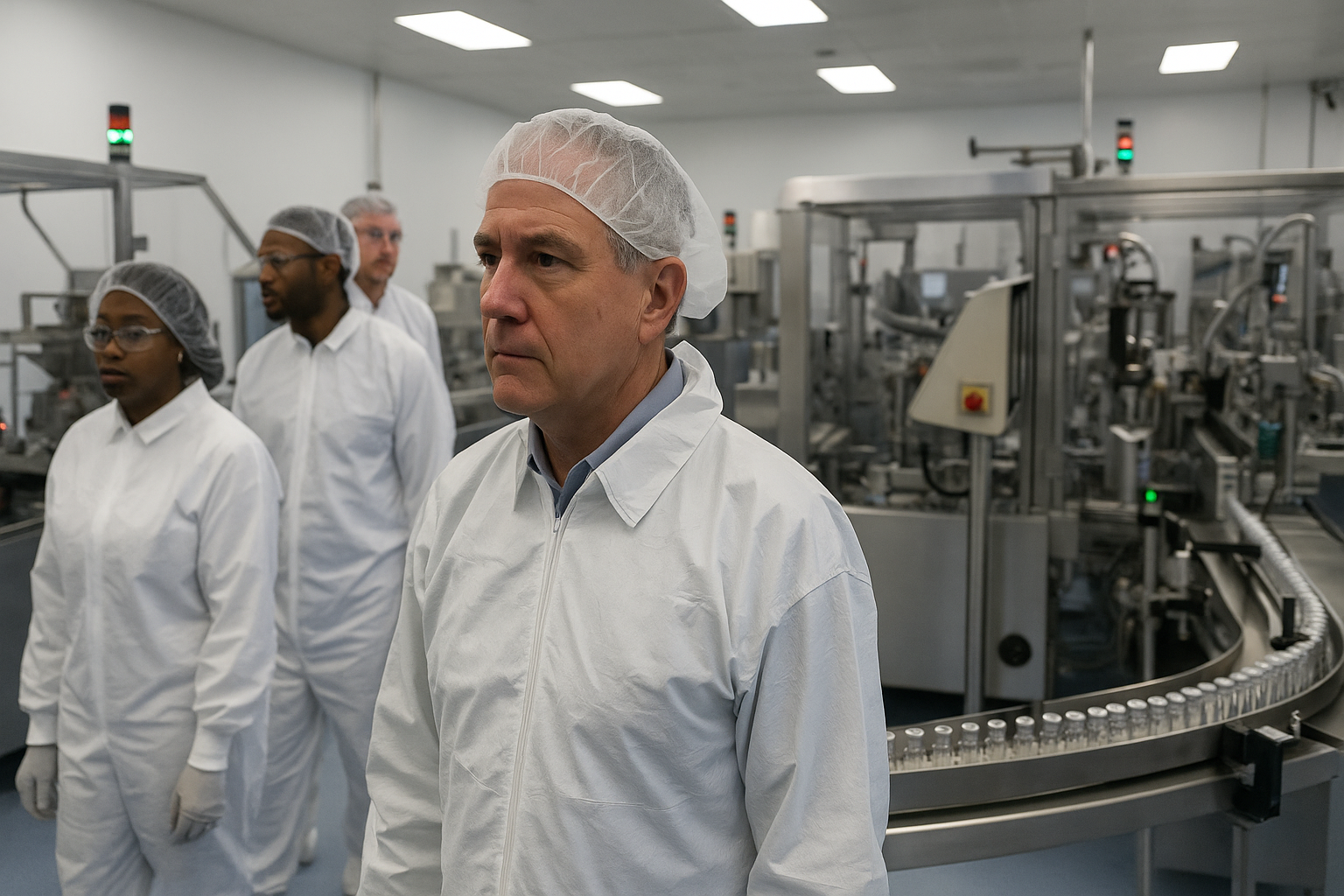
Most CEO handovers are a polite way to hide a problem. West Pharmaceutical is changing leaders while aiming for up to $3.38 billion in 2026 sales — after a global cyberattack.
That is not a succession ceremony. That is a live-fire test of whether the business was actually built to run without the bloke at the top.
Michel Lagarde inherits momentum — and no hiding place
On August 31, 2026, Michel Lagarde becomes president and CEO of West Pharmaceutical Services, replacing Eric Green, who retires as president, CEO and board chair. Robert Friel, previously West’s lead independent director, becomes chair. It is a clean split of the chief executive and chair roles, and that matters more than the press-release adjectives.
Green has run West since 2015 and has been board chair since 2022. His departure was signalled in March, with the board saying he would stay until a successor was found. That is what grown-up succession looks like: planned, deliberate and completed before the business is in obvious trouble. ([finance.yahoo.com](https://finance.yahoo.com/sectors/healthcare/articles/west-pharma-names-former-thermo-212145917.html?utm_source=openai))
Lagarde is not a romantic founder pick or a boardroom mascot. He most recently ran the majority of Thermo Fisher Scientific’s businesses as executive vice president and chief operating officer. Before that, he joined Thermo Fisher through its 2017 acquisition of Patheon, where he had been president and COO. In plain English: he has spent years operating inside the machinery that drug companies depend on when failure is not an option. ([sec.gov](https://www.sec.gov/Archives/edgar/data/105770/000010577026000080/pressrelease-6126.htm))
West does the bits of healthcare that most consumers never see and absolutely do not want to think about: components, containment and delivery systems for injectable medicines. It is the sort of business where a seal, stopper or delivery device can be a tiny line item — until it stops a billion-dollar therapy getting safely into a patient.
That is why this CEO change deserves more attention than the usual executive musical chairs. West is not handing over a lifestyle brand or a software subscription business that can paper over a rough quarter with a flashy product launch. It is handing over an industrial-quality operation at the sharp end of biologics, injectable drugs and the GLP-1 boom.
The numbers say the old CEO is leaving the place in good nick
A lot of CEOs announce retirement just before someone discovers the engine has been smoking for years. Green is leaving with the dashboard looking fairly healthy.
West reported second-quarter sales of $872.3 million, up 13.8% year-on-year, with organic growth of 12.7%. Adjusted diluted earnings per share rose 28.8% to $2.37. The company then lifted its full-year 2026 outlook to sales of $3.345 billion to $3.380 billion and adjusted EPS of $8.85 to $9.05. ([sec.gov](https://www.sec.gov/Archives/edgar/data/105770/000010577026000097/exh991q22026earningsrelease.htm?utm_source=openai))
The important figure is not just the headline revenue. High-Value Product Components generated $424.1 million in the quarter, up 19.4%, and accounted for 49% of total company sales. High-Value Product Delivery Devices grew 29.6% to $131.2 million. Those are the higher-value parts of the business, not a desperate scramble to sell more commodity units at thinner margins. ([sec.gov](https://www.sec.gov/Archives/edgar/data/105770/000010577026000097/exh991q22026earningsrelease.htm?utm_source=openai))
Management pointed to biologics demand, upgrades linked to Annex 1 requirements, and GLP-1 elastomers as major drivers. That means Lagarde walks in with genuine tailwinds. But tailwinds can make operators lazy. When demand is running hard, every mediocre process looks clever and every weak manager suddenly thinks they are a genius.
The job now is to separate temporary demand from durable advantage. West cannot control how long obesity-drug demand stays red hot. It can control manufacturing reliability, customer intimacy, product mix, capital discipline and how quickly it turns technical know-how into the next high-value platform.
The cyberattack is the part nobody should skip past
In May, West disclosed a material cyberattack after detecting an intrusion on May 4. The company said data had been exfiltrated, certain systems had been encrypted, and it had proactively taken systems offline globally to contain the incident. Shipping, receiving and manufacturing processes were disrupted as the company worked through restoration. ([investor.westpharma.com](https://investor.westpharma.com/static-files/4f5c542b-a2e7-44bc-bb1d-8d0463dcce34?campaignid=15274771565&creative=561833169310&device=c&matchtype=e))
Reuters later reported that West had restored operations across its sites and expected no material hit to its 2026 financial outlook. That is encouraging. It is not a reason to treat the event as ancient history because it happened a few months ago. ([finance.yahoo.com](https://finance.yahoo.com/sectors/healthcare/articles/west-pharma-names-former-thermo-212145917.html?utm_source=openai))
A cyberattack in a critical supply-chain business is not mainly an IT issue. It is an operating-model audit. It tells you whether leaders know which systems are mission-critical, whether plants can keep moving when central systems go dark, whether customers get a straight answer, and whether the organisation can make decisions without waiting for a committee meeting.
This is where Lagarde’s appointment makes commercial sense. West does not need an inspirational poster salesman. It needs someone who treats quality, redundancy, supply continuity and customer trust as one connected system.
The first mistake a new CEO can make is charging in with a grand strategy deck. The better move is brutally simple: find the five ways the company could fail its most important customers, put named owners against each one, and make the fixes visible. If the business is genuinely strong, it will survive that scrutiny. If it is only strong because demand is doing the heavy lifting, the cracks will appear quickly.
The overlooked angle: this is a board test, not just Lagarde’s test
Everyone will grade the new CEO. They should also grade the board.
West has separated the chair and CEO roles on day one. Green leaves the board; Lagarde joins it; Friel becomes chair. That avoids the dreadful halfway house where a retired CEO hangs around the boardroom, calls it “support”, and quietly makes it impossible for the successor to own the job.
I have seen that movie. The outgoing founder or CEO says they are only there to help. Staff then keep calling them. Executives hedge every decision. The incoming boss becomes a caretaker with a nicer title. It is expensive, slow and miserable.
West has chosen a cleaner line. Friel’s role is oversight, not shadow management. Lagarde’s role is operating the company. Green gets to leave with his reputation intact. That is how adults do it.
The contrarian point is this: a smooth succession is not proof that a company has leadership depth. It can just mean everyone avoided a public argument. The proof arrives six to 12 months later, when the new CEO has to make an unpopular capital call, replace an underperforming executive or say no to a large customer asking for something commercially stupid.
That is when we find out whether the board hired a steward or a leader.
Why the Thermo Fisher pedigree matters — but should not hypnotise you
Lagarde comes from a much larger life-sciences ecosystem. Thermo Fisher has annual revenue above $45 billion, so he has operated at a scale West is still growing into. ([corporate.thermofisher.com](https://corporate.thermofisher.com/us/en/index/about.html?cid=WEB_INE_20250806_YRP5EH&utm_source=openai))
That experience is valuable, particularly in a business where global customers expect flawless execution across regions. West’s second-quarter organic growth was 10.6% in the Americas, 12.1% in Europe, the Middle East and Africa, and 27.0% in Asia Pacific. Scaling that without creating quality failures or bureaucratic sludge is a proper CEO job. ([investor.westpharma.com](https://investor.westpharma.com/news-releases/news-release-details/west-reports-second-quarter-2026-results))
But big-company experience comes with a trap: confusing process with progress. Giant firms can afford layers of meetings, internal acronyms and committees that exist mostly to protect the people in them. West should want Lagarde’s operational rigour, not a Thermo Fisher-sized administrative hangover.
The best incoming executive does not import their old company’s playbook wholesale. They learn what is sacred in the new business, identify what is broken, then remove friction with a knife — carefully, but without apology.
What this means for you
If you run a business, today’s handover gives you a useful checklist.
First, do not wait for your CEO, founder or critical executive to announce they are exhausted before you build a succession plan. Identify who could run the company tomorrow, who could run it in 18 months, and what they are missing. Then give them real responsibility now, not a leadership-course certificate and a handshake.
Second, separate job titles from decision rights. West’s split between CEO and chair is useful because it is clear. In your own business, everyone should know who owns operations, capital allocation, customer escalations and talent calls. Ambiguity feels polite until something goes wrong.
Third, treat cyber resilience as operating resilience. Ask one uncomfortable question this week: if your core systems went offline this afternoon, what could your team still ship, serve, collect or manufacture tomorrow morning? If the answer is “we’d need to check”, you have work to do.
Finally, when business is growing, become more suspicious of your own competence — not less. Strong demand disguises weak systems. Use the good times to test the machine, upgrade the bench and remove people who are surviving on momentum.
Michel Lagarde has inherited a business with growth, a credible plan and a very recent reminder that operations can be humbled overnight. Lucky him. That is also exactly the sort of pressure where you discover whether somebody can truly lead.