Why KKR Paid $5.7B for Integer Holdings
KKR is paying $5.7 billion for Integer Holdings because customers cannot casually replace a supplier embedded in critical medical devices.
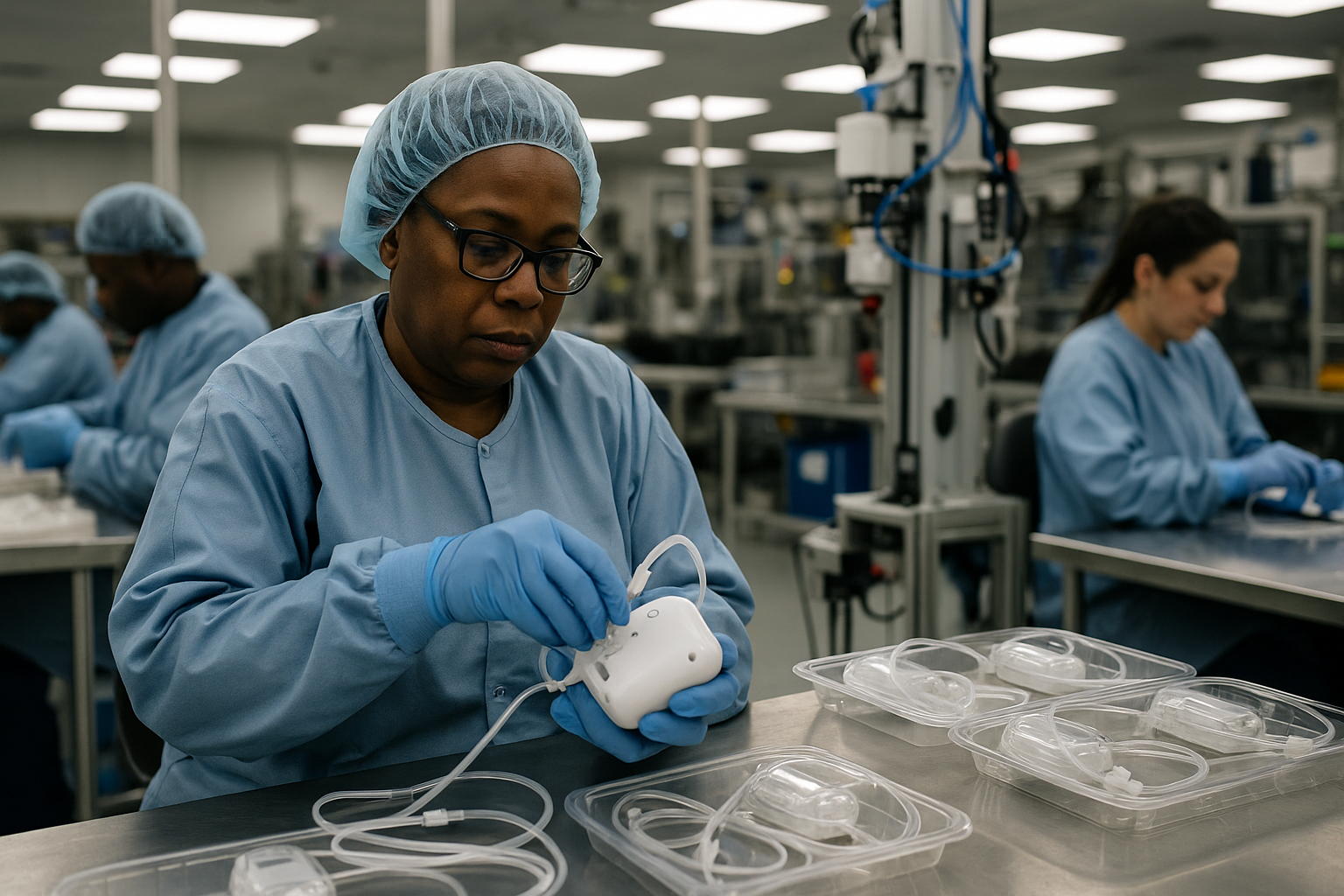
KKR is paying $5.7 billion to take Integer Holdings private, and the most important part of this deal is what Integer doesn’t sell.
It doesn’t sell a shiny consumer gadget. It doesn’t have a cult founder, a viral app or some AI story stapled to a PowerPoint. It makes the bits inside medical devices that other companies need to get to market. Boring? Maybe. Valuable? Bloody oath.
On August 3, KKR agreed to acquire Integer in an all-cash deal that values the medical-device contract manufacturer at roughly $5.7 billion in enterprise value. Integer shareholders are set to receive $127 a share — a 51.8% premium to the closing price on April 29, the day before Integer announced its strategic review, and a 28.8% premium to its 30-day volume-weighted average price through July 31.
That is a serious cheque for a company most people outside healthcare have never heard of. And it tells founders and investors something worth paying attention to: the market still pays handsomely for businesses that sit in the critical path of somebody else’s revenue.
KKR Is Buying the Picks, Shovels and Regulatory Scar Tissue
Integer is a contract development and manufacturing organisation — a CDMO, if you enjoy acronyms. It helps medical-device companies develop and manufacture components and finished products across areas including cardiac rhythm management, neuromodulation, cardio and vascular care.
In plain English: its customers make products that end up affecting people’s hearts, blood vessels and nervous systems. The work is technical, regulated and decidedly not the sort of supplier relationship you change because someone else offers a 7% discount.
That last bit is why this deal matters.
When a business gets designed into a medical device, the supplier is not merely shipping boxes. It is embedded in engineering, manufacturing processes, validation work, quality systems, regulatory documentation and customer timelines. Replacing it can be possible, of course. But it can also be slow, risky and horrendously expensive.
That is the kind of stickiness private equity loves — not because it is glamorous, but because it creates a more predictable base from which to improve operations, add capacity, make selective acquisitions and compound cash flow.
KKR is financing the deal with equity from funds it manages plus committed debt financing. Importantly, the transaction is not subject to a financing contingency. The agreement still needs shareholder and regulatory approvals, with closing expected by the end of 2026, but this is not a half-baked “we’ll raise it later” announcement.
The Integer board unanimously approved the deal after a strategic review that began on April 30. Shareholders get certainty: $127 cash. KKR gets a company it believes can be worth more outside the quarterly circus of public markets.
Neither side is pretending this is a rescue mission. That is another reason to take notice.
The Premium Looks Huge Because the Public Market Was Looking at the Wrong Thing
A 51.8% premium sounds outrageous until you remember what it is measured against: Integer’s share price before the strategic review became public.
Markets are very good at pricing the next quarter. They are often hopeless at pricing a capable business with a long runway, messy short-term numbers and a customer base that requires patience to understand.
Integer reported that second-quarter 2026 sales in its Cardio & Vascular product line fell 2% to $280 million, while Cardiac Rhythm Management & Neuromodulation sales rose 1% to $174 million. Those figures are hardly the stuff of a conference-stage standing ovation. But a buyer with a five- or seven-year hold period may see something different: specialised manufacturing know-how, durable customer relationships, regulated production capacity and future demand driven by an ageing population and ongoing medical innovation.
This is where public and private capital can see the same business through completely different lenses.
Public investors frequently demand clean, visible growth immediately. Private buyers can accept a bumpier year if they believe the underlying asset is hard to replicate and the earnings power can improve with better capital allocation and execution.
That does not mean private equity has X-ray vision. Plenty of buyouts fail because buyers overpay, pile on too much debt or confuse spreadsheet “synergies” with operational reality. But the Integer premium suggests KKR believes the listed market was underestimating the value of being deeply embedded in a mission-critical supply chain.
And frankly, I understand the attraction.
The Overlooked Asset Is Not the Factory — It’s Trust
Most commentary around deals like this focuses on manufacturing scale, margins and leverage. Fair enough. Those things matter.
But the harder asset to rebuild is trust.
In a tightly regulated industry, trust is operational. A customer needs confidence that components will meet specification, manufacturing will be consistent, problems will be identified early, records will be right and supply will still turn up when it matters. A late delivery of novelty sunglasses is annoying. A quality failure in a medical-device supply chain is a completely different category of pain.
That trust takes years to build. It also creates a moat that does not show up neatly on a balance sheet.
Founders get this wrong all the time. They chase a feature advantage while ignoring the cost of becoming dependable. Then a competitor copies the feature in six months and wins because its implementation team answers the phone, its product does not break, and its customers do not need a prayer circle to get value from it.
Integer’s value is partly technical capability. But it is also the accumulated evidence that customers can rely on the company with work they cannot afford to botch.
That is a far better business than one built around attention alone.
The Contrarian Take: This Is Not Really a Healthcare Bet
Calling this a healthcare acquisition is true, but incomplete.
It is really a bet on industrial capability in an era when everyone is obsessed with software.
Software can be magnificent. I’m building Agave Finder, so I am hardly anti-tech. But too many people have talked themselves into believing that physical-world businesses are somehow second-class because they involve factories, quality checks, procurement, equipment and humans doing difficult work.
That is nonsense.
A well-run physical business with technical depth, regulated processes and recurring customer demand can be brutally hard to compete with. It may grow more slowly than a software company in the good years. It may also be much harder to dislodge when the market turns ugly.
The real question is not whether a business is “tech” or “old economy.” The question is whether it owns an important constraint.
Integer appears to own several: specialised manufacturing expertise, regulatory experience, customer qualification processes and production relationships in a field where mistakes are expensive.
That is why KKR can plausibly pay $5.7 billion for a company that will never trend on social media.
The Risk KKR Is Taking Is Real
Let’s not get carried away and pretend this is a risk-free money printer.
A take-private deal still has to survive the boring but consequential bits: regulatory approval, shareholder approval, debt markets, employee retention and customer confidence. Integer itself listed potential risks around approvals, financing arrangements, key personnel, customer and supplier relationships, unexpected liabilities and the distraction of running a deal while running a business.
Those are not footnotes. They are where many acquisitions get punched in the face.
Healthcare manufacturing also carries the usual operational headaches: quality-control demands, labour availability, supply-chain disruption, customer concentration and capital spending. If KKR gets aggressive with cost cuts and damages the quality culture, it could destroy the very thing it bought.
The best private-equity owners understand that efficiency is not the same as starvation. You can trim bureaucracy. You cannot “optimise” your way around a failed quality system.
KKR says it intends to establish a broad-based employee ownership and engagement program at Integer after closing. That is sensible, if it is real. In a business where knowledge sits in plants, engineering teams and quality functions, keeping good people is not a nice HR initiative. It is the investment case.
What This Means for You
If you are a founder, stop asking only, “How fast can we grow?” Ask, “How painful would it be for a good customer to replace us?”
Build switching costs honestly. Not through dodgy contracts or hostage tactics. Build them by becoming integral to a workflow, accumulating useful data, delivering consistent outcomes and knowing your customer’s operation better than the next bloke.
If you are an operator, treat reliability as a growth strategy. Document processes. Build quality systems before a big customer forces you to. Protect the people who understand the machinery, the customer, the codebase or the supply chain. That institutional knowledge is often worth more than your latest feature release.
If you are an investor, look past whatever has the loudest story. Businesses that enable other businesses — especially in regulated, technical or mission-critical markets — can compound quietly for years. The best ones are often not obvious until a buyer turns up with a premium large enough to make everyone suddenly rediscover the word “quality.”
And if you run a business that feels boring, good. Boring is not the enemy.
Being replaceable is.