WNBA’s 2025 ‘The W’ Trademark Fight Could Cost It the Brand It Needs
The WNBA is fighting the Cubs and Nationals for the right to own “The W” on a hoodie. That sounds petty—until you realise the league’s next decade of merchandise money sits behind it.
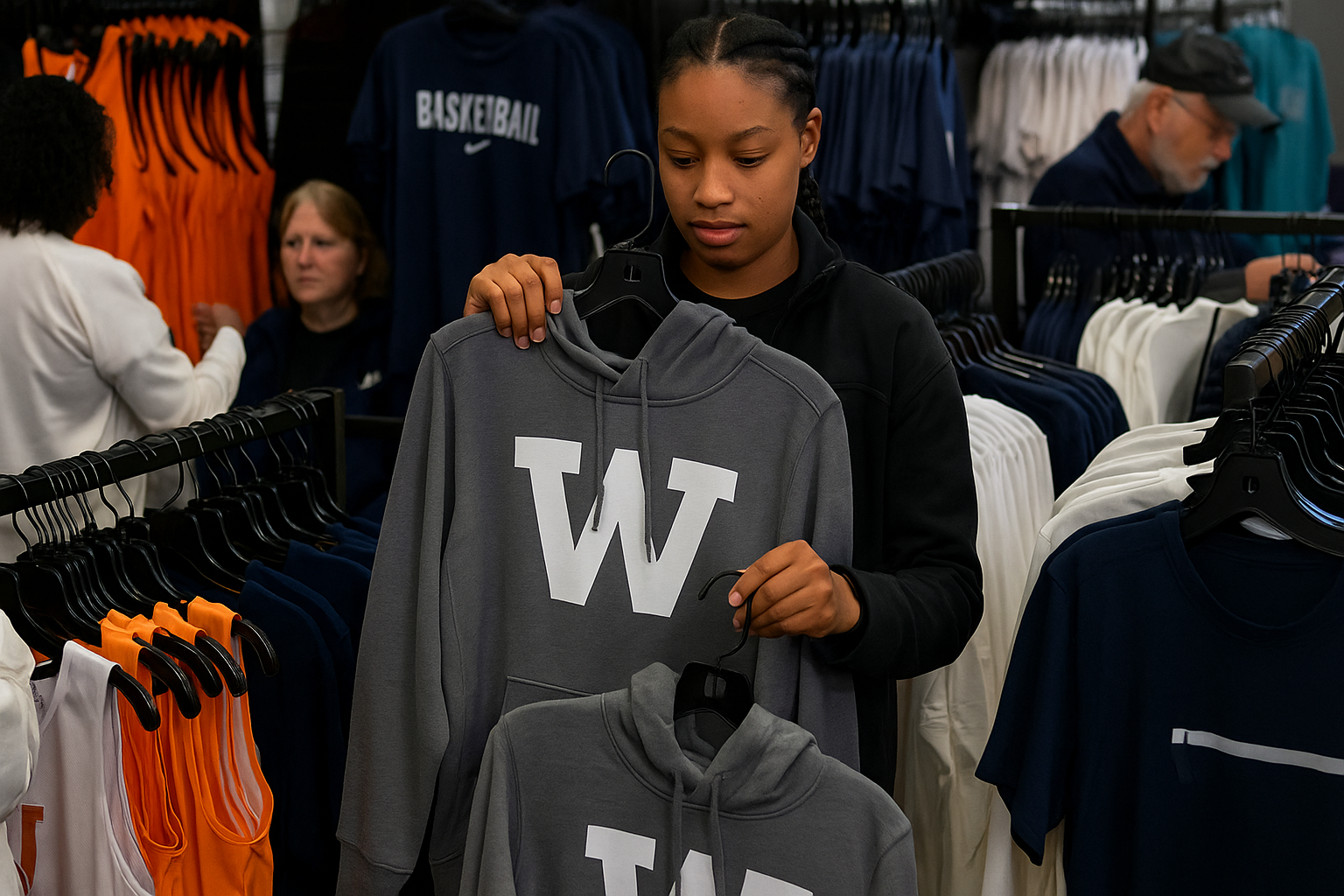
The WNBA does not have a basketball problem. It has a land-grab problem.
Its fight with the Chicago Cubs and Washington Nationals over the phrase “The W” looks like lawyers arguing about a letter on a T-shirt. That is the lazy read. The real issue is whether the league can turn the shorthand fans already use into a protected, repeatable, properly monetised global brand—or whether it keeps building value on rented land.
The fight: three sports businesses want the same commercial real estate
WNBA Enterprises filed a U.S. trademark application for “THE W” on March 26, 2025. The application covers the things that matter most when a sports league wants to make its brand portable: jerseys, hoodies, sweatshirts, caps, shirts, footwear, socks, jackets, shorts and pants.
Not basketballs. Not merely live-game entertainment. Clothing.
That distinction is the whole game.
The Chicago Cubs and Washington Nationals have challenged the application. Both clubs have long histories of protecting “W” marks connected to baseball, and the relevant Trademark Trial and Appeal Board records show both teams on the other side of the WNBA in the dispute.
At first glance, you might say, “Come off it. Nobody is confusing a WNBA hoodie with a Cubs win flag.” Fair enough. I doubt a person buying an A’ja Wilson shirt thinks they have accidentally wandered into Wrigley Field.
But trademark battles are not decided by whether the public is idiotic. They are decided by rights, product categories, commercial overlap and the likelihood of consumer confusion. And apparel is precisely where these businesses collide.
The Cubs’ famous W flag is not some decorative afterthought. It is a piece of commercial identity. The Nationals also own multiple W-related registrations tied to goods and sports services. Their lawyers are doing what lawyers for valuable sports brands are paid to do: object early, preserve options and make everyone else spend money explaining themselves.
That is not villainy. It is capitalism with expensive stationery.
Why “The W” matters more now than it did 5 years ago
The WNBA has spent years being described as an emerging property. That phrase is now getting a bit stale. A league cannot keep emerging forever. Eventually it has to own the room.
The timing matters because the WNBA’s media arrangements with Disney, Amazon Prime Video and NBCUniversal began with the 2026 season and run through 2036. Games are distributed across ABC, ESPN, ESPN2, NBC, USA Network, Peacock and Prime Video, with Amazon carrying games globally.
That does not automatically make a league rich. Plenty of sports properties have broad distribution and a messy business model. But it does create something extremely valuable: repetition.
Every broadcast mention, every social clip, every Caitlin Clark highlight, every A’ja Wilson MVP conversation, every Sabrina Ionescu shoe drop and every Paige Bueckers rookie feature is another chance to teach people a simple phrase: The W.
Simple language wins in consumer businesses because people repeat it without being asked. Fans do not say “I’m watching the National Basketball Association” at the pub. They say NBA. They do not need a brand guide to understand the NFL. The shorthand has become the product.
For the WNBA, “The W” is potentially more useful than its formal name. It is short. It is conversational. It fits on a cap. It works in a hashtag. It can sit beside a player’s name without looking like a corporate sponsorship deck escaped onto a hoodie.
That makes it commercially dangerous territory.
If the WNBA has only a narrow or heavily qualified right to use “The W,” every future licensing deal becomes a little clumsier. Every apparel collaboration needs more checking. Every expansion-team launch, international campaign and retail pitch has another legal edge to sand down.
No single restriction kills the business. Death by a thousand small permissions is what kills momentum.
The overlooked angle: this is not really about ownership of a letter
The popular reaction to trademark disputes is usually correct in spirit and useless in practice: “You cannot own a letter.”
Correct. Nobody owns the letter W in the abstract. Nor should they.
But businesses can own particular uses of symbols in specific commercial contexts. The WNBA is not trying to stop the world from writing a W. It is trying to secure a commercial lane for “The W” on consumer merchandise. The Cubs and Nationals are defending lanes they believe they already occupy.
That is why founders need to pay attention. A trademark is not a trophy you hang on the wall after naming your company. It is a boundary around future cash flow.
When I am building Agave Finder, I do not care whether a name sounds clever in a brainstorm. I care whether it is ownable, searchable, pronounceable and usable when the business is ten times bigger than it is today. A name that works only until you sell your first serious product is not a brand. It is a future legal bill.
The WNBA has a more complicated version of that same problem. The phrase is powerful because fans have made it powerful. But the more naturally a phrase enters culture, the more likely somebody else has rights near it.
That is the tax on becoming relevant.
The Cubs and Nationals may be right to object—and still wrong strategically
Here is the contrarian bit: the Cubs and Nationals are not necessarily wrong on the legal mechanics. Their brands have equity. Their marks exist. Apparel overlap is real. If they fail to enforce marks consistently, they can weaken their position in later disputes that matter more.
Still, legal defensibility and commercial wisdom are not the same thing.
A public fight against the WNBA over “The W” is the sort of move that makes sense in a trademark database and looks absurd in the real world. It gives the league free publicity, reinforces that “The W” is a valuable phrase, and risks making two MLB clubs look like they are trying to fence off a vowel-sized patch of culture.
The sensible outcome is not a courtroom bloodbath. It is a tightly drafted coexistence agreement.
The WNBA could accept guardrails on styling, baseball-related products or marketing language. The Cubs and Nationals could preserve their rights over their distinct marks and core baseball merchandising. Everyone can then walk away claiming they protected the brand.
That is often how these things finish because litigation is a terrible use of management attention. Lawyers enjoy it because they are paid by the hour. Operators should hate it because they are paid by the result.
The real commercial victory for the WNBA is not winning an argument about a letter. It is obtaining enough certainty to put “The W” everywhere for the next decade without asking permission each time.
Brand ownership is player economics in disguise
This is where sports fans tend to miss the plot.
A stronger league brand expands the pool of money around the players. Not magically, and not immediately. But more recognisable consumer products create better licensing opportunities. Better licensing makes sponsors more comfortable. More sponsors and media distribution strengthen franchise values. Stronger franchises and league revenues improve the ceiling for player compensation when collective bargaining comes around.
That is why names such as Clark, Wilson, Ionescu and Bueckers matter beyond highlights. Star players pull audiences in. The league’s job is to convert that attention into assets that still produce cash when the players retire, get injured or switch teams.
A viral clip is rented attention. A protected consumer brand is owned attention.
The WNBA cannot afford to confuse those two things.
What this means for you
If you run a business, do this before your next launch:
1. Search the name before you fall in love with it. Check trademarks, domains, app stores, social handles and competitors. Do it before the designer makes the logo and before you tell 40 mates how brilliant it is.
2. Think in categories, not just names. Your brand may be safe in software and a nightmare in apparel, drinks, media or events. Ask where you intend to make money in three years—not just what you sell this Tuesday.
3. Protect the shorthand. Customers will shorten your brand whether you like it or not. Work out what they call you, then make sure you are not accidentally building someone else’s asset.
4. Treat legal work as commercial work. The best legal spend prevents a future negotiation from becoming a hostage situation. It is boring until it saves you a fortune.
5. Do not confuse attention with ownership. You can dominate social media for a week and still own nothing useful. Build the systems, rights and distribution that let you collect cash long after the noise moves on.
That is the hard-nosed lesson in the WNBA’s fight over “The W.” Great brands are not built when people first notice you. They are built when you make sure that, once they do, the value has somewhere to land.