WNBA’s $3.1B Deal Faces the 1.15M Viewer Test
A $3.1 billion media package does not make the WNBA bulletproof. It gives the league a far bigger problem: turning record attention into a business that compounds without Caitlin Clark carrying the whole bloody thing.
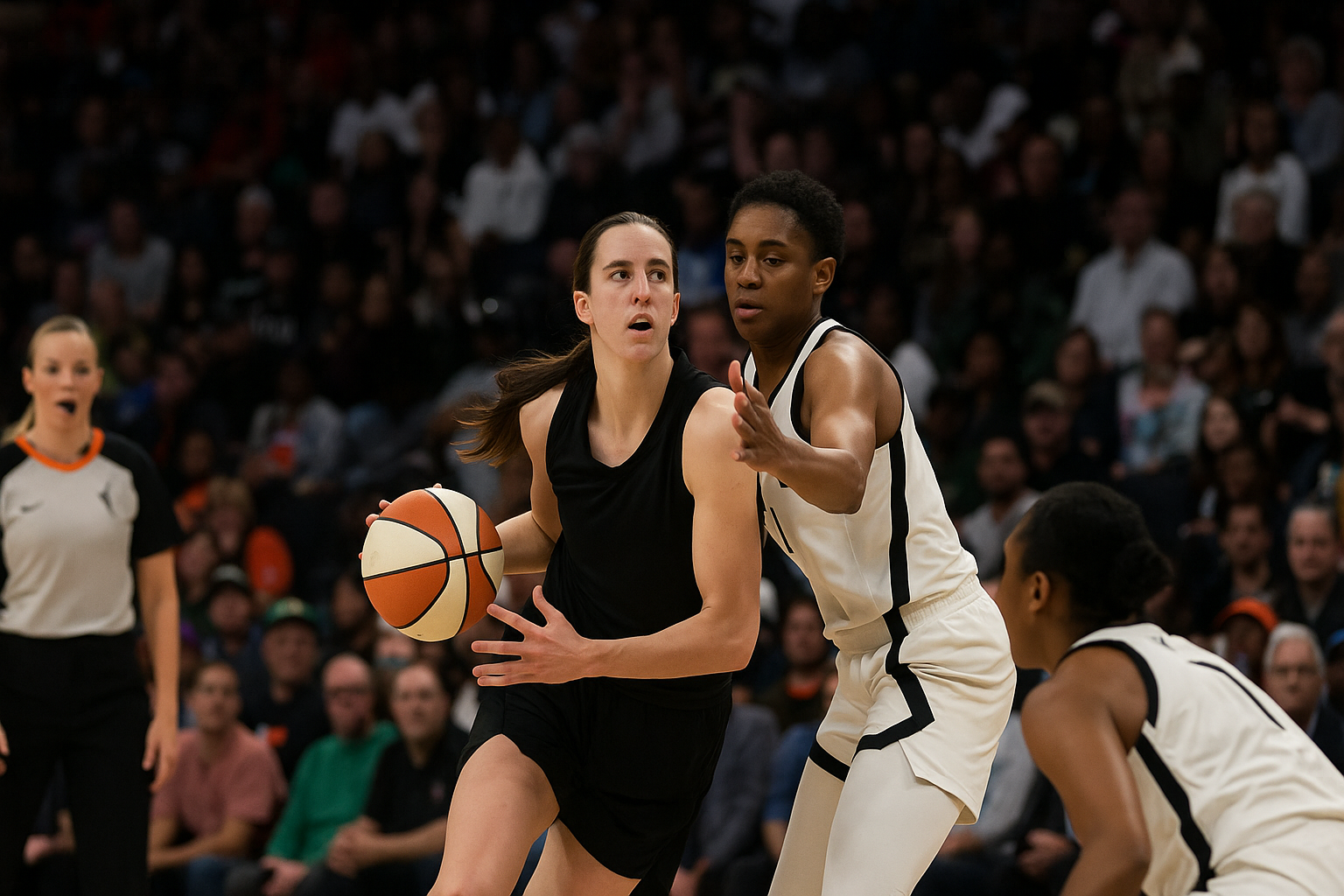
A $3.1 billion media package does not make the WNBA bulletproof. It gives the league a far bigger problem: turning record attention into a business that compounds without Caitlin Clark carrying the whole bloody thing.
On October 7, the WNBA semifinals averaged 1.15 million viewers across two opening games, up 10% on last year’s equivalent games. That is good news. It is also not permission for anyone in the league office to start congratulating themselves too hard.
The 1.15 million-viewer test is bigger than two games
The New York Liberty’s game against the Atlanta Dream drew 1.17 million viewers on ABC. The Las Vegas Aces’ game against the Golden State Valkyries drew 1.12 million across NBC and Peacock.
Both games ran directly into the NFL’s Sunday slate. That matters. Live sport is a knife fight for attention, and the NFL is the bloke who turns up with a flamethrower.
Still, the result matters for a more useful reason: this was the first WNBA playoff game on NBC since 2002. NBC and Peacock are not just extra distribution. They are part of the WNBA’s attempt to turn a cultural surge into a serious, diversified media business.
The league’s new rights arrangements begin with the 2026 season and run through 2036. Its collection of deals with Disney, NBCUniversal, Amazon, CBS/Paramount, Scripps, USA Network and NBA TV is valued at $3.1 billion over 11 years, according to Front Office Sports. The 2026 schedule included a record 216 national games.
That is the real story. The WNBA has shifted from fighting for television windows to managing a portfolio of premium media partners.
And that changes the standard.
Nobody sensible should demand that a Sunday afternoon WNBA semifinal beat the NFL. But a league taking in billions cannot be judged forever on whether it is merely growing from a small base. It needs to prove it can hold audiences when the novelty wears off, when a superstar is injured, and when fans have six apps asking for their credit card.
The Caitlin Clark question is not going away
Caitlin Clark remains the most commercially consequential athlete in American basketball outside the NBA. Pretending otherwise is corporate theatre.
Her Indiana Fever games led the WNBA’s first-round viewing this postseason. The Fever’s deciding Game 3 against the Aces drew 2.3 million viewers on USA Network, the second-most-watched first-round WNBA playoff game ever. The first round as a whole averaged 1.3 million viewers across 10 games, up 37% from the prior year.
Clark’s pull is massive. So is the danger of building an entire investment case around one person.
The encouraging bit is that the semifinal numbers did not require the Fever. The Liberty, Dream, Aces and Valkyries collectively delivered more than a million viewers per game in windows that had to compete with NFL football. That says the league has moved beyond the simplistic argument that every viewer is only there for Clark.
But let’s not get carried away. “Beyond one star” is not the same as “independent of one star.” Clark, Angel Reese, Paige Bueckers and Olivia Miles are not just players; they are acquisition channels. They pull in younger fans, casual fans and people who have never previously bothered with women’s basketball.
A proper operator uses a breakout customer-acquisition channel to build a durable database, product habit and repeat purchase. They do not admire the channel and call it strategy.
The WNBA must do the same. Every Clark game, every Aces game and every Liberty game should be converting viewers into registered fans, ticket buyers, merchandise buyers, subscribers, newsletter readers and local community members. If attention does not become owned relationships, the league is renting its future from broadcasters and social platforms.
The media deal is valuable because it spreads the risk
The smart part of the WNBA’s new setup is not merely the headline dollar figure. It is the distribution.
Disney carries games across ABC, ESPN and ESPN2. NBCUniversal brings NBC, USA Network and Peacock. Amazon streams games globally on Prime Video. CBS and Paramount+ are in the mix. Scripps has ION. USA Network has committed to at least 50 games annually under its own 11-year agreement.
That is reach. It is also complexity.
For years, sports executives acted as though more distribution was automatically better. It is better for rights fees. It is not automatically better for the customer.
Fans do not care how cleverly a league has sliced its inventory between broadcasters. They care whether they can find the game in 15 seconds without needing a bloody flowchart.
This is the overlooked risk in the WNBA’s boom: fragmentation can quietly tax fandom. A casual viewer who catches a Liberty game on ABC might not know where to find the next game on Peacock, Prime Video, USA Network or ION. Hardcore fans will figure it out. Casual fans are less forgiving. They simply watch something else.
The league has bought itself distribution. Now it has to deliver discovery.
That means one dead-simple schedule hub, better in-app reminders, clear broadcaster branding, personalised alerts and relentless promotion between partner platforms. The commercial winner will not be the network with the cleverest rights package. It will be the league that removes every excuse not to watch.
The next fight is not viewership. It is leverage.
The WNBA’s media money is already changing the financial conversation around the sport.
In March, the league said a tentative collective bargaining agreement projected more than $1 billion in player salaries and benefits over seven years, while paving the way for the first multimillion-dollar player contracts in WNBA history. Minimum salaries for 2026 were projected to range from $270,000 to $300,000, depending on service time.
Good. Top talent should be paid properly. A league cannot sell elite athletes as premium entertainment while paying them like an afterthought.
But the second-order implication is more interesting: higher fixed costs demand better commercial discipline.
More player pay, more expansion, more national games and more premium partners are all excellent when demand keeps rising. They become dangerous if operators mistake a growth phase for permanent entitlement. Sport is littered with businesses that signed costs on the assumption that hype would last forever.
The WNBA needs to resist the temptation to become a vanity-growth machine. Not every expansion team will work. Not every sponsorship is worth taking. Not every social-media spike is evidence of a customer relationship.
The league should be ruthless about measuring three things: repeat viewing, local ticket retention and sponsor renewal. Those are the numbers that tell you whether a sports property has genuine economic gravity.
A viral clip is attention. A sold-out season-ticket base is a business.
The contrarian view: the NFL competition may actually help
Here is the bit most people will miss: competing against the NFL is not always bad news.
If the WNBA can consistently deliver more than one million viewers in direct competition with Sunday football, it proves something valuable to advertisers and distributors. It proves that its audience is not merely watching because there is nothing else on.
That is a far more useful proof point than an inflated number in an empty sporting window.
The Liberty-Dream and Aces-Valkyries figures also show why broadcast television still matters. Streaming is brilliant for data, targeting and global reach. But mass-market broadcast remains the quickest way to put a sport in front of households that did not wake up intending to find it.
The lesson is not “streaming is bad.” That would be nonsense. The lesson is that premium sports businesses need both reach and ownership: broad television for discovery, direct digital products for retention, and a clear pathway between the two.
That is how you make an audience valuable more than once.
What this means for you
Whether you run a startup, invest in growth businesses or manage a big sales team, the WNBA’s moment offers a useful operating lesson.
First, do not confuse a headline number with a finished business. A $3.1 billion deal is validation, not invincibility. When your company lands a major customer, raises capital or gets press, ask what must be true for that win to repeat without the original catalyst.
Second, turn borrowed attention into owned demand. Caitlin Clark is a spectacular acquisition engine for the WNBA. Your equivalent may be a major partner, a viral campaign, a celebrity customer or a lucky algorithm boost. Capture the email, the account, the repeat order and the referral before the traffic disappears.
Third, make the next step stupidly easy. The WNBA’s biggest operational job is helping fans find the next game. Your job is the same. If a customer needs to think, search or ask someone what happens next, you have created friction where revenue should be.
Finally, build for the day your biggest star is absent. Clark will not play every game. Your best salesperson will leave. Your largest client may cut spend. Your social reach will dip. A real business is one that still works when its favourite shortcut disappears.
The WNBA has more money, more partners and more attention than it has ever had. Now comes the hard bit: proving it can turn that momentum into a machine. That is where the real fortunes are made.