XDOF’s $1.2B Bet Says Robot Data, Not Robots, Is the Gold Mine
$1.2 billion for a company that collects people controlling robots. If your operational data is a mess, you are sitting on the wrong side of AI.
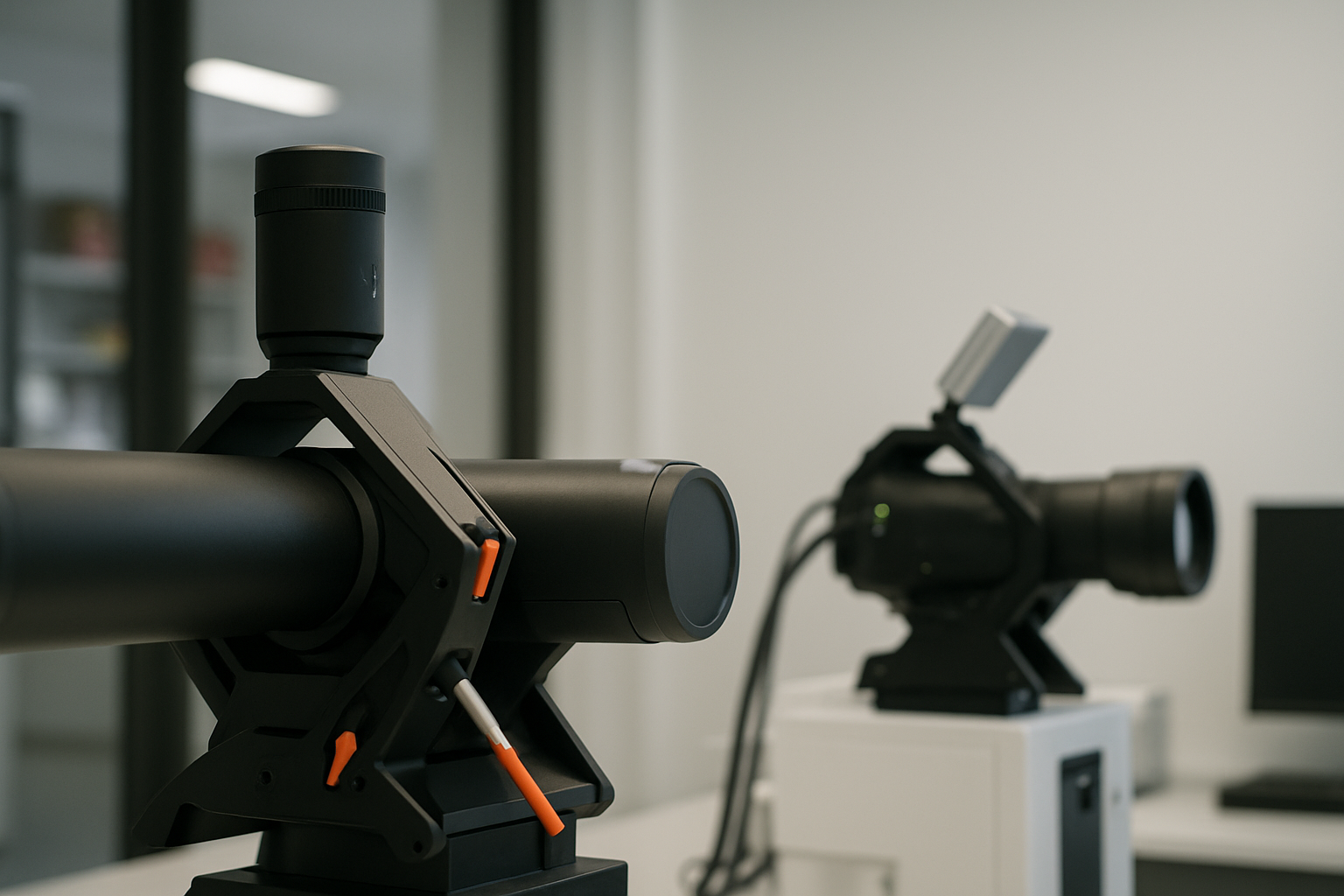
XDOF is reportedly being valued at $1.2 billion less than three months after leaving stealth — and it does not build robots. It collects data of people controlling them. That’s the business.
If you think the money in AI belongs to whoever builds the flashiest model or buys the most GPUs, you’re looking at the shop window, not the cash register.
XDOF is selling the thing robots cannot magically invent
TechCrunch reported on September 4 that XDOF is in late-stage talks for a Series B led by 8VC at a valuation of roughly $1.2 billion. Important caveat: this is a reported deal, not a completed financing, and the final terms could change.
Still, the numbers are enough to get your attention. XDOF emerged from stealth in June 2026, then raised a $70 million Series A with Thrive Capital, Andreessen Horowitz, Lux Capital and Spark Capital participating. Now, according to TechCrunch’s reporting, the business is approaching $50 million in annualised revenue and working with around 20 customers, including frontier AI labs.
Not bad for a company founded in 2024 by UC Berkeley researchers Philipp Wu, its CEO, and Fred Shentu, its CTO.
But don’t mistake this for another Silicon Valley story about two clever blokes raising silly money on a slide deck. The interesting part is what they are selling.
XDOF helps collect, process and organise the real-world demonstrations robots need to learn physical tasks. A human remotely guides a robot arm through a job — folding clothes, moving objects, using tools, assembling something fiddly — and the system captures the movements, camera feeds and other signals. That becomes training material.
Language models had the internet. Robots do not.
A robot cannot learn to handle a crumpled shirt, a slippery bottle or a badly packed carton merely by reading Reddit and hoovering up Wikipedia. The physical world is rude, inconsistent and full of edge cases. That is precisely why it is valuable.
The internet made software cheap. Reality is making robotics expensive.
The first AI gold rush was powered by abundant digital material. Text, images, code and video already existed in obscene quantities. There were arguments over rights, quality and access — fair enough — but the raw stuff was everywhere.
Robotics has a much uglier supply chain.
You need a physical robot. You need an environment. You need sensors and cameras. You need someone to demonstrate the task. You need clean synchronised records of what happened. You need quality control because a robot copying a hesitant, clumsy demonstration can learn hesitation and clumsiness remarkably well. Then you need a system that makes all of it usable to a model builder.
That is operational work. Repetitive, expensive, technically demanding operational work.
And that is why XDOF matters. It is trying to become the infrastructure layer between ambitious robotics labs and the horrible reality of gathering useful physical data at scale. The company’s own Foundry platform describes a system for exploring samples, customer uploads and provisioned datasets in one place. Its broader pitch is not simply “we have robot videos.” It is the full chain: collection tools, data operations, curation, storage and training-ready datasets.
That may sound less sexy than a humanoid doing a backflip onstage. It is also a much more sensible place to build a business.
I’ve built enough companies to know this: glamour attracts attention; bottlenecks attract budgets.
The $70 million Series A was not the real signal
Venture capitalists writing big cheques is not, by itself, proof of anything except that venture capitalists still own chequebooks. The stronger signal is the reported commercial pull.
TechCrunch says XDOF was not planning to raise again so quickly after its June Series A. The fresh round came because investors approached it amid fast revenue growth. If that reporting is right, it tells us the buyers are already feeling pain badly enough to pay someone else to solve it.
That distinction matters.
A lot of AI businesses are selling hope to executives who do not want to miss a boardroom trend. XDOF’s apparent customers are closer to the coalface: robotics companies and frontier labs that need more and better demonstrations to improve systems in the real world. They are not buying a motivational keynote. They are buying throughput.
The founders’ earlier work helps explain why. Wu and Shentu were among the authors of GELLO, a low-cost teleoperation framework designed to make it easier for humans to guide robot manipulators and collect demonstrations. The academic problem was blunt: robot learning is constrained by the quality, scale and variety of the examples it receives.
That idea has now become a commercial machine.
XDOF also released ABC-130K in June: an open-source teleoperation dataset with more than 130,000 episodes across 195 bimanual manipulation tasks, according to the company. Open-sourcing material may look counterintuitive for a startup chasing a $1.2 billion valuation. I think it is shrewd.
Give researchers and builders a useful public dataset, establish credibility, become part of their workflow, then sell the industrial-grade version: proprietary collection, bespoke data, evaluation and infrastructure. That is the old open-source playbook wearing robot gloves.
The overlooked angle: data quality beats data quantity
Here is the bit most people will miss because “more data” sounds like an easy headline.
More data is not automatically better. More bad data just gives a machine more ways to become confidently useless.
XDOF published research in June describing a folding-robot experiment where adding more demonstrations made performance worse. The issue was not whether the final shirt fold succeeded. It was the wasted movement inside each demonstration: hesitation, re-gripping, stalling and dead time. Train a robot indiscriminately on that footage and it may faithfully learn the nonsense too.
The company reported that, on one set of increasingly messy folding demonstrations, plain imitation learning fell from 20 successful folds out of 20 to two out of 20, then zero out of 20. Its approach to weighting productive moments in the data held results at 20, 19 and 14 out of 20 across those same tiers.
Treat those as company research results, not scripture. But the underlying lesson is absolutely right: the valuable asset is not a giant pile of inputs. It is a reliably labelled connection between action and outcome.
That should ring a bell for any operator.
Your CRM is not valuable because it has 400,000 records. It is valuable if you know which leads bought, which sales calls converted, which offers were profitable and why good prospects walked away.
Your support archive is not valuable because it contains years of customer complaints. It is valuable if it shows the problem, the fix, the customer outcome and whether the fix actually held.
Your factory, field-service team or logistics operation does not have “data” just because software spits out reports. It has an asset when the operational record is tied to what worked.
That is the XDOF lesson for normal businesses: outcomes are the labels that turn activity into intelligence.
The contrarian view: XDOF could be valuable precisely because robots are not ready
The usual robotics prediction goes like this: once the robots are good enough, the data company becomes less important.
Maybe. But that is backwards in the period that matters.
The less capable and less general-purpose robots are, the more demonstration, testing, correction and evaluation they need. Every new body type, worksite, product line and task variation creates another awkward gap between a lab demo and a commercially useful machine.
A warehouse robot trained in one tidy environment does not automatically understand a different box, different lighting, different shelf layout or a worker who has put things where they should not be. Welcome to reality.
That means the near-term prize may not go to the company claiming it has solved general-purpose robotics. It may go to the company that makes repeated adaptation cheaper and faster for everyone else.
Of course, there are risks. XDOF faces competitors, including data platforms expanding from language-model work into robotics. Customers may bring more collection in-house. Standards may change. And a reported $1.2 billion valuation leaves little room for sloppy execution.
But this is not a punt on robots suddenly replacing every worker. It is a bet that, before robots become commonplace, someone has to do the unglamorous work of teaching them not to stuff up.
What this means for you
You do not need robot arms or a Berkeley PhD to use this tomorrow.
First, find one repeatable process in your business where staff make the same judgment dozens of times a week: qualifying leads, approving refunds, pricing jobs, routing support tickets, ordering stock or checking compliance.
Second, stop recording only the activity. Record the outcome. Add one field if you have to: Did this work? Better still, capture why it worked or failed.
Third, clean the record while the context still exists. A sales rep knows why a deal died today. Six months later, your CRM will say “lost — budget” because nobody could be bothered writing the truth.
Fourth, protect your proprietary examples. When you buy AI tools, read the data-use terms instead of skipping to the logo page. Your best operational data is not something to casually donate to a vendor because the onboarding flow was pretty.
Finally, do not wait for a perfect AI strategy. Build an outcome-rich dataset around one costly workflow now. The models will improve, get cheaper and become easier to access. You cannot go back in time and recreate five years of well-labelled decisions.
XDOF’s reported $1.2 billion valuation is not really a story about robot arms. It is a warning shot.
The next valuable AI asset may be sitting inside your business already — buried under unloved spreadsheets, vague notes and staff knowledge that walks out the door at 5pm. Sort that out before somebody else does.