XDOF’s $1.2B Series B Talks Prove Robot Data Is the Real Prize
A startup barely out of stealth may be worth $1.2 billion because robots are useless without somebody doing the boring work AI hype forgot.
Most AI founders are chasing the clever bit. XDOF may be worth $1.2 billion because it is chasing the tedious bit: getting someone to collect enough real-world data so a robot can stop behaving like an expensive toddler.
That should make every founder slightly uncomfortable. The money is not always in the sexy product. Quite often, it is in the ugly bottleneck everybody else is pretending will disappear.
The deal: a potential $1.2 billion valuation before the paint is dry
XDOF, a robotics-data startup founded in 2024 by UC Berkeley researchers Philipp Wu and Fred Shentu, is in late-stage talks for a Series B led by 8VC at a valuation of about $1.2 billion.
Important distinction: the financing is not final. Neither XDOF nor 8VC commented, the size of the round is unknown, and it is not known whether the reported valuation includes the new cash. Anyone telling you this is a closed deal is getting ahead of themselves.
Still, the signal is loud enough.
XDOF emerged from stealth less than three months ago. In June, it raised a $70 million Series A with participation from Thrive Capital, Andreessen Horowitz, Lux and Spark Capital. Axios also reported participation from WndrCo, Scribble VC, Samsung Next, Abstract Ventures and Emerson Collective.
Now venture firms are reportedly circling again because XDOF’s annualised revenue is approaching $50 million. That is the part that matters. A $1.2 billion valuation for a young company is eye-catching; roughly $50 million in annualised revenue, with only about 20 customers, is why serious investors pick up the phone.
The company builds data pipelines, collection tools and annotation systems for frontier AI labs and robotics companies. Put bluntly, it supplies the training material for machines that need to operate in the physical world.
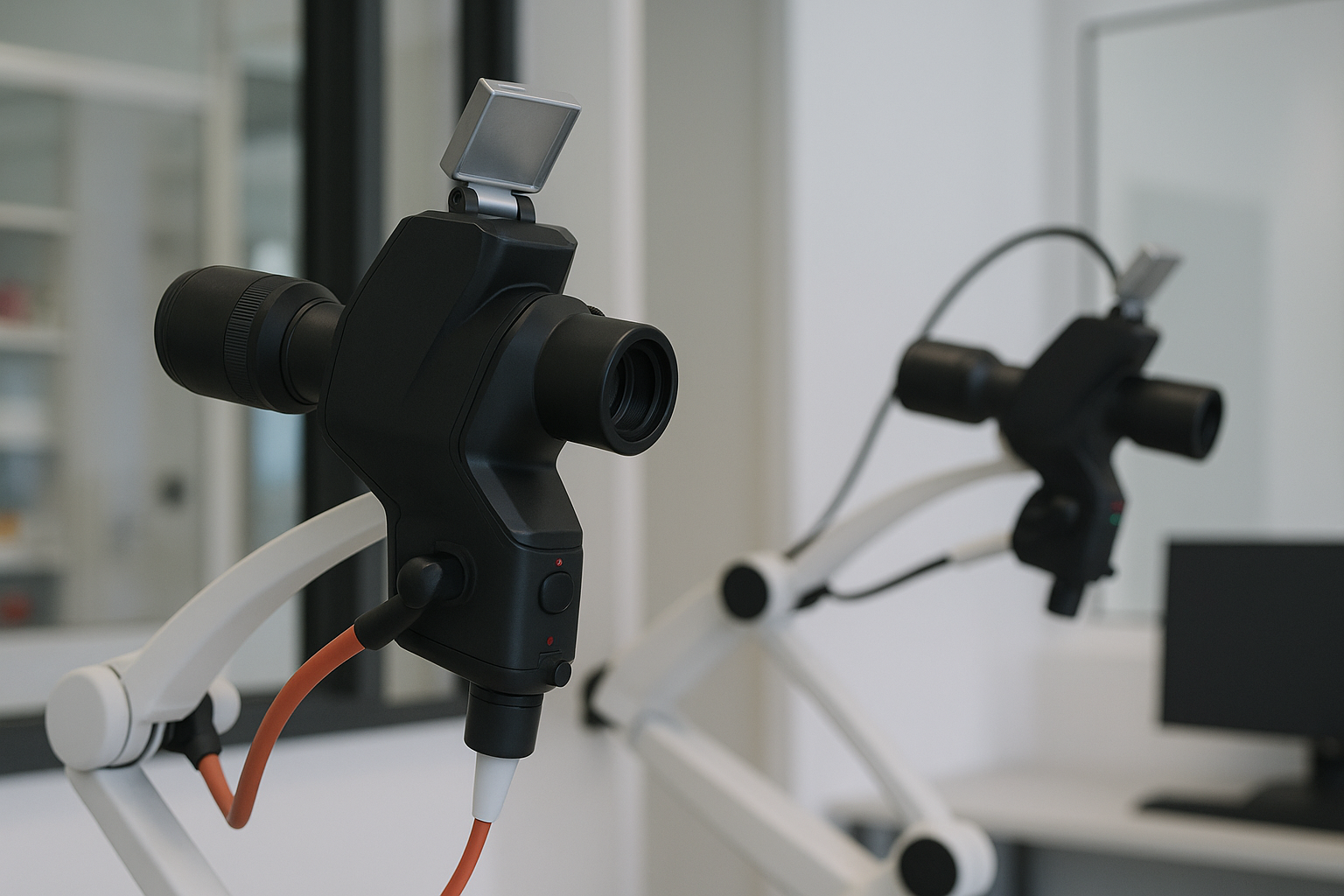
Its starting point was GELLO, a low-cost teleoperation system that lets a human remotely control a robotic arm. From there, XDOF has expanded its collection approach: remote operators steer robots, while human workers wearing sensors record movements involved in ordinary tasks such as folding clothes and flattening boxes.
It sounds unglamorous because it is. And that is precisely why it may be valuable.
Language models had the internet. Robots have a data famine.
The first wave of generative AI had a magnificent cheat code: the internet already existed.
Text, images, code, videos, forums, documentation and digitised human knowledge were sitting there in absurd quantities. There were obvious fights over rights, quality and access, but there was no question that the raw material existed at planetary scale.
Robotics has no equivalent.
There is no neat public archive containing billions of clean examples of hands opening awkward packages, two arms folding a shirt, a worker moving objects around a crowded storeroom, or a machine recovering when it misses a grip by two centimetres. Physical work happens in messy places, with bad lighting, weird objects, friction, humans in the way and consequences when things go wrong.
That is XDOF’s bet: robot intelligence will be constrained less by clever model architecture than by access to high-quality, real-world training data.
The business is trying to become an outsourced data supply chain for physical AI. Wu and Shentu’s academic roots matter here. Their work began with the practical research problem of how robots learn from larger datasets when those datasets barely exist. XDOF is now commercialising that pain.
The company is also partnering with UC Berkeley’s AI Research lab on ABC, which it describes as the largest collection of high-quality robot-training data assembled to date.
I would not get too misty-eyed about the academic language. The commercial translation is simple: if XDOF can consistently supply data that makes customers’ robots learn faster or work more reliably, customers will pay. If it cannot, the $1.2 billion talk will look very silly very quickly.
Why investors are moving before the round is even necessary
The most revealing part of this story is that XDOF reportedly was not planning to raise again so soon after June’s $70 million Series A.
That is what genuine leverage looks like.
When you need money, investors smell it. They ask for more ownership, more preferences, more control and more ways to make your life unpleasant later. When you have revenue accelerating, credible customers and a constraint the market believes will get worse, investors approach you. The negotiation changes completely.
XDOF appears to have hit that sweet spot.
Its reported annualised revenue near $50 million suggests buyers are not merely running shiny robotics pilots for the board presentation. They are spending real money on data infrastructure. And if several frontier AI labs are among 20 customers, as reported, that gives XDOF something every young company wants: a concentrated group of sophisticated buyers who understand the problem before the rest of the market does.
There is a caveat, though. Twenty customers is both impressive and dangerous.
Impressive because it suggests meaningful revenue per account. Dangerous because a handful of large customers can dictate terms, build an in-house alternative, delay procurement, or decide a competitor has better data. A startup with 20 serious customers has product-market fit. It does not yet have immunity.
That is why the use of any new capital matters more than the headline valuation. XDOF plans to hire and train data collectors globally. That is sensible if it produces a repeatable, quality-controlled collection machine. It is a headache if growth simply means hiring more people every time a customer wants a new task recorded.
The overlooked angle: this is not a clean software business
Here is the bit people will conveniently ignore while admiring the unicorn sticker.
XDOF is not selling a frictionless app that spreads through an organisation while the founders sleep. It is operating in the stubborn, physical world. Its product mixes software, robotics equipment, remote operation, human collection, labelling, quality control and customer-specific delivery.
That can create a moat. It can also create operational indigestion.
A true data advantage compounds when each project improves the dataset, the tooling, the quality standards and the ability to win the next customer. XDOF could become hard to dislodge if its data gets better, cheaper and more useful with scale.
But there is no law saying that happens automatically.
If every customer requires bespoke hardware, bespoke workflows and armies of people doing slightly different tasks, then the company can grow revenue while quietly building a very expensive services business. There is nothing wrong with services businesses, by the way. I have made money in businesses with plenty of humans involved. But do not pay software multiples for a labour machine just because someone put “AI” and “robotics” on the slide deck.
The winning version of XDOF is not the company with the most people collecting data. It is the company that turns collection into a system: standardised hardware, rapid deployment, repeatable task libraries, ruthless quality measurement and data customers cannot easily recreate.
That is the actual job now.
This is the next battle after chips and power
The AI boom has already taught investors that models alone are not the whole game. Compute capacity matters. Chips matter. Data centres and electricity matter. Distribution matters.
Robotics adds another layer: the model has to learn how reality behaves.
That means physical-AI companies may increasingly compete for proprietary datasets rather than just engineering talent. The valuable asset will not necessarily be the robot itself. It may be the company that owns the feedback loop between a machine trying something, a human correcting it, a dataset capturing it and a model improving from it.
That is why investors compare XDOF to Scale AI and Mercor, even though the application is different. Those businesses made data work commercially important during the language-model boom. XDOF is trying to do something similar for robots.
Competition is already coming from companies including Mecka AI, as well as data platforms such as Scale AI and Micro1 expanding beyond large language models. XDOF has an early lead in attention, a strong academic origin story and serious capital behind it. None of that guarantees it owns the category.
Founders should take note: the best market position is not “we use AI.” Every second bloke says that now. The better position is “we own a painful input required for AI to work, and the alternative is slow, costly and unreliable.”
That is a business customers struggle to replace.
What this means for you
If you are a founder, stop asking where AI can make your product look more modern. Ask where AI runs into a real-world constraint in your industry.
Make a list tomorrow morning:
1. What does the model need that it cannot cheaply get? It could be proprietary data, approvals, physical access, compliance records, domain experts or a workflow buried inside a customer’s operations. 2. Who already pays to solve that problem badly? Do not begin with a grand vision. Find the buyer currently burning money, staff time or reputation on the bottleneck. 3. Can every customer interaction improve the product? If the work does not compound into better data, better automation or better distribution, you may just be building a consultancy with nicer branding. 4. Are you measuring revenue quality, not just revenue? Twenty customers and $50 million annualised revenue can be brilliant. It can also hide concentration risk. Track revenue per customer, renewal risk, gross margin and the work required to deliver each dollar. 5. Raise when the market comes to you, not because your spreadsheet says it is fundraising season. XDOF’s reported leverage came from momentum. Build the evidence first; the valuation chat becomes much easier afterwards.
The lesson from XDOF is not that everyone should start a robot company. God help us if they do.
It is that fortunes are made around constraints. Find the boring, painful thing everybody needs before the magic works. Then become frighteningly good at solving it.