XPeng’s US$900M Robotics Raise at a US$6.3B Valuation
XPeng just raised more than US$900 million for robots at a valuation above US$6.3 billion. That is what car makers do when vehicle margins stop being worth the pain.
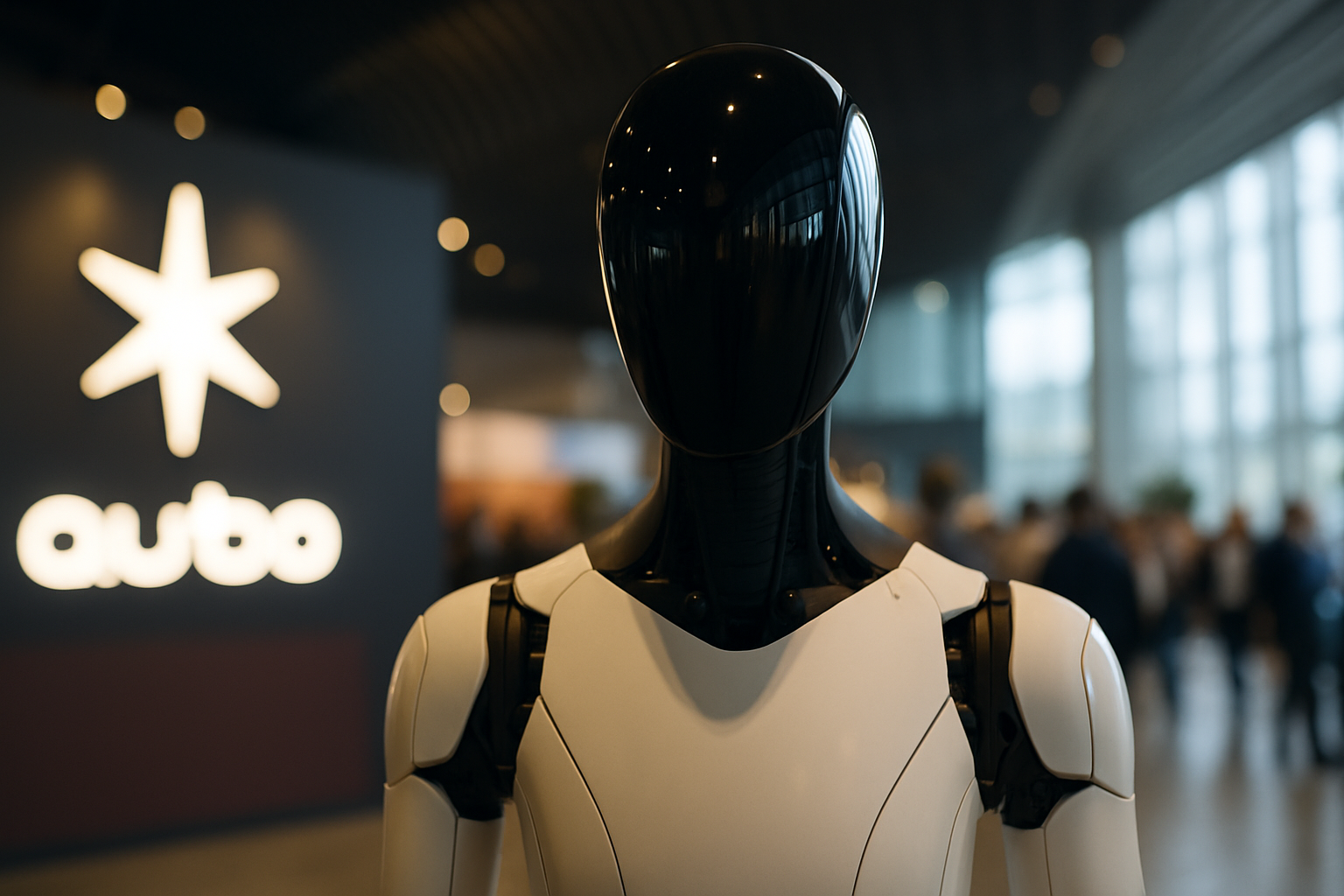
Car makers are not becoming robot companies because they love science fiction. They are doing it because selling cars is turning into a brutal way to make a thin margin.
XPeng just raised more than US$900 million for its robotics business at a post-money valuation above US$6.3 billion. That is not a quirky side project. It is a very loud admission that the next great profit pool may sit outside the vehicle itself.
XPeng has put US$900 million on the table
On August 24, XPeng announced that its robotics business had entered share-purchase agreements raising more than US$900 million. The company said the valuation was above US$6.3 billion and called it China’s largest single private funding round in embodied AI.
The money matters. So does where it came from.
IDG Capital led the round. Gaorong Ventures participated. Tencent and Alibaba came in as strategic investors. Bloomberg reported the package included US$600 million from outside investors, US$200 million from XPeng and about US$100 million from top executives.
That last bit should make people sit up. When management puts real money beside its press release, I pay more attention. It does not make the investment safe. Plenty of founders have confidently lit money on fire. But it tells you this is not merely a PowerPoint exercise designed to goose an automaker’s share price for a quarter.
XPeng’s robotics business is being developed through Dogotix, and its main product is Iron, a general-purpose humanoid robot intended for commercial deployment. XPeng says the new capital will accelerate physical-AI model development and mass production.
That phrase — physical AI — is doing a lot of work. It means software that does not merely answer a question, generate a spreadsheet or make a slightly cursed picture of your dog. It has to perceive a messy physical environment, understand what is happening, decide what to do and move safely enough to be useful.
That is vastly harder than making a chatbot sound clever. It is also potentially vastly more valuable.
The car business is forcing the issue
The comfortable take is that XPeng is copying Tesla because robots are fashionable.
The more useful take is that Chinese electric-vehicle makers are searching for a business with better economics than cars.
EVs are capital-intensive, competitive and unforgiving. You need factories, supply chains, service infrastructure, continual product upgrades and price discipline — right up until your competitor cuts price and your discipline turns into a margin problem. Build a decent car and someone else will build a similar one. Then the market starts treating the product like a fridge with wheels.
That is why a successful car company would happily become something else.
Humanoid robots offer a seductive answer: take capabilities developed for autonomous driving — sensors, perception, mapping, planning, simulation, onboard compute and control systems — then apply them to factories, warehouses and commercial settings. The underlying technology is not identical, but the overlap is meaningful enough that auto companies are not starting from zero.
Michael Dunne, the chief executive of advisory firm Dunne Insights, told TechCrunch that XPeng is among the Chinese automakers most focused on autonomy and humanoid robotics. His blunt rationale was the important part: vehicle margins are razor-thin, while robots may offer something better.
Exactly right. The robot thesis is not that every household wants a metallic butler folding towels. That might happen eventually, or it might remain a demo-video fantasy for years. The nearer commercial prize is more boring and more profitable: moving parts, sorting materials, loading equipment, checking inventory, performing repetitive factory tasks and working in controlled environments where labour is scarce, expensive or difficult to retain.
Boring work pays. That is why this is serious.
China is turning its manufacturing base into a robotics advantage
XPeng is not alone. Chery’s robotics affiliate AiMOGA is preparing for an IPO and has said it wants to sharply increase humanoid-robot deliveries next year. BYD unveiled a humanoid robot called Xiao Di. Changan, GAC, Li Auto, SAIC and Seres are also working on humanoid robotics projects.
This is where the story gets bigger than XPeng.
China’s car industry has spent years building deep competence in supply chains, motors, batteries, cameras, sensors, manufacturing automation and rapid product iteration. Those are not trivial advantages when your product has limbs, joints, batteries, actuators and safety requirements rather than a browser tab.
American AI companies have been brilliant at selling intelligence in the cloud. Chinese industrial companies may be unusually well positioned to put increasingly capable AI into physical products at scale.
That does not mean they have won. Hardware capacity is not the same as a reliable robot brain. A humanoid operating around humans has to be safe, resilient and economical, not just impressive in a choreographed launch event. It needs to function on Tuesday afternoon when the lighting is poor, the floor is cluttered and someone has parked a pallet in the wrong place.
But the manufacturing advantage is real. And because Chinese automakers are already under pressure to find growth beyond crowded car markets, they have every incentive to move quickly.
The valuation is exciting — and it should make you more demanding
Here is the contrarian bit: US$6.3 billion is not evidence that XPeng’s robot business has solved commercial robotics. It is evidence that investors believe it might.
Those are very different things.
A private valuation is a price paid for future optionality. In this case, the option is enormous: a company that can build a dependable, affordable general-purpose worker at scale could create a category worth far more than a successful EV model. The temptation, naturally, is to price in the win before the hard graft is complete.
We have seen this movie before. Capital races into a promising technical frontier. The strongest companies use it to build product, distribution and production capability. The rest use it to extend the period before reality catches up with the demo.
Investors should therefore stop asking, “How human does the robot look?” That is mostly theatre. Ask four much harder questions instead.
First: what specific task can it perform repeatedly without remote human intervention?
Second: what does that task cost the customer today, including maintenance, integration, downtime and supervision?
Third: what is the payback period versus a human worker or existing automation?
Fourth: can the company manufacture and service thousands of units without turning every deployment into a bespoke consulting project?
If management cannot answer those questions clearly, the robot is not a business yet. It is an expensive prospectus wearing hands.
Tesla is the headline, but the real competition is uglier
Tesla’s Optimus has made humanoid robots a mainstream story. But the competitive field is already broad: Figure, Agility Robotics, Apptronik, Boston Dynamics, Unitree, AiMOGA, Mobileye’s Mentee Robotics and now a growing list of auto-backed entrants.
Mobileye agreed in January to acquire Mentee Robotics for about US$900 million, underlining the same strategic logic. It sees the overlap between autonomous-driving technology and embodied AI. Hyundai plans to bring Boston Dynamics’ Atlas humanoid robot into its Georgia factory this year, with tasks such as parts sequencing in view by 2028.
The overlooked angle is that the eventual winners may not sell the most famous robot. They may own the unglamorous bits around it: deployment tools, fleet management, safety systems, simulation data, maintenance networks, financing and task-specific software.
In every technology boom, the shiny object gets the attention. The operating system, service layer and distribution channel usually take more of the economics than people expect.
That is the genuine opportunity for XPeng. It already knows how to build complicated hardware at industrial scale. If it can combine that capability with a useful AI stack and disciplined commercial deployment, it may have a defensible path. If it just builds impressive demos, it will join the graveyard of companies that confused attention with traction.
What this means for you
For founders and operators, do not wait for a humanoid robot to arrive before thinking about automation. Start with your ugliest repeatable workflow now.
Pick one task that is costly, frequent, measurable and unpopular with staff. Map its steps. Record its error rate. Calculate its fully loaded cost. Work out where a human decision is genuinely required and where the process is simply habit dressed up as judgement.
That exercise alone will make your business better, even if you never buy a robot.
For investors, separate the platform story from the proof. XPeng’s US$900 million raise is a meaningful signal that embodied AI is becoming a serious strategic category, especially for automakers trapped in low-margin competition. It is not a licence to buy every company with a robot video and the words “physical AI” in its deck.
And for anyone building a company: watch where ambitious businesses spend money when their core market gets harder. XPeng is telling you something useful. When the main product becomes commoditised, the answer is not motivational posters about innovation. The answer is to build a second engine before the first one starts coughing.
That is what this US$6.3 billion robot bet really is: not a science-fiction punt, but an escape plan.
Sources
- Chinese automakers are following Tesla’s bet that robots are the next big profit machine
- Xpeng Robot Unit to Raise $900 Million From Likes of Alibaba
- XPENG Robotics Business Raises Over US$900 Million at a Post-Money Valuation of Over US$6.3 Billion
- Reuters: Chery’s robot affiliate AiMOGA eyes IPO, targets overseas market