Yum’s $2.7B Pizza Hut Sale Proves Famous Brands Can Become Dead Weight
Yum just sold Pizza Hut for $2.7 billion because 19,974 restaurants and a world-famous logo weren’t enough. Brand recognition is worthless when the operating model belongs in a museum.
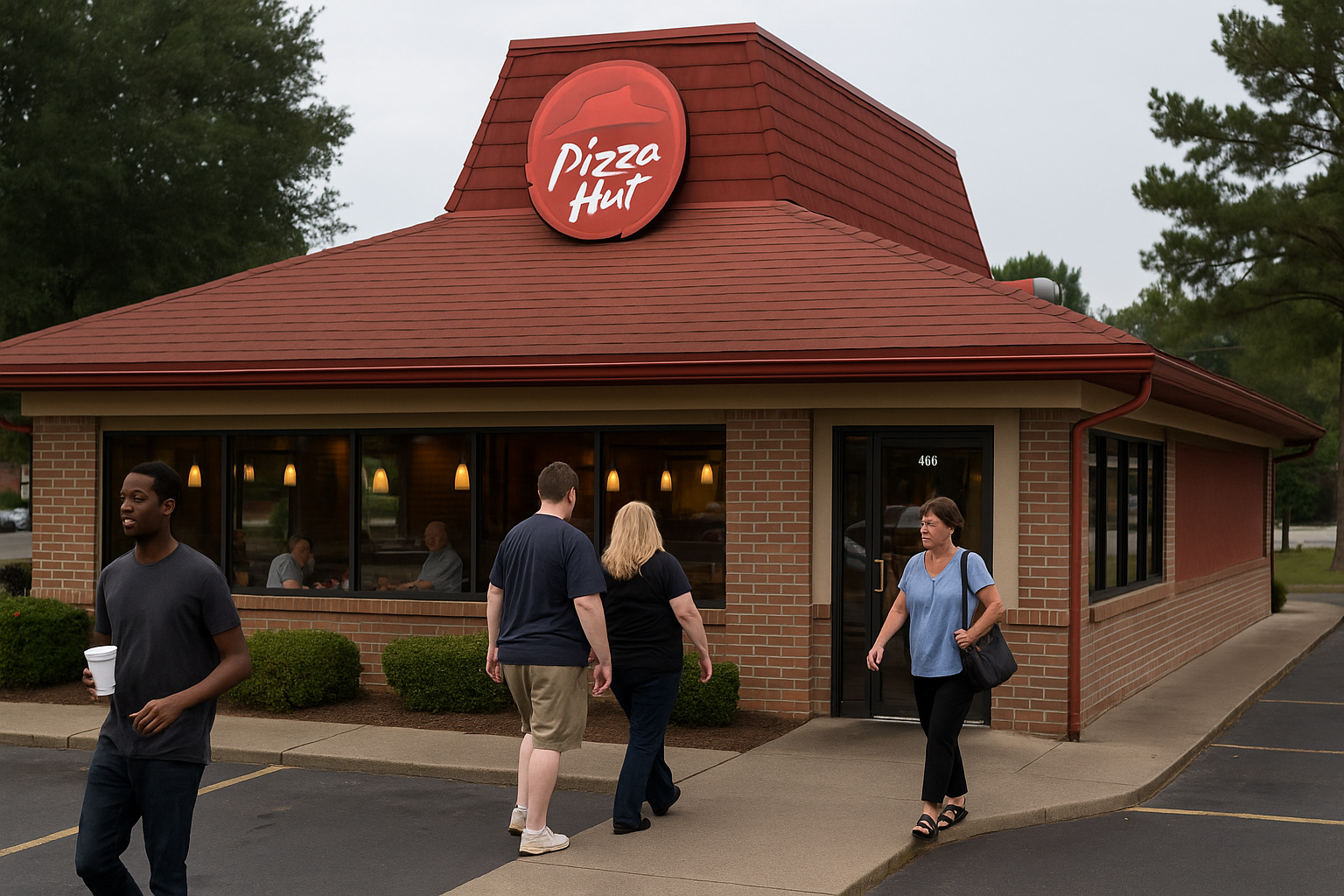
Yum! Brands just sold Pizza Hut for $2.7 billion because nearly 20,000 restaurants and one of the world’s most recognisable logos weren’t enough. ([Yum! Brands](https://www.yum.com/wps/portal/yumbrands/Yumbrands/news/press-releases/yum%21%2Bbrands%2Bcompletes%2Bsale%2Bof%2Bpizza%2Bhut%2Bto%2Blongrange%2Bcapital))
That should make a few founders uncomfortable. A famous brand is not an asset if customers have moved on and the business beneath it is built for a world that no longer exists.
The deal: Yum has finally cut Pizza Hut loose
Yum! Brands said that on September 1, 2026, it completed the sale of Pizza Hut outside Mainland China to private-equity firm LongRange Capital for about $1.5 billion, subject to adjustments. Yum can also receive up to another $75 million by 2030 if performance targets are met. The other piece — Pizza Hut China — was sold to Yum China Holdings for about $1.2 billion and closed on August 7, 2026. That brings Yum’s full exit from Pizza Hut to $2.7 billion. ([Yum! Brands](https://www.yum.com/wps/portal/yumbrands/Yumbrands/news/press-releases/yum%21%2Bbrands%2Bcompletes%2Bsale%2Bof%2Bpizza%2Bhut%2Bto%2Blongrange%2Bcapital))
This is not a tidy little portfolio adjustment. Pizza Hut was one of the original pillars of Yum, alongside KFC and Taco Bell. Now it is gone. Yum says it will move forward focused on KFC, Taco Bell and Habit Burger & Grill, operating or franchising more than 44,000 restaurants across 151 countries and territories. ([Yum! Brands](https://www.yum.com/wps/portal/yumbrands/Yumbrands/news/press-releases/yum%21%2Bbrands%2Bcompletes%2Bsale%2Bof%2Bpizza%2Bhut%2Bto%2Blongrange%2Bcapital))
Yum began reviewing options for Pizza Hut in November 2025. By the time it announced the split sale, management expected roughly $2.3 billion in net proceeds after tax, closing adjustments and transaction-related fees, excluding the earn-out. It also forecast about $85 million of one-off separation costs during 2026 — because even getting rid of a business this large is expensive. The board simultaneously authorised another $4 billion in share repurchases. ([Yum! Brands investor release](https://investors.yum.com/news-events/financial-releases/news-details/2026/Yum-Brands-Inc--Enters-into-Agreements-to-Sell-Pizza-Hut-for-2-7-Billion/default.aspx))
Read that again: Yum did not merely sell Pizza Hut. It turned an underperforming division into cash, removed a management distraction and set itself up to hand capital back to shareholders.
That is what ruthless capital allocation looks like. No sentimentality. No executive PowerPoint about “unlocking synergies” while the business quietly drags on for another decade.
Pizza Hut had the brand. It lost the model.
Pizza Hut’s issue was not that people suddenly hate pizza. That would almost be easier to fix.
The problem is that the company was built around a very different customer habit: driving to a big red-roof restaurant, sitting down with the family, ordering a pan pizza and maybe playing a game of Space Invaders while your parents drank Pepsi. That business model made sense when Pizza Hut was opening rapidly and delivery meant ringing one pizza shop.
Then the market changed.
Delivery became the default. Domino’s made speed and carryout a system. DoorDash and Uber Eats trained customers to expect every cuisine at their front door. The pizza category became crowded, discount-driven and brutally transparent. If the product, price or delivery promise is weak, a customer has 30 alternatives on their phone.
Pizza Hut was left carrying the baggage of large dine-in sites just as the market rewarded businesses built for off-premise volume. At the end of last year, it had 19,974 restaurants worldwide. Yet scale did not save it: Yum’s global sales grew 5% last year while Pizza Hut’s sales fell 2%. In the United States, Pizza Hut sales dropped 8.2% in 2025, worse than the broader pizza market, where sales were roughly flat to slightly down. Yum had already announced plans in February to close 250 U.S. Pizza Hut locations. ([Associated Press](https://apnews.com/article/348bb9ea9f68e559aba6663f2b9e45ac))
That is the bit most people miss. A large footprint is not automatically a moat. Sometimes it is just a bigger repair bill.
I have seen plenty of operators convince themselves that their history is an advantage. “We’ve been here for 20 years.” Great. So has the problem. Longevity is not proof you are winning; it is only proof you have survived so far.
Yum sold the problem to owners with a different mandate
Yum’s logic is obvious. KFC and Taco Bell are stronger growth vehicles. Pizza Hut needed more than another campaign, another menu refresh or a few new delivery offers. It needed patient, concentrated operational work — exactly the sort of job a specialist owner can choose to obsess over.
LongRange Capital gets the Pizza Hut business outside China. It was founded in 2019 by Bob Berlin, who previously led private-equity investments at Baupost and worked on the turnaround of Arby’s. LongRange has not publicly laid out a full revival plan, and that is sensible: announcing a turnaround is easy; actually fixing unit economics is where the bruises happen. ([Associated Press](https://apnews.com/article/348bb9ea9f68e559aba6663f2b9e45ac))
The opportunity is real. Pizza Hut still has global brand recognition, franchisees, customer awareness and massive installed infrastructure. It does not need to become a trendy new pizza concept. It needs to become economically relevant to customers and franchise partners again.
That probably means fewer sacred cows. More ruthless decisions about site formats. Better use of delivery data. Cleaner menus. Faster kitchen flow. Fewer stores that look like they are waiting for 1998 to return.
And it means working with franchisees rather than pretending head office can dictate a turnaround from a boardroom. Franchise systems fail when corporate managers announce growth while individual store owners are drowning in labour, rent and food costs.
The China split is smarter than it looks
The most intelligent feature of this transaction is not the price. It is the split.
Yum China bought Pizza Hut China for $1.2 billion, while LongRange acquired the rest for about $1.5 billion. China was Pizza Hut’s second-largest market outside the United States and accounted for 19% of sales, according to reporting when the deal was announced. ([Associated Press](https://apnews.com/article/348bb9ea9f68e559aba6663f2b9e45ac))
One global owner is neat on an org chart. It is not always smart in the real world.
China is a distinct market with its own consumer behaviour, delivery ecosystem, operating tempo and local competition. Yum China already knows that environment and has a direct incentive to make Pizza Hut work alongside its existing restaurant operations. LongRange, meanwhile, can focus on the vastly different ex-China turnaround without trying to force a global one-size-fits-all playbook.
Founders should steal this lesson: do not confuse centralised ownership with operational competence. A business can have one brand and still need different owners, leaders or models in different markets.
The correct structure is the one that gives each asset the best chance to win — not the one that looks cleanest in your annual report.
The overlooked risk: private equity does not fix bad economics by magic
Here is the contrarian bit. Selling Pizza Hut to private equity is not automatically good news for Pizza Hut.
Private equity can bring sharper incentives, faster decisions and desperately needed discipline. It can also bring leverage, cost cuts and an unhealthy fixation on extracting cash before the underlying business is truly stronger. Both versions exist.
Pizza has not always been a happy hunting ground for financial sponsors. Axios pointed to several cautionary examples: California Pizza Kitchen went through private-equity ownership before filing for Chapter 11 in 2020; Sbarro filed for bankruptcy after its MidOcean Partners deal; and FAT Brands, owner of Round Table Pizza, filed for Chapter 11 earlier in 2026. ([Axios](https://www.axios.com/2026/06/17/private-equity-pizza-hut))
That does not mean LongRange will repeat those mistakes. It means nobody should confuse a change in ownership with a solved business problem.
If LongRange uses the brand as collateral and strips costs blindly, Pizza Hut will get worse. If it fixes the store-level engine first — franchise economics, order frequency, kitchen throughput, digital conversion and site productivity — it has a genuine shot.
The order matters. You cannot financial-engineer your way out of customers choosing somebody else for dinner.
What this means for you
If you run a business, here is the useful bit — and it has nothing to do with pizza.
First, separate brand strength from business strength. Ask customers why they buy from you now, not why they remember you. If the answer is vague nostalgia, you have a marketing asset, not a durable operating advantage.
Second, inspect your unit economics by channel. A dine-in store, a delivery order, a subscription customer and a wholesale account can all look profitable in an aggregate monthly report while one quietly destroys your margins. Break it apart. The numbers will usually tell you which “growth” deserves to be killed.
Third, do not wait for the market to force the divestment. Yum started reviewing Pizza Hut in November 2025, before it completed the transaction on September 1, 2026. Good operators sell, shut or restructure businesses while they still have choices. Bad operators wait until the bank, the board or the market does it for them.
Finally, protect your attention like capital. Yum did not just collect sale proceeds. It removed an enormous problem from the executive agenda. If one division, product line or client consumes 40% of your energy and delivers 5% of your future, it is not a strategic asset. It is a hostage situation.
Pizza Hut is still a huge name. But names do not create returns. Useful products, sound economics and leaders willing to make ugly decisions do.
That is the actual lesson in Yum’s $2.7 billion goodbye.